
Mental health experts and advocates have called for urgent national attention on the mental well-being of young people, warning that neglecting their struggles can have devastating consequences later in life.
Professor Emmanuel Nii-Boye Quarshie, President of the Association for Suicide Prevention Ghana (GASP), said adolescents and young adults remained the most vulnerable group globally when it came to deaths by suicide, driven by a complex mix of social, economic and personal pressures.
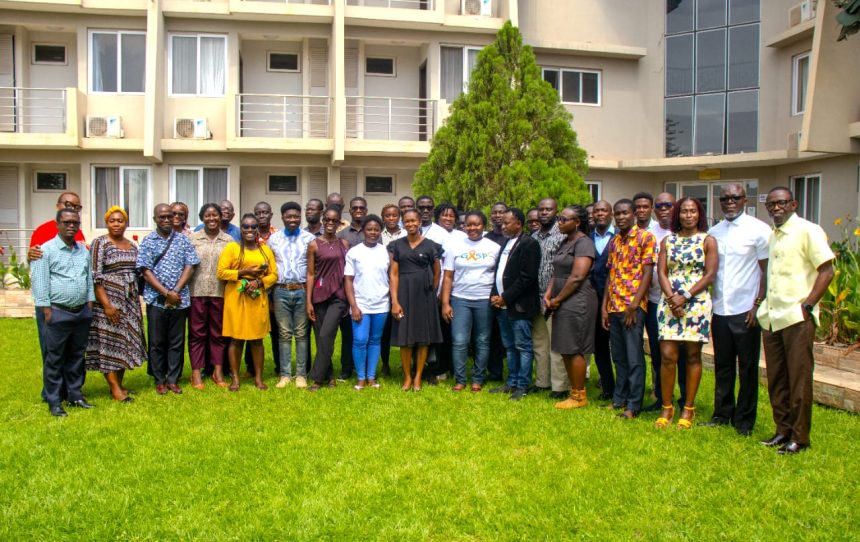
Prof Quarshie made the call on the sidelines of a capacity-building workshop for media practitioners in Accra on Friday, organised by the GASP in collaboration with the WHO Ghana Office and the Department of Psychology of the University of Ghana.
The workshop was to raise awareness on the WHO’S guideline in suicide reporting as well as to educate participants on the application of localised guidelines within the same context.
Prof Quarshie noted that while bullying existed in earlier generations, the current generation of youth faced additional challenges such as cyberbullying and unrealistic lifestyles portrayed on social media.
“Many of our young people are losing their self-esteem and sense of self-worth in silence, particularly in the virtual world,” he said.
“Unaddressed mental health challenges in the early years often persisted into adulthood with serious consequences.”
Prof Quarshie said evidence showed that most mental health conditions began early in life and failure to intervene promptly could lead to crises marked by hopelessness and loss of meaning, sometimes with fatal outcomes.
Worsening economic conditions, unemployment, poverty and difficulties in accessing education were additional stressors confronting young people, he said, adding that even families with children benefiting from free senior high school education still struggled to provide basic support.
Prof Quarshie called for deliberate efforts to build resilience, strengthen life skills education and introduce safeguards in the digital space to protect young people’s mental health.
Sharing a personal account, Dr Pokua Osei Yeboah, who lost her son to suicide, stressed on the importance of open and consistent communication between parents and their children.
She said many parents failed to engage their children in an honest one-on-one conversations, often missing warning signs until it was too late.
“Checking in is very important. We need to ask questions about their lives, their struggles, school, relationships and whether they are being bullied,” Dr Osei Yeboah said.
“Parents should also ask directly if their children are having thoughts of harming themselves.”
Dr Osei Yeboah admitted that cultural attitudes and traditional parenting styles sometimes discouraged such openness, causing emotional distress to be dismissed as weakness.
“Looking back, I didn’t see the danger coming, even though his struggles started when he was an adolescent. He never shared, and I never pushed the conversation. I have learnt my lessons after the passing of my son,” she said.
She called for increased public education, mental health funding, reduced stigma and the establishment of a national crisis hotline similar to emergency services available in other countries, to provide immediate support for people in distress.
Dr Johnny Andoh-Arthur, Secretary to the GASP, highlighted the lack of reliable national data on suicide and attempted self-harm, noting that most available figures were derived from media and police reports.
“As a country, we do not have a dedicated system for recording these cases, and without data, prevention becomes difficult,” he stated.
Dr Andoh-Arthur said although Ghana had decriminalised attempted suicide, about two to three years ago, implementation was incomplete without adequate investment in mental health services.
He expressed worry over the allocation of less than two per cent of the national health budget to mental health, limiting the capacity of health facilities to provide timely and effective support.
The GASP Secretary noted that with the decriminalisation, people in crisis should be encouraged to seek help without fear of punishment, which would require well-resourced facilities, trained professionals and accessible services.
While the decriminalisation marked important progress, sustained national commitment, data-driven policies and compassionate support systems were needed to protect young people’s mental health and prevent avoidable loss of life, he added.