Farmlands of whispering crops and sun-drenched soil, deep in the heart of Ewoyaa near Mankessim, now simmer with quiet despair. What was once fertile ground for food and hope has become a symbol of suspended dreams, as the two-year delay in parliamentary ratification of Ghana’s flagship Atlantic Lithium project continues to exact a heavy toll on farming families and host communities.
The Ewoyaa Lithium Project, hailed as a transformational opportunity for Ghana’s green energy future, remains stuck in legislative limbo. In the meantime, its unintended consequences are unfolding daily on the lives of subsistence farmers whose lands lie within the concession.
Farming halted, livelihoods frozen
For farmers like Mr. Kwame Asare, the delay has meant the gradual collapse of livelihoods. Restrictions placed on farmlands within the concession area have halted the cultivation of major crops such as plantain, pineapple and cassava. Only limited planting of short-cycle food crops like maize has been allowed, merely to prevent starvation.
Standing beneath a towering mahogany tree at the edge of Ewoyaa, Mr. Asare gazes at a rusted pickaxe lying idly by his side—a reminder of the brighter future he once envisioned.
“This land fed my family,” the 42-year-old father of four says quietly. “Now, we just wait.”
Mr. Asare had built big dreams around the lithium project, hoping compensation would help him complete his four-bedroom house and secure a better future for his children. Instead, his family lands were bulldozed, crops destroyed, and income lost, with compensation still pending.
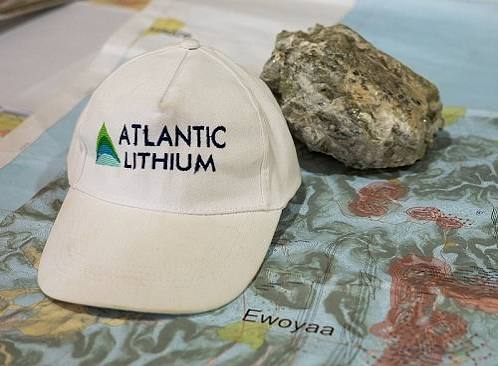
Once, his cassava fields produced enough to feed his wife, Esi Ampah, and children—Simpson, Cecilia and Hannah—with surplus for sale. Today, the fields lie barren, etched with white lithium veins that snake through the soil like broken promises.
“This delay has turned our dreams into nightmares,” he lamented. “My family starves while politicians argue over terms.”
Job losses compound the crisis
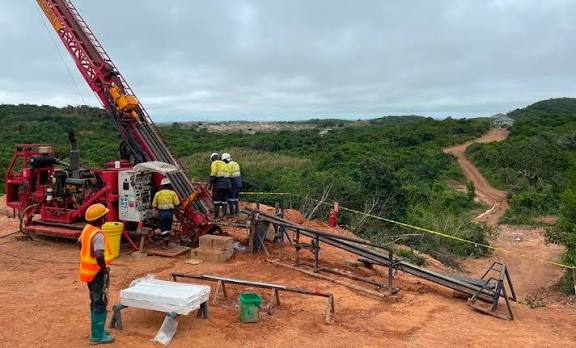
The hardship extends beyond farming. Mr. Asare’s brother, Mr. Vincent Mensah, was among more than 100 workers laid off by Atlantic Lithium due to the stalled ratification.
Mr. Mensah, a strong supporter of the project, had been engaged in October 2024 along with 167 others, including geologists, laboratory technicians, drivers, electricians and support staff. Today, only 62 workers remain on site.
Mr. Ahmed Salim Adam, General Manager of Atlantic Lithium, confirmed that the workforce had been drastically reduced because it was economically unsustainable to maintain staff without full operational clearance.
“Both the company and the workers were fully prepared to commence operations,” Mr. Adam said. “All equipment and logistics were in place, but without ratification, it does not make economic sense to keep everyone.”
He warned that a looming redundancy programme could further reduce staff numbers, worsening the situation for host communities in the Mfantseman and Abura-Asebu-Kwamankese (AAK) districts, where youth expectations for employment are high.
Despite injecting $68 million into the project, Mr. Adam said the company was yet to see meaningful returns, stressing that urgent parliamentary action was needed to avert deeper losses.
Traditional leaders sound the alarm
The humanitarian implications have not gone unnoticed by traditional authorities.
Osagyefo Amanfo Edu VI, Omanhen of the Mankessim Traditional Area, described the situation as an “artificial disaster,” declaring lithium exploration communities within his jurisdiction as “Artificial Disaster Zones.”
Although he understands the need for due process, the Omanhen said the delay had intensified suffering, casting a cloud of despair over communities during what should be a season of joy.
“With Christmas days away, farmers are barred from planting essential crops, their lands seized without a pesewa in compensation,” he said. “This is not a natural disaster, but one created by inaction.”
He warned that the frustration and anger brewing among residents could become a ticking time bomb if urgent steps were not taken.
Similarly, Okogyeman Okese Essando IX, Omanhen of the Nkusukum Traditional Area, described the project as the “hope of the people of Nkusukum and Mfantseman.”
“We have waited patiently since 2023,” he said. “The company is ready, the communities are ready, but ratification remains stalled. Compensation and resettlement hang in the balance.”
He added that swift parliamentary approval would trigger compensation payments, resettlement construction, job creation and renewed peace in the area.
Political pressure mounts
The delay has placed the Member of Parliament for Mfantseman, Dr. Ebenezer Prince Arhin, under intense pressure from constituents.
He has repeatedly assured residents that the project remains under parliamentary review and is moving toward resolution. At a recent engagement, he reiterated that Cabinet had approved discussions between the Ministry of Lands and Natural Resources and Barari DV Ghana Limited to ensure compliance with all requirements.
“Once the Ewoyaa Lithium Project begins, it will create numerous jobs for our people,” he said, pledging full support for Atlantic Lithium while urging the company to prioritise local employment.
“We have capable youth here—excavator operators, drivers, vendors and secretaries,” he stressed.
Government cautions against future pitfalls
The Central Regional Minister, Mr. Ekow Panyin Okyere Eduamoah, urged traditional leaders and residents to prepare for responsible mining even before production begins.
“Let’s put ground rules in place early to prevent lithium galamsey,” he cautioned, stressing that the region must avoid the chaos and environmental destruction associated with illegal gold mining.
Company maintains hope
Despite the uncertainty, Atlantic Lithium has given assurances that operations will begin immediately once the lease is ratified. Mr. Adam said all laid-off workers would be re-engaged, alongside fresh recruits from surrounding communities.
He disclosed that the Minister of Lands and Natural Resources, Mr. Emmanuel Armah Kofi Buah, had assured the company that the lease would be presented to Parliament in the next sitting.
“We remain hopeful,” he said, adding that the company continues to support host communities through boreholes, school rehabilitation and other corporate social responsibility initiatives.
Ghana’s lithium promise and the bigger picture
Ghana’s lithium deposits—primarily in the Ewoyaa/Mankessim area—are among the most commercially viable in Africa. The project covers 139.23 square kilometres, with estimated reserves of 30.1 million tonnes at 0.26 percent lithium oxide.
Globally, lithium demand is surging due to the shift toward electric vehicles and renewable energy. The International Energy Agency projects demand could grow 40-fold to meet climate targets, positioning lithium as the “new oil” of the green economy.
Yet critics warn that Ghana risks repeating the mistakes of its extractive past. Under current terms, the state holds a five percent carried interest, projecting $4.8 billion over the mine’s 12-year life—figures many stakeholders consider inadequate.
Concerns also persist over the export of raw ore, limited value addition, opaque tax concessions and weak local content provisions.
A choice before parliament
As families in Ewoyaa wait, the stakes could not be higher. Beyond the figures and forecasts lie real human costs—lost harvests, empty homes, unemployed youth and communities suspended between hope and hardship.
For residents, the question is no longer just about lithium—it is about dignity, fairness and whether Ghana’s green transition will uplift those who sit closest to its mineral wealth.
Until Parliament acts, Ewoyaa’s promise remains frozen, and its people continue to pay the price.
GNA