
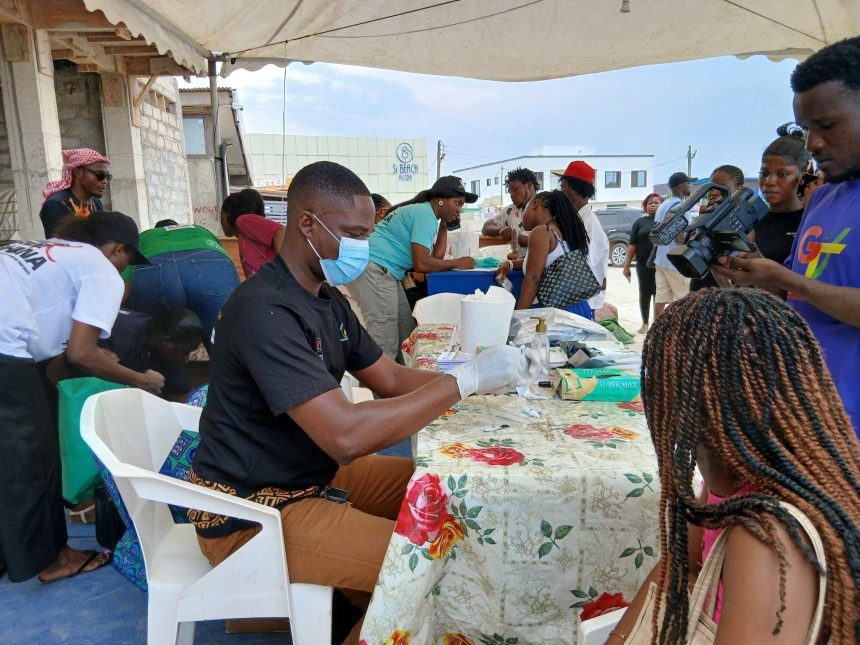
The Ghana HIV and AIDS Network (GHANET) has renewed calls on the Government to urgently resource the National HIV and AIDS Fund, warning that dwindling donor support threatens Ghana’s ability to curb new HIV infections and AIDS-related deaths.
More than 15,000 new HIV infections and 12,000 AIDS-related deaths were recorded in the country in 2024, according to data from the Ghana AIDS Commission.
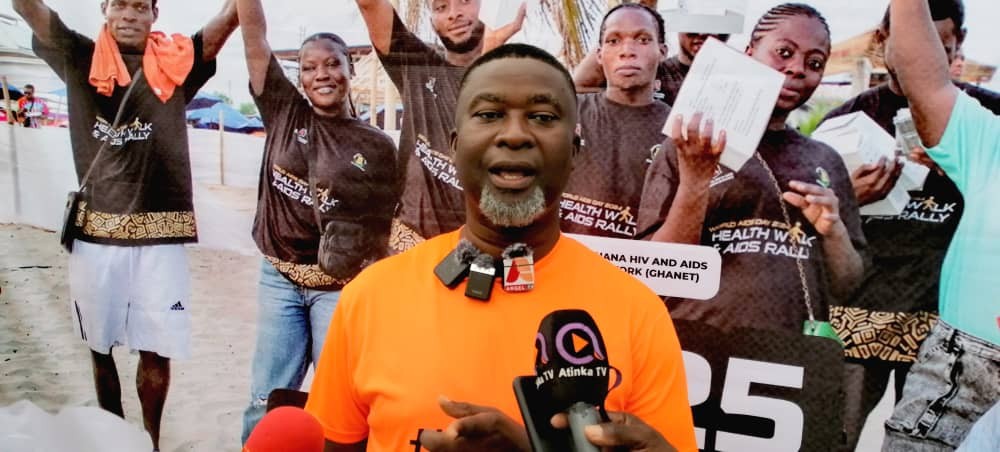
Speaking during an end-of-year safe sex campaign at Laboma Beach in Accra on January 1, 2026, Mr. Ernest Amoabeng Ortsin, President of GHANET, said the figures underscored the need for sustained investment in prevention, testing, and treatment.
“The National HIV and AIDS Fund was established in 2016, but as we speak, the fund is still empty. We are largely relying on global funds, yet donors are scaling back. Government must step in with domestic resources,” he said.
GHANET’s warning comes amid reductions in international health financing, including cuts linked to the withdrawal of the United States from some global health commitments and the closure of USAID-supported programmes.

Mr. Ortsin cautioned that by 2030, donor funding for HIV and AIDS programming could significantly decline or end altogether, making domestic financing critical to sustaining Ghana’s HIV response.
While acknowledging progress in reducing HIV prevalence from nearly three per cent in the early 2000s to about 1.4 per cent currently, Mr. Ortsin said Ghana still faced major challenges in meeting the global target of ending AIDS as a public health threat by 2030.
“If we are serious about preventing new infections and deaths, we must invest now,” he said.
“Government funding is no longer optional; it is critical for Ghana’s HIV response.”
As part of the awareness drive, GHANET intensified public education during the festive season, focusing on HIV prevention, consistent condom use, and regular testing.
The organisation distributed free condoms and HIV self-test kits to encourage safer sexual practices.
Since launching the 2025 end-of-year campaign on December 26, Mr. Ortsin said GHANET had distributed more than 600 HIV self-test kits, with about 60 per cent taken home for private testing and 40 per cent administered on-site at the request of beneficiaries.
Mr. Ortsin explained that the end-of-year safe sex campaign, instituted last year, was aimed at raising awareness about HIV, AIDS, and other sexually transmitted infections, particularly during the festive season when social activities increase and people are more likely to engage in risky sexual behaviours.
He noted that GHANET had been promoting the use of HIV self-test kits since 2023 to enable individuals to test discreetly in the comfort of their homes and seek confirmatory testing when results were reactive.
Additionally, he said the organisation had placed more than 500 people who tested positive on treatment since the campaign began.
Mr. Ortsin cautioned against the perception that familiarity or physical appearance could determine a person’s HIV status, warning that unprotected sex without prior testing was extremely risky.
“Don’t look at someone’s face, physique, or appearance and assume they are HIV negative. Before engaging in unprotected sex, it is always advisable to know your partner’s status,” he said.
He encouraged the public to take advantage of HIV self-testing, stressing that the days when individuals had to visit health facilities to know their status were over.
“Everyone should test and know their status,” he added.