
The government is set to revert to a familiar name for its primary domestic intelligence agency, proposing to change the National Investigations Bureau (NIB) back to the Bureau of National Intelligence (BNI).
The change is part of the broader Security and Intelligence Agencies Bill, 2025, currently before Parliament. If passed, the legislation will formally abolish the NIB and re-establish the Bureau of National Intelligence.
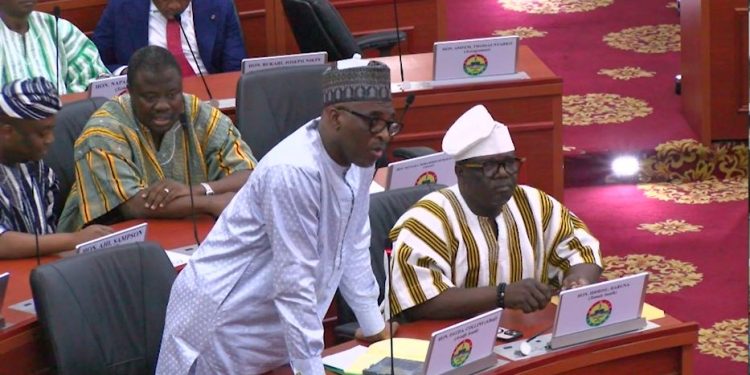
Interior Minister Mohammed Mubarak Muntaka presented the rationale to Parliament on Thursday, stating that the current acronym creates significant public confusion.
He argued that “NIB” is frequently mistaken for the National Investment Bank, a financial institution, creating an ambiguity that is at odds with legal standards for naming security bodies.
“Anywhere in the world, the acronyms of security agencies are legally distinct to avoid confusion. Unfortunately, when you say NIB, people are unsure whether you mean a bank or a security agency,” the Minister explained.
“By introducing BNI, the Bureau of National Intelligence, we address this issue.”
The name “Bureau of National Intelligence” is not new to Ghana’s security landscape; it was the official designation of the domestic intelligence agency until 2021, when it was renamed the National Investigations Bureau under the previous administration.
Beyond the renaming, the 2025 bill has sparked political controversy due to its proposed restructuring of the security hierarchy.
The legislation seeks to abolish the specific ministerial position for National Security. Instead, it would grant the President the authority to designate any minister to oversee the National Security Coordinator.
This provision has drawn sharp criticism from the Minority Leader in Parliament, Alexander Afenyo-Markin.
He warned that the bill risks concentrating excessive power within the National Security apparatus, potentially leading to abuses of citizens’ rights.
He described the proposed law as a matter of “significant political concern” that requires rigorous scrutiny.