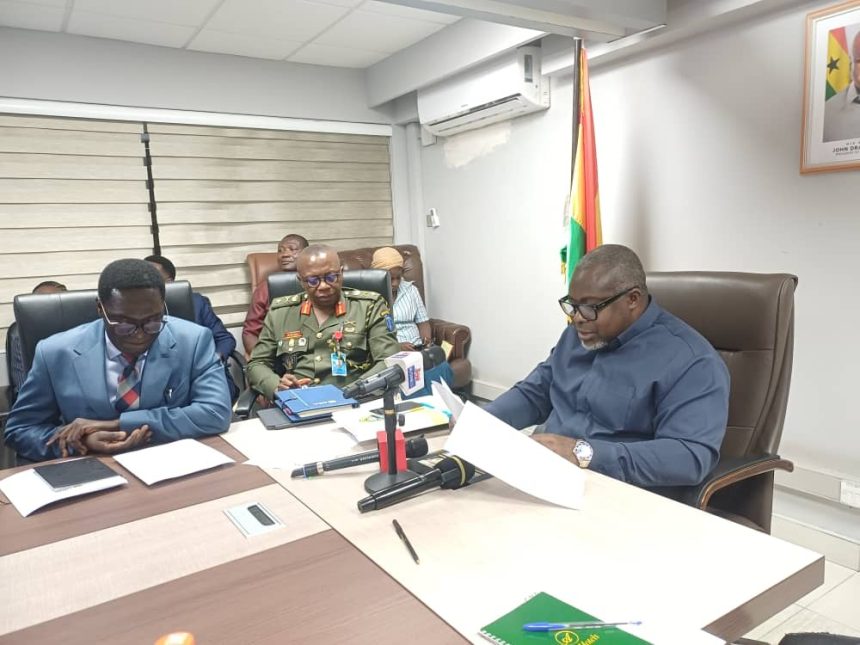
The Commissioner-General of the Ghana Revenue Authority (GRA), Mr Anthony Sarpong, on Tuesday inaugurated the National VAT Compliance and Enforcement Team, describing it as a major milestone in Ghana’s Value Added Tax (VAT) reform journey.
He said the initiative followed reforms that began last year and culminated in the passage of the new VAT Act, which took effect on January 1, 2026, to strengthen domestic revenue mobilisation for national development.
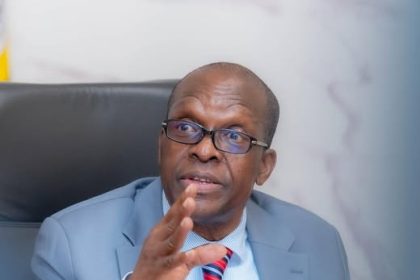
The 26-member Compliance and Enforcement Team is chaired by Dr Martin Kolbil Yamborigya, a renowned Tax Administrator and Public Finance Expert.
The members comprise experts in audit, investigation, intelligence, legal enforcement and taxpayer services.
The core mandate of the team is to promote voluntary compliance, detect and deter non-compliance, and ensure the consistent and professional application of the VAT law across all sectors.
Mr Sarpong said VAT remained a critical source of government revenue, but current data showed a VAT gap of about 60 per cent, indicating that only four out of every 10 registered taxpayers were complying with their VAT obligations.
Addressing the challenge required strong collaboration between the GRA and the business community, he said, adding that the Authority remained committed to supporting businesses through fairness, professionalism and quality service delivery.
Mr Sarpong said enforcement measures would be applied where taxpayers failed to register, charge VAT or remit VAT collected.
He disclosed that a pilot enforcement exercise conducted on selected streets in Accra revealed that about 60 per cent of shops were either not registered for VAT, not charging VAT, or charging VAT but failing to remit it to the State.
“This calls for a nationwide compliance and enforcement drive,” he said.
The GRA Commissioner General urged compliant businesses to maintain their good practices and called on non-compliant ones to regularise their VAT affairs immediately.
He assured taxpayers that VAT registration could be completed within 24 hours and warned that the GRA was using data and analytics to identify defaulters.
Although the Authority preferred cooperation through education and awareness, he said it would apply lawful enforcement measures when necessary, guided by fairness and professionalism.
He announced that GRA officers would be visible on the streets and at business premises – sometimes with prior notice and at other times unannounced – to ensure compliance.
He appealed to the media to help communicate the VAT reform message to the public.
Mr Sarpong said the GRA would, later in 2026, introduce automation under the Fiscal and Electronic Devices Act, alongside a taxpayer reward scheme, to further strengthen compliance.
He called on consumers to always demand VAT invoices when making purchases, noting that this ensured VAT paid was channelled to the State to support essential public services such as roads, hospitals and schools.
Reaffirming the GRA’s commitment to professionalism, fairness and service, he urged Ghanaians to support VAT compliance as a shared responsibility for national development.
Dr Yamborigya, in his remarks, noted that the new VAT Act aimed to modernise the tax system, broaden the tax base, and ensure fairness, transparency and efficiency in revenue collection.
“Laws alone are not enough; effective implementation and enforcement are critical to success,” he said.
Enforcement was about fairness, not punishment, ensuring everyone paid their fair share and protecting honest businesses from unfair competition, he added.
Dr Yamborigya assured that members of the Team would uphold integrity, professionalism, accountability and taxpayers’ rights.