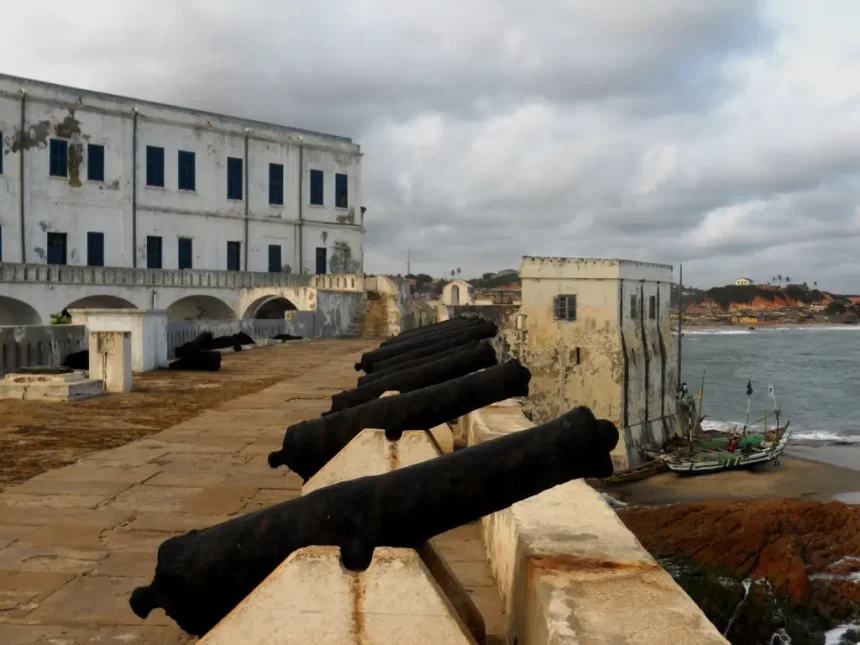
Several of Ghana’s historic forts and castles have been temporarily closed to the public to allow for maintenance and safety works, heritage authorities have announced.
The Ghana Museums and Monuments Board (GMMB) said the decision was taken to protect the ageing structures, many of which have been standing for more than 300 years and have suffered gradual deterioration from erosion, salt air and heavy use.
The sites affected by the closure are Fort Apollonia at Beyin, Fort St Anthony at Axim, Fort Orange in Sekondi, James Fort in Jamestown, Accra, and Ussher Fort in nearby Usshertown.
According to the GMMB, the maintenance works will include structural assessments, repairs to weakened sections and measures to address safety concerns for visitors and staff.
“These interventions are necessary to preserve the forts and ensure they remain safe and accessible,” the board said in a statement, apologising for any inconvenience caused to tourists and tour operators.
Ghana’s forts and castles were built by European powers from the late 15th century as part of competition for control of trade along the Gold Coast. The Portuguese were the first to arrive, followed by the Dutch, British, Danes and Swedes, who constructed fortified trading posts to secure gold, ivory and, later, enslaved Africans.
Many of the forts, including those now closed, served multiple roles over time. They functioned as commercial hubs, military installations and colonial administrative centres.
By the 17th and 18th centuries, several had become central holding points in the transatlantic slave trade, where captives were imprisoned in dungeons before being shipped to the Americas.
James Fort and Ussher Fort in Accra, for example, were key British and Dutch strongholds in what later became the colonial capital.
Fort St Anthony in Axim and Fort Apollonia in Beyin played similar roles along the western coast, reflecting the strategic importance of the region to European trading interests.
Today, the forts and castles are preserved as sites of memory, education and reflection.
Together with larger sites such as Cape Coast Castle and Elmina Castle, they form the “Forts and Castles of Ghana” World Heritage ensemble recognised by UNESCO for their outstanding universal value.
The closures are expected to have a short-term impact on tourism, particularly in coastal communities that depend on visitors to the historic sites for income. Ghana’s forts and castles are among the country’s most visited attractions, drawing both domestic tourists and members of the African diaspora seeking to connect with their history.
Heritage conservation experts have largely welcomed the move, noting that routine maintenance is often delayed until damage becomes severe.
“If these structures are not properly maintained, the risk is that we lose them entirely,” one conservation specialist said. “Temporary closures are preferable to permanent loss.”
The government has previously announced funding allocations for the rehabilitation of forts and castles nationwide, as part of efforts to strengthen cultural tourism and preserve Ghana’s historical assets.
The GMMB said the sites would reopen once maintenance works and safety checks are completed, but no firm timeline has been given.