Maritime experts say the ongoing disruption in the Strait of Hormuz is far more complex and unpredictable than the 2021 Suez Canal blockage.
Mr Fred Asiedu Dartey, Head, Freight and Logistics, Ghana Shippers Authority, and Captain Francis Kwesi Micah, Maritime Consultant, stated this during a media forum powered by the Ghana Ports and Harbours Authority (GPHA) on the theme: “Impact of the Closure of the Strait of Hormuz on Trade, Supply Chain and the Shipping Industry.”
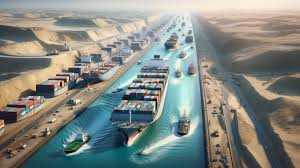
Mr Dartey explained that the Suez Canal incident, caused by the Ever-Given vessel, delayed goods worth about 9.6 billion dollars but was resolved within six days.
“But the good thing about that one was that it was an operational error, so immediately resources were put together, and over a period of six days, the vessel was pulled away and the channel was open for the free flow of vessels, so it had a finite duration. Even though it was unexpected and it rippled across the industry, over a short period of time, we found a solution,” he said.
He said in contrast, the current situation was geopolitical and has no clear timeline for resolution.
“What we are dealing with today is unexpected, a geopolitical conflict, one that nobody can predict the end of because every now and then, in one breath, one party says we’ve done significant damage and there is going to be a call for a truce, and we are getting there; in another breath, you hear that the way things are going, we will have to go for another two weeks or so,” he observed.
Captain Micah indicated that currently over 2,500 commercial vessels and about 20,000 seafarers were currently stuck in the Asian gulf, stressing that the repercussions were huge.
He said the two scenarios could not be compared, as the Suez Canal blockage was a navigational error that resulted in the blockage, so it has a solution, while the Strait of Hormuz has no timeline.
“If this exacerbates, prices of goods will be very high; it affects all over, and the fact that the refineries and production lines have been hit by missiles, etc. means that even when the hostility ends today, we are going to have issues for a number of years or months that will be required to restore the volumes of production. It means that we are going to be in this long haul for a long time,” he said.
Captain Micah warned that even if hostilities end immediately, damaged infrastructure and disrupted production systems could take months or years to recover.