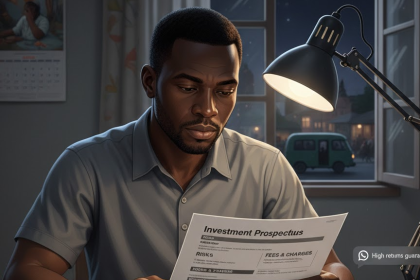
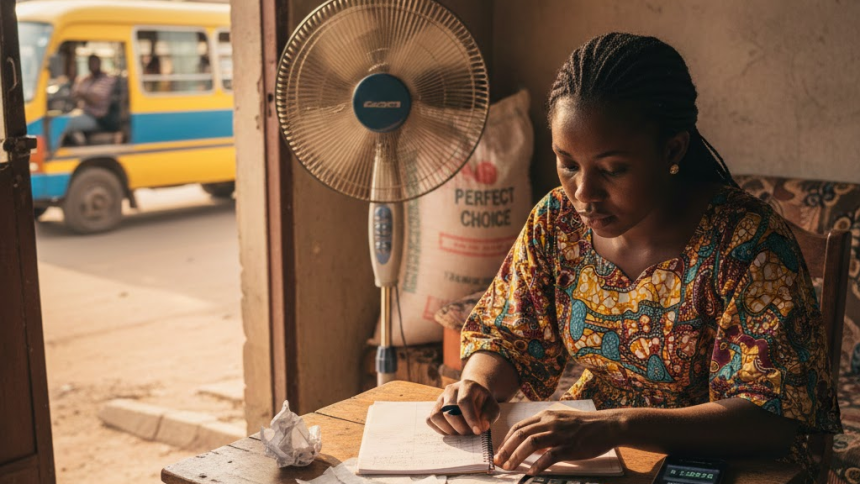
For many Ghanaians, budgeting feels less like a financial tool and more like an exercise in frustration. Salaries arrive late, prices change without warning, family obligations are non-negotiable, and emergencies are never announced in advance. In that environment, the neat budgeting formulas found online often collapse within weeks.
Yet a realistic monthly budget is still possible. It just has to reflect how money actually moves in Ghana, not how it is supposed to move in theory.
Why most budgets fail in Ghana
The first problem is predictability. For a large number of workers, income is not fixed. Even salaried employees may receive allowances irregularly, experience delays in payment, or supplement income through side work. Informal sector workers face even greater uncertainty.
The second issue is inflation. Prices of food, transport, utilities, and services can rise sharply within a short period. A budget created in January may already be outdated by March.
Then there is the social dimension. Financial planning in Ghana rarely involves only the individual. Parents, siblings, extended family members, church contributions, funerals, weddings, and community obligations all place real demands on monthly income. Ignoring these realities does not make them disappear; it only guarantees budget failure.
A realistic budget begins by accepting these facts rather than fighting them.
Start with what you actually earn, not what you hope to earn
The foundation of a workable budget is honest income calculation. This means focusing on net income, not gross figures. What matters is the money that actually hits your account or wallet after taxes, SSNIT, loan deductions, and mobile money charges.
For those with variable income, the safest approach is to calculate a conservative monthly average. This can be done by reviewing earnings over the past six months and using the lowest or second-lowest month as the baseline. Any additional income should be treated as a bonus, not a guarantee.
This single step prevents overcommitment and reduces the stress that comes when income falls short of expectations.
Separate fixed expenses from flexible ones
Once income is clear, expenses should be divided into two broad categories.
Fixed expenses are those that rarely change within the month. Rent, loan repayments, school fees paid monthly, internet subscriptions, and transport passes fall into this group.
Flexible expenses fluctuate. Food, fuel, utilities, mobile data, airtime, social spending, and household supplies all vary depending on prices and behaviour.
In Ghana, many people underestimate flexible expenses, particularly food and transport. A realistic budget deliberately overestimates these costs to create breathing room when prices rise.
Build the budget around priorities, not percentages
Popular budgeting rules such as the 50-30-20 formula assume stable incomes and low social obligations. For many Ghanaians, these assumptions do not hold.
A better approach is priority-based budgeting. This involves ranking expenses in order of importance. Survival expenses come first: food, shelter, transport, utilities, and basic healthcare. Next are obligations that carry consequences if ignored, such as loan repayments, school fees, and essential family support.
Savings, even if modest, should come before lifestyle spending. This might feel counterintuitive, but saving only what is left over often results in saving nothing at all.
Lifestyle expenses such as eating out, subscriptions, fashion, and leisure come last. They are not unimportant, but they must adjust when income tightens.
Treat savings as a bill, not a reward
One of the most common budgeting mistakes is treating savings as optional. In reality, savings should be built into the budget as a fixed expense, even if the amount is small.
For many Ghanaians, saving five or ten percent of income consistently is more realistic than aiming for ambitious targets that collapse after a few months. The goal is habit, not heroics.
Where savings are kept also matters. Short-term savings are best held in places that are accessible but not too easy to spend, such as a dedicated savings account, a susu arrangement with discipline, or a regulated digital savings platform. Long-term savings should be protected from daily temptation.
Plan deliberately for family and social obligations
Family support is often treated as an emergency expense, yet it is one of the most predictable financial outflows in Ghanaian life. A realistic budget sets aside a defined amount for family support and social obligations.
This approach does two things. It protects the rest of the budget from being disrupted, and it creates boundaries. When the allocated amount is exhausted, it becomes easier to say no or postpone requests without guilt.
Budgeting for generosity does not make one less generous. It makes generosity sustainable.
Expect emergencies and budget for them
In Ghana, emergencies are not rare events. Illness, funerals, vehicle repairs, school-related costs, and utility issues are recurring realities.
Instead of pretending emergencies will not happen, a realistic budget includes a small monthly contribution to an emergency fund. Over time, this fund becomes a financial shock absorber, reducing reliance on loans, overdrafts, or family bailouts.
Review and adjust, not abandon
A budget is not a fixed document. It is a living tool. Prices change, income shifts, and responsibilities evolve. Reviewing the budget monthly allows for adjustments without discarding the entire plan.
Tracking expenses does not require complex apps or spreadsheets. A simple notebook, phone notes, or basic budgeting app can work, as long as it is used consistently. The aim is progress, not perfection.
What a realistic budget really offers
A realistic budget does not eliminate financial stress overnight. What it offers is clarity. It shows where money is going, where pressure points lie, and what trade-offs are being made.
In a challenging economic environment, that clarity is powerful. It allows individuals to make conscious choices instead of reactive ones, to plan rather than hope, and to build financial stability gradually within Ghana’s economic realities.
For many Ghanaians, that is not just good financial practice. It is a form of indispensable resilience.