
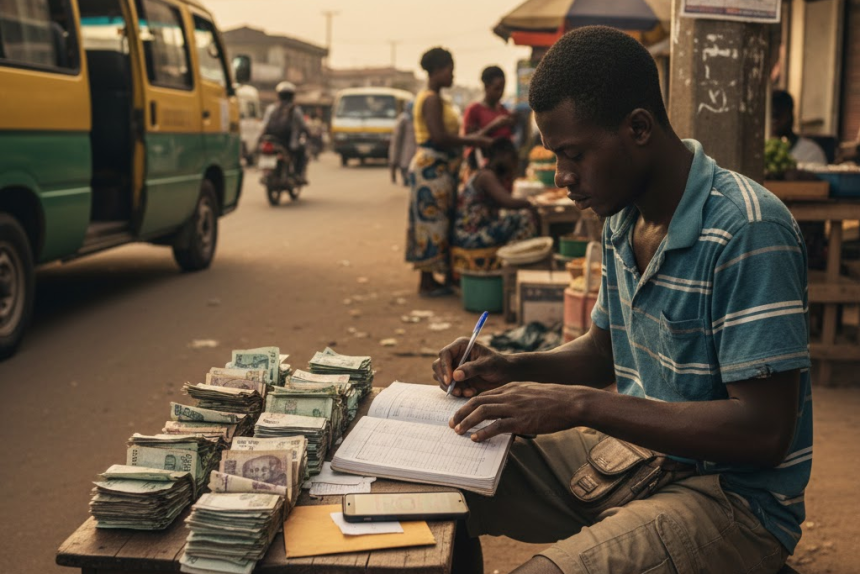
For a large share of Ghana’s workforce, monthly income is anything but predictable. Market women, drivers, freelancers, artisans, traders, creatives, gig workers and countless others rely on earnings that rise and fall with seasons, demand and opportunity. Even some salaried workers supplement their income with commissions or side jobs that vary from month to month.
Yet most financial advice assumes a steady paycheck. The result is a gap between how people actually earn money in Ghana and the financial rules they are told to follow. For millions of Ghanaians whose income is irregular, standard budgeting techniques simply do not work.
But unpredictability does not have to mean instability. With the right approach, people earning varying incomes can build savings, plan ahead and cushion themselves against lean periods.
The first step is knowing your income pattern
Irregular income is not the same as unpredictable income. Many informal and gig workers earn inconsistently, but not randomly. There are busy seasons and slow seasons, high weeks and low weeks.
The key is identifying the pattern. This means tracking earnings for at least three to six months. A simple notebook or phone note can reveal:
- Your highest-earning months
- Your lowest-earning months
- Weekly and seasonal fluctuations
- Which activities bring the most reliable income
This information becomes the foundation of a workable financial plan.
Build your budget around your lowest monthly income
People with irregular income often make the mistake of budgeting based on their best months. When lean months arrive — as they always do — they find themselves scrambling, borrowing or dipping into savings.
A more realistic approach is to budget using the lowest monthly income you consistently earned in the past six months. That becomes your baseline.
Anything earned above that amount is surplus — money to save, invest or use to build a buffer for future dry spells.
This method protects you from financial shocks and reduces stress during off-peak periods.
Separate your expenses into essentials and flexible costs
A workable budget for irregular earners must distinguish between:
Essential expenses:
- Food
- Rent
- Transport
- Utilities
- School fees
- Health costs
- Basic family support
These must be covered by your baseline (lowest) income.
Flexible expenses:
- Eating out
- Fashion
- Subscriptions
- Entertainment
- Non-essential purchases
These should only be funded from surplus income.
This structure ensures that essentials remain secure even when income drops.
Prioritise an emergency fund — it matters even more for informal workers
For someone with unpredictable income, an emergency fund is not a nice-to-have; it is essential. Emergencies do not wait for good months. Without a buffer, small crises — a broken phone, illness, vehicle repairs — can wipe out business capital or force expensive borrowing.
Informal and gig workers should aim to save enough to cover three months of essential expenses, built gradually. Even small amounts saved consistently during good weeks can grow into a meaningful cushion.
Pay yourself a “salary” from your business or income stream
For people whose earnings fluctuate daily or weekly, adopting a personal salary system helps create stability. The idea is simple:
- All earnings go into one central account or cash pool.
- You then pay yourself a fixed amount every week or month — your “salary.”
This salary should be equal to your baseline income.
During good periods, extra earnings stay in the business or savings pool.
During lean periods, the pool supports your salary.
It’s a technique used globally by freelancers and entrepreneurs and is particularly effective in Ghana’s informal economy.
Reduce debt and avoid quick loans
High-interest mobile loans have become traps for many informal workers. The pressure to repay from future unpredictable income often leads to a cycle of borrowing to fill gaps created by earlier borrowing.
Irregular earners should avoid debt where possible and prioritise paying off existing loans during strong months. Borrowing to survive during slow periods is a sign that your financial structure needs strengthening.
Diversify income streams where possible
Informal and gig workers often rely heavily on one source of income. When that source dries up, financial stress quickly follows. Diversifying does not always mean starting a new business; it can be as simple as:
- Offering additional services
- Selling complementary products
- Expanding into weekend or seasonal work
- Monetising a skill already in demand
In many Ghanaian communities, the people who survive economic downturns are those with multiple income streams rather than a single one.
Plan intentionally for family responsibilities
Family support is a major feature of Ghanaian financial life. But for irregular earners, agreeing to fixed monthly commitments can be risky. Instead, it’s safer to set aside a specific percentage of monthly earnings for family responsibilities.
This protects relationships while maintaining financial boundaries.
The strength behind a flexible financial strategy
Earning irregular income does not mean you cannot plan your financial life. It simply requires a system built on flexibility rather than fixed rules.
By budgeting based on the lowest income, saving aggressively in good months, keeping expenses predictable and building a cushion against lean periods, informal workers and gig earners can create stability that many salaried workers struggle to achieve.
In a country where the informal economy carries the nation on its back, these strategies are not just useful — they are vital. They help ensure that the people who keep markets running, transport systems moving, and small enterprises growing can build the financial security they deserve, even in the face of uncertainty