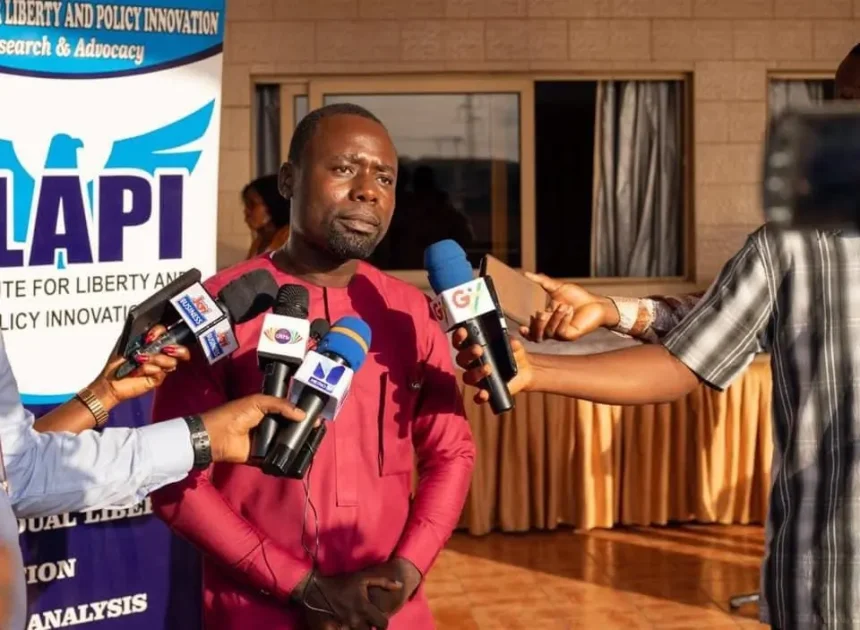
Mr Peter Bismark Kwofie, the Executive Director of the Institute of Liberty and Policy Innovation (ILAPI), has urged the Government of Ghana to adopt strategic economic policies to shield the country from possible shocks should tensions between the United States and Iran escalate into a broader conflict.
Speaking with the Ghana News Agency (GNA), Mr Kwofie cautioned that Ghana’s heavy reliance on imports makes the country vulnerable to disruptions in global trade routes, particularly those passing through the Gulf Region.
Mr Kwofie noted that Ghana’s economic structure still reflects a significant dependence on imports for a wide range of goods, including food, cosmetics, detergents and several industrial products.
According to him, the country’s limited industrial base exposes it to external economic shocks whenever geopolitical tensions affect global supply chains.
“We are largely an import-driven economy,” he said.
He added: “We import food and almost everything we consume. When you carefully examine the structure of our trade system, any disruption in global supply chains immediately affects our revenue and overall economic stability.”
He explained that reduced imports could significantly impact government revenue from port duties, levies and taxes, which constitute a major component of national income.
Mr Kwofie emphasised that Ghana must urgently move from rhetoric to concrete action in its long-standing call for industrialisation.
“This is the moment for Ghana to take advantage of the situation and industrialise the economy,” he stated adding, “we missed several opportunities during the COVID-19 pandemic and the Russia–Ukraine war. We cannot afford to repeat that mistake.”
He urged policymakers to implement innovative home-grown strategies that would strengthen local manufacturing and reduce the country’s dependence on imports.
“If we fail to take decisive steps to industrialise our economy now, it will become extremely difficult for us as a nation in the near future,” he warned.
Mr Kwofie explained that many goods imported from China often pass through major trading hubs in the Gulf region, including Dubai, before reaching Ghana.
He warned that an escalation of tensions in the Gulf could disrupt these routes and affect the availability of consumer goods such as cosmetics, detergents and other products commonly imported into Ghana.
“If these supply chains are disrupted, imports will decline, port activities will slow down, and government revenue from taxes and levies could reduce significantly,” he said.