Professor Maxwell Anim Gyampo, Dean of the School of Engineering at the University for Development Studies (UDS), has urged journalists to prioritise waste management reporting to promote environmental sustainability and public health.
He said the media played a pivotal role in shaping public attitudes and influencing policy implementation, noting that sustained education and advocacy could significantly improve waste management practices across communities.
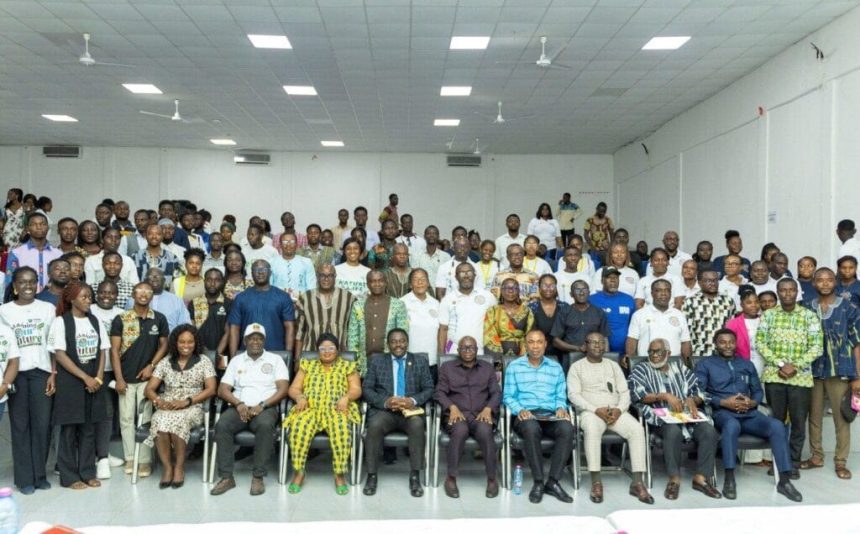
Professor Gyampo made the call at a dissemination and media engagement workshop in Tamale organised under the Waste Reduction and Management by Implementing Circular Economy in Western Africa (WARM) Project.
The project is partly implemented by researchers at the Energy Technology Centre (ETC) of the School of Engineering, UDS, with financial support from the ERASMUS-EDU-2024-CBHE-STRAND-2 Programme.
The workshop brought together journalists and environmentalists to discuss strategies for effective waste reporting and the promotion of circular economy principles in Ghana and the West African sub-region.
The engagement formed part of the WARM Project’s implementation activities and was organised to disseminate findings from surveys on Ghana’s waste management sector, while highlighting gaps in policy implementation and public behaviour.
Professor Gyampo said preliminary survey findings had revealed a shortage of expertise in waste management in Africa, necessitating collaboration between universities in Europe and West Africa under the WARM Project.
He said Ghana, Burkina Faso, and Sierra Leone, with technical support from European partner institutions, were working to build capacity in waste management education and research in West Africa.
Professor Gyampo noted that although Ghana had adequate policies and laws on waste management, weak enforcement and limited public awareness remained major challenges.
“We are not doing right because policies are sitting in books. The problem is enforcement and lack of information. People are literate but ignorant in certain knowledge areas,” he said.
He said journalists could help bridge the knowledge gap by translating technical research and policy issues into messages that the public could easily understand, thereby facilitating effective policy implementation.
Dr Mubarick Issahaku, Acting Head of the ETC at UDS, described the current waste management situation as discouraging, citing widespread plastic pollution and inadequate wastewater management. He called for increased investment in human resources and technology.
Dr Issahaku urged the public to take responsibility for waste disposal at homes, workplaces, schools, and social spaces, stressing that behavioural change was essential to achieving a cleaner environment.
Dr Abubakari Zarouk Imoro, Head of the Department of Mechanical and Industrial Engineering at UDS and Principal Investigator for the WARM Project, said that although Ghana had made some progress, significant investment was still required in human resources and technology to improve the sector.
“We need to rethink and take responsibility for handling our waste. Plastics and other waste must be disposed of responsibly to reduce environmental pollution,” he said.
Mr Abdul-Hayi Moomen, Director of Public Affairs at UDS, encouraged journalists to adopt solutions-oriented reporting by highlighting best practices, community innovations, and recycling initiatives to support circular economy efforts.