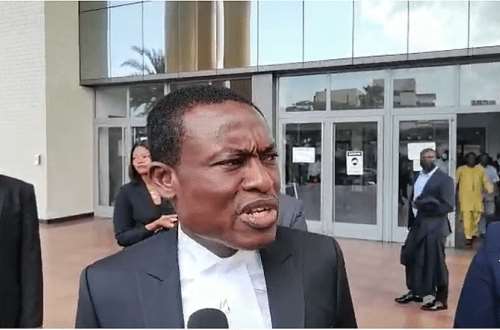
The biblical story of John the Baptist who was beheaded for condemning corruption in the king’s court is not just an ancient tale. Here it reflects a stark parallel in the intense pressures and public campaigns against Ghana’s Special Prosecutor, Kissi Agyebeng. When the messenger becomes the target, it is often a sign that the message is hitting its mark, and is hitting hard. The real question for Ghana is no longer just about individual scandals, but whether its institutions and public will can protect the integrity of the fight itself or if the anti-corruption crusade will be sacrificed for political convenience.
When John the Baptist’s head was demanded on a platter, the gruesome scene exposed a toxic mix of personal vendetta, political theater and a leader more concerned with appearances than justice. In Ghana today, a vocal public drawn from both sides of the political aisle is calling for the removal of Special Prosecutor Kissi Agyebeng, while, in the dark, partisan actors and private interests sniff opportunity. The danger is the same now aa it as then – the ritual of removal risks serving the powerful more than it serves the people.
As the public protests demand the Special Prosecutor’s ousting, the substance of the complaints and the political context really do matter. If demands are shaped and amplified by partisan leaders or by individuals whose ultimate aim may be to replace the officeholder, the result is not accountability but capture. Simply put, asking for a head can be a naked grab for power, not a call for cleaner institutions.
Why this matters is because the stakes are national. Civil society estimates that Ghana annually losses to corruption in the order of billions, around US$3 billion per year – money that could instead fund health, education, roads and jobs. Money that could fund Ghana’s transformation. When institutions meant to investigate and prosecute grand corruption are weakened by politics, the system tilts in favour of impunity and the political class often becomes the primary beneficiary. Citizens, not politicians, pay the bill.
History has showed us the cost of institutional fragility. The resignation of Ghana’s first Special Prosecutor, Martin Amidu, in November 2020 was widely mourned by anti-corruption advocates as a national loss and, some argued, a political gain for entrenched interests that prefer opaque governance. Losing an independent or perceived-independent anti-corruption figure often empowers those with the most to hide and it undermines public trust in the rule of law.
Ghana is not alone in seeing a civic backlash when leaders touch anti-corruption bodies. In Ukraine in July 2025, mass protests erupted after laws perceived as curbing the independence of the National Anti-Corruption Bureau (NABU) and the Specialized Anti-Corruption Prosecutor’s Office were pushed through. The outcry of the Ukrainian public underscored how Ukrainians view anti-corruption institutions as national safeguards, not political playthings. That example should remind Ghanaians that weakening or purging prosecutorial independence provokes public resistance and damages a country’s democratic credentials.
The John-the-Baptist analogy is a useful civic rhetoric and it crystallizes how private grudges and public spectacle can destroy moral and institutional authority. The John the Baptist analogy should pair the ethical lens with facts, to flag who benefits from a removal and to ask institutional reform, transparent investigations and safeguards that insulate the Office of the Special Prosecutor from partisan capture. If Ghanaians insist on justice, we must insist on rules that outlast any single head on a platter.
Is our outrage genuine? Or are our calls to scrap the Office of the Special Prosecutor or remove its head merely fulfilling a partisan script, which undermines the very fight against corruption we claim to champion?
I ask again,
Is this righteous anger or are we being played? Does our frenzy to remove the anti-corruption Czar say less about his failures and more about our comfort with the corruption he/his office threatens to expose.