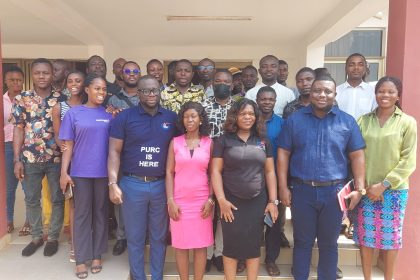
The Klo Kane Foundation, in collaboration with the Light for the Eye Foundation (Oogzorg op Locatie) from the Netherlands, has conducted a free eye‑screening exercise for residents of Lower Manya Krobo in the Eastern Region.
The outreach covered several communities, including Oborpah West, Asitey, Osupanya, Adjikpo Yokunya, Odumase-Krobo, Nuaso and Asesewa.
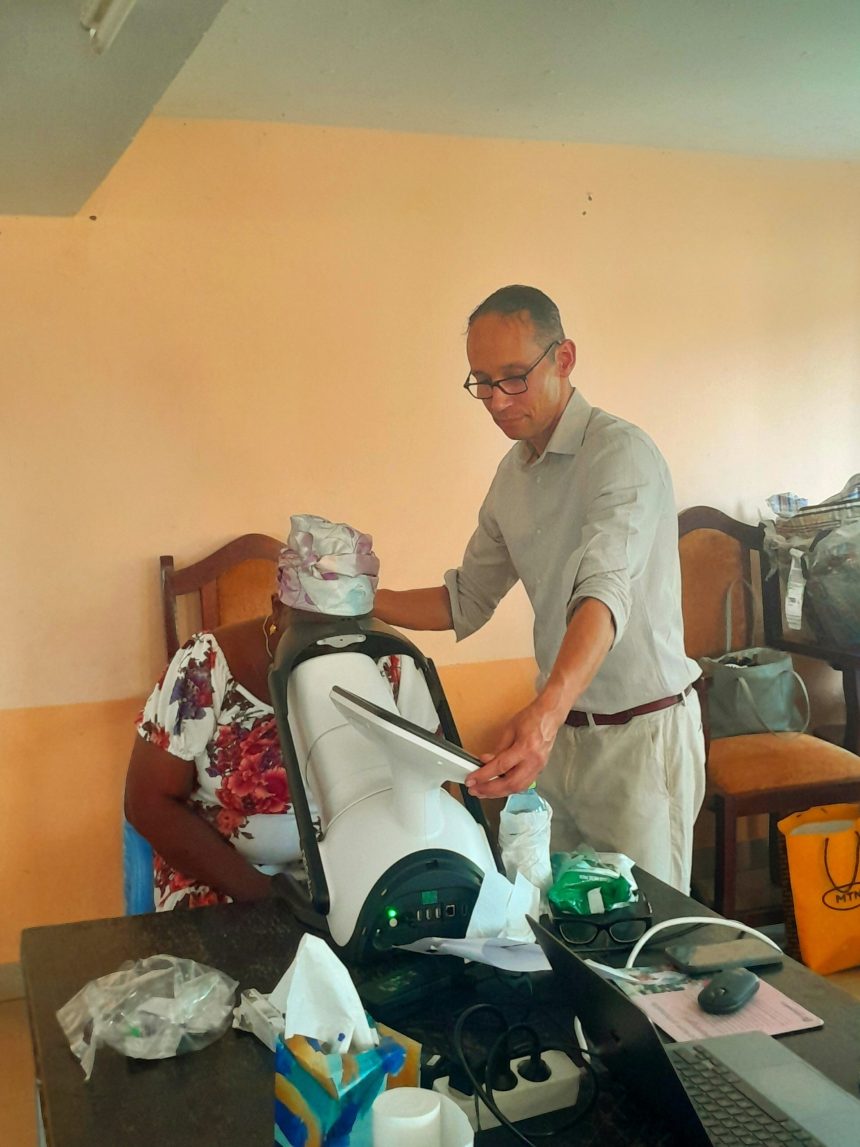
Activities undertaken included medical eye screening, AI‑assisted retinal photography, cataract and glaucoma assessments, and the distribution of free corrective glasses.
Dr Johannes Schoonhoven, a Dutch optometrist, told the Ghana News Agency that the initiative was organised “for the sake of God, to give back to society and help people.”
He said a significant number of residents screened were diagnosed with glaucoma and cataracts and were counselled on ways to manage their conditions.
“Our target is to screen about 1,000 people from these communities,” he said, noting that many older adults live with untreated eye problems.
He added that prolonged exposure to sunlight contributes substantially to eye conditions among both the young and the aged, stressing the importance of protective eyewear and routine check-ups.
Manye Angmorkuor Yoko I, Development Queen Mother of the Manya Krobo Traditional Area and Executive Director of the Klo Kane Foundation, said the exercise was the foundation’s first project of its kind.
She acknowledged the support of Ms Marian Mateko Asamoah, a Netherlands‑based Ghanaian who collaborated with the foundation to make the programme possible.
She explained that the team used sophisticated equipment that allows images captured during screening to be transmitted to the Netherlands, where prescriptions are prepared, and glasses returned within 60 days.
She added that some patients had also been referred for free treatment based on their conditions.
Manye Yoko, said she noted that Ms Asamoah’s own eye challenges while living in the Netherlands inspired her to initiate the partnership, after experiencing the effects of prolonged exposure to Ghana’s intense sunlight.
She added that dietary and lifestyle factors, including diabetes, continue to increase the burden of eye‑related diseases in the area.
Dr Dillys Amego, a Lecturer and Optometrist at the University of Cape Coast’s School of Optometry and Vision Science, highlighted the high prevalence of glaucoma in the Lower Manya Krobo area.
She described glaucoma as a silent disease that progressively damages vision, stressing that blindness resulting from it is irreversible, though preventable through early detection.
She urged adults aged 40 and above, particularly those with a family history of blindness, to undergo yearly eye examinations.
A beneficiary of the exercise, Ms Gifty Korleki Larnoh, said she was unaware that her blood pressure and diabetes had affected her vision.
She has since been referred to the Saint Martin de Porres Catholic Hospital for further management.
The screening exercise underscored the need for regular eye checks, the use of protective eyewear, and greater lifestyle awareness in preventing eye diseases within the region.