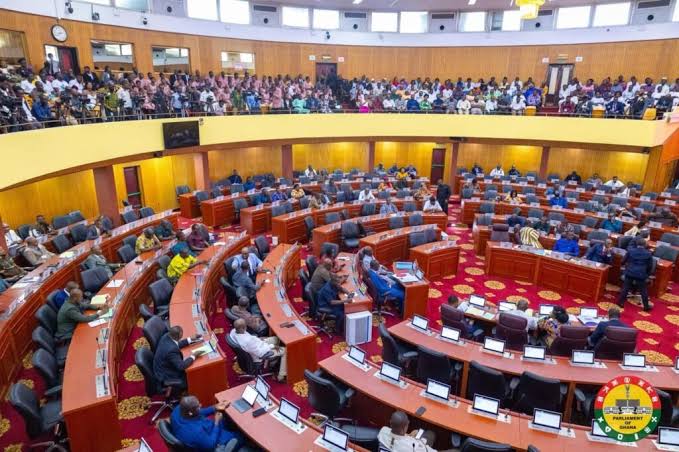
Ghana’s first major lithium project has become the centre of a growing political and public dispute, as Parliament again considers a renegotiated mining lease that critics say sharply reduces the country’s expected benefits from the Ewoyaa deposit in the Central Region.
The current controversy turns on a simple but consequential shift. The government originally announced that Ghana would receive a 10 percent royalty from the project. The revised agreement now before Parliament no longer includes that rate. Instead, it states that the company will pay the royalty “prescribed by law”, which is currently five percent.
Government officials say the earlier 10 percent rate could not be enforced because the Minerals and Mining Act fixes royalties at five percent. They argue that the Executive cannot impose a higher charge through a contract without amending the law first. The Lands Ministry maintains that the revised lease conforms with existing legislation and that a move to 10 percent would require a legal change.
The Minority in Parliament, civil society groups and some chiefs reject this explanation. They argue that Ghana has previously set royalty rates through negotiated contracts and that the original 10 percent provision was both legal and justified for a mineral as strategic as lithium. For them, the new agreement represents a retreat and undermines Ghana’s leverage at a time when global demand for battery minerals is rising.
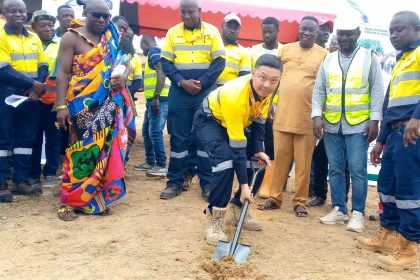
The Ewoyaa project first gained public attention in 2023 when government announced what it described as a groundbreaking agreement with Barari DV Ghana Ltd, a subsidiary of Atlantic Lithium. Alongside the 10 percent royalty, the deal included a 13 percent free carried interest for the state, additional equity through the Minerals Income Investment Fund and a commitment to build a chemical plant in Ghana. Officials presented it as evidence that the country was finally extracting better terms from its minerals.
Debates soon followed over whether even the 10 percent royalty was sufficient or whether Ghana should have secured more. At the same time, some analysts welcomed the agreement as the country’s strongest mining lease in decades.
The dispute sharpened when questions were raised about whether a 10 percent royalty could stand without amending the mining law. Government now says the original figure was inconsistent with the statute, a claim many legal analysts dispute. They argue that Ghanaian mining agreements have long included terms that differ from the statutory rate and that the Executive retains discretion in contract negotiations.
The revised lease laid before Parliament immediately triggered strong criticism. The Minority says the country is giving up too much for too little, especially after months of public assurances that Ghana would secure better deals for green minerals. Chiefs and residents in the project area have also expressed concern, warning that the burden of mining will fall on local communities while state revenue falls.
The government’s defence focuses on economic conditions. Lithium prices have fallen since the original agreement, and officials say insisting on the initial royalty and equity terms could make the project unviable. They argue that Ghana still secures strong participation through the state’s carried interest, equity arrangements and the requirement for value addition in-country.
The debate now sits at the intersection of law, politics and national strategy. Civil society groups see the royalties fight as a test of whether Ghana can break with a history of weak mining deals and negotiate from a stronger position in the emerging global energy transition. Government insists it is committed to fair returns but must operate within the law and the realities of the market.
Parliament has not yet ratified the revised lease. With public pressure mounting, the dispute has broadened into a wider conversation about how Ghana should manage its mineral resources and whether lithium will mark a turning point or repeat familiar patterns.