Ministries, Departments and Agencies (MDAs) have been asked to seek legal advice from the Office of the Attorney General and Ministry of Justice on their various agreements to avert judgment debts.
The MDAs should submit various agreements to the Office of the Attorney General and Ministry of Justice to go through them and take out clauses which could result in judgment debts.
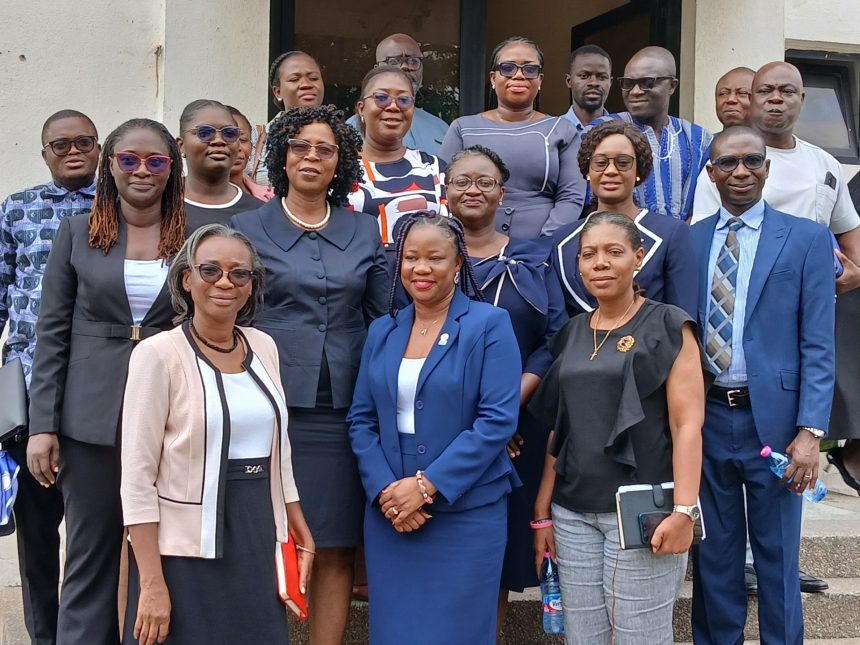
Mrs Nancynetta Twumasi Asiamah, Principal State Attorney, Civil Division, Office of the Attorney General, said this at the Stakeholders Sensitisation Programme in Accra on Friday, adding: “We should look at the AG as a partner in protecting state resources.”
The meeting sought to offer the various MDAs the opportunity to familiarise themselves with the operations of the Attorney General’s Office, ascertain their challenges and find solutions.
Mrs Asiamah noted that some agreements submitted to the Office were excellently written but others had various clauses hidden in them, which when breached resulted in various judgement debts.
She noted that sometimes some of the drafts of the agreements looked different from what the MDAs signed.
Mrs Asiamah tasked the MDAs to keep copies of the signed agreements to be used for evidential processes whenever a litigation erupted. She charged them to also keep copies with the Public Records and Archives Administration Department (PRAAD) for reference purposes when institutions were dragged to court.
In some instances, some agreements could not be traced, making it difficult to defend cases against MDAs whose accounts were sometimes garnesheed, Mrs Asiamah said.
“When we are signing agreements, let the Office know and let us give our input,” she added.
The Principal State Attorney said regulations were being developed to sanction officials whose actions led to the loss of state funds. She discouraged officials from making verbal agreements on purchases and supply of goods and services, which were normally not documented.
Nana Ama Adinkrah, a Senior State Attorney, said the police had been given a fiat to prosecute some cases. However, in cases of murder and after their investigations, the police forwarded dockets to the Attorney General for advice.
Ms Adinkrah said the Office of the Attorney General also received petitions from the public on human rights breaches. It also reviewed plea bargaining requests of people, she noted, adding that “it is only the AG that has the power to sanction plea bargaining requests.”
Mrs Helen A. A. Ziwu, Solicitor -General, in a speech read on her behalf, said the Ministry of Justice played a central coordinating role in the administration of justice, providing legal advice to government, criminal prosecution, legislative drafting, public education on the law and the promotion of human rights
Giving those wide mandates, Mrs Ziwu said it was essential that stakeholders had a clear understanding of how the Office of the Attorney General and Ministry of Justice worked, and procedures guiding their operations.
She said the sensitization was therefore timely, which provided an opportunity to clarify their internal processes, outline recent reforms and highlight home grown initiatives aimed at enhancing efficiency and service delivery.
Stakeholders were briefed on the mandate of the Public Prosecutions Division and enactment process for Substantive and Subsidiary legislation in Ghana.