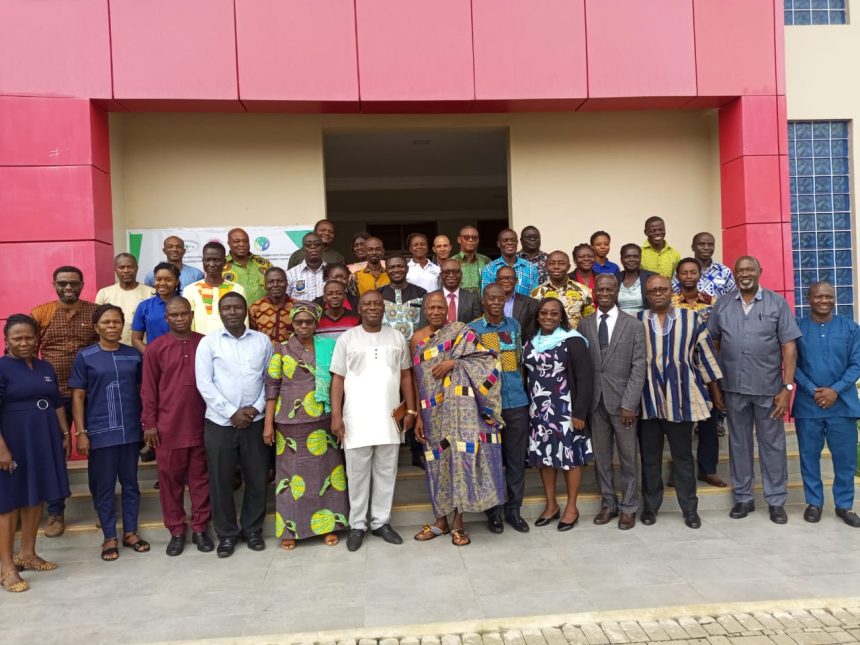
The Ministry of Local Government, Chieftaincy, and Religious Affairs (MLGCRA) in collaboration with the United Nations Population Fund (UNFPA), has engaged Faith-Based Organisations in the Eastern Region to discuss strategies to strengthen collective effort to end Gender-Based Violence (GBV).
Among the issues discussed were child marriage, teenage pregnancy, and gender equity.
The meeting explored resources available to Faith-Based Organisations to support the initiative and foster positive change within their communities.
Gender-based Violence is any form of violence committed against a person because of his sex, gender, and vulnerability.
The forms are sexual violence, physical violence, emotional or psychological violence, and other harmful practices such as child marriage.
Addressing participants in Koforidua, Madam Stella Someah-Kawa, Assistant Director of the Eastern Regional Coordinating Council, who represented the Minister for Local Government, Chieftancy, and Religious Affairs, said GBV and child marriage were practices that undermined the dignity of our people and future of the children.
She said the MLGCRA recognised the unique influence of faith leaders in shaping values, guiding communities, and inspiring change.
The fight against GBV and child marriage is not only a government priority, but a moral and spiritual imperative.
The Ministry expressed gratitude to the UNFPA for its steadfast partnership and support.
” We seek to build bridges between policy and practice, between faith and civic responsibility, so that every child in Ghana can grow free from violence and coercion. ”
Mr. Faisal Bawa, National Programme Analyst, Gender-Based Violence, UNFPA said in Ghana, child marriage was ongoing, although the prevalence rate was not as high as GBV.
He said the global target of the Sustainable Development Goal (SDG) five aimed to close the gender gap and ensure equal opportunities for all by 2030 and called on all and sundry to put in more efforts to achieve the goal.
Among the participants were representatives of the Eastern Regional House of Chiefs, the Gender Desk Officer, Regional Coordinating Council, National Peace Council – Eastern Region, Catholic Diocese – Eastern Region, Ghana Fellowship of Evangelical Students, the Ameer of the Ahmadiyya Muslim Mission, President – Coalition of Muslim Organisations, Ghana (COMOG), and the National Council of Traditional Priests and Priestesses.