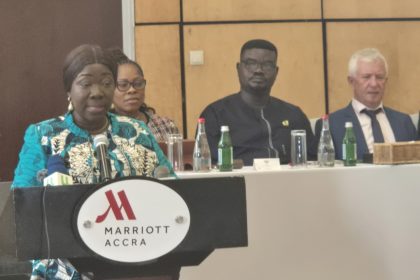
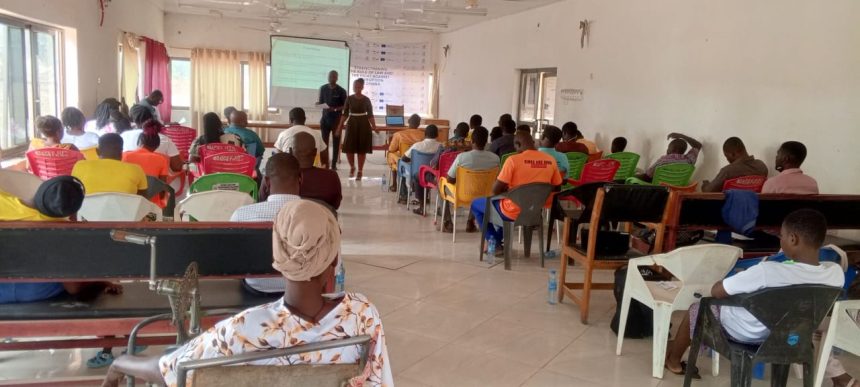
The National Commission for Civic Education (NCCE) in the Nabdam District has organised a public engagement to equip residents with knowledge and practical tools to promote social auditing, strengthen the rule of law, and intensify the fight against corruption.
The engagement, held at the Nabdam District Assembly, formed part of civic engagement activities under the Participation, Accountability and Integrity for a Resilient Democracy (PAIReD) programme aimed at strengthening public accountability and citizen participation in local governance.
The programme, commissioned by the German Federal Ministry for Economic Cooperation and Development (BMZ), is co-financed by the European Union and the Swiss State Secretariat for Economic Affairs (SECO), and implemented by GIZ and the Ministry of Finance.
Mr Joachim Elbazar, the Nabdam District Director of the NCCE, said the rule of law and public accountability remained fundamental pillars of democratic governance and sustainable development.
He explained that public accountability operated on both the supply and demand sides, noting that while public office holders were required to act within the law, provide information, justify decisions, and deliver services responsibly, citizens also had a duty to seek information, monitor public actions, and hold duty bearers accountable through lawful and participatory means.
“Effective governance is achieved when empowered citizens engage constructively with responsive institutions within a framework anchored in transparency and respect for the rule of law,” he stated.
Mr Joachim acknowledged that although Ghana had established various laws, policies, and institutional mechanisms to promote accountability, challenges remained in translating these frameworks into meaningful citizen participation, particularly at the local level.
He observed that limited awareness of local government operations and weak citizen-state engagement constrained citizens’ ability to demand accountability and monitor public service delivery, thereby weakening public trust and creating room for inefficiencies and corrupt practices to persist.
Ms Patricia Ayichuru, the Nabdam District Director of the Commission on Human Rights and Administrative Justice (CHRAJ), presenting on accountability mechanisms, urged participants to seek information and utilise established legal channels to hold duty bearers accountable.
She stressed that informed and active citizens were essential to curbing corruption and promoting transparency in governance.
Mr Francis Yenwona Tobig, the Nabdam District Chief Executive, reaffirmed his commitment to open and inclusive governance, emphasising that his doors were open to all residents willing to contribute to the development of the district.
He encouraged citizens to participate fully in the district’s development agenda and to hold duty bearers accountable responsibly and constructively.
Mr Anaba Leuis, a participant, noted the need for duty bearers to act in ways that would boost public confidence rather than victimise citizens who demanded accountability.
He called on residents to remain vigilant and report any wrongdoing, describing such actions as crucial steps in limiting corruption in the district.
The engagement formed part of ongoing efforts by the NCCE and its partners to deepen democratic governance, strengthen citizen participation, and promote integrity in public administration at the grassroots level.