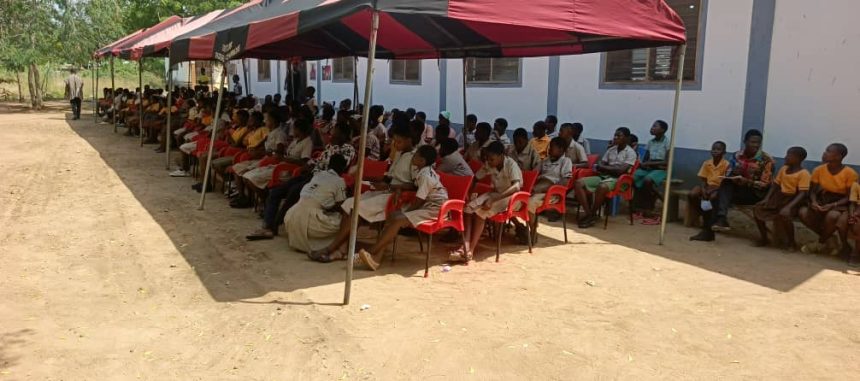
The Volta Regional Department of Children, under the Ministry of Gender, Children and Social Protection, has held a community sensitisation programme on visual impairment for children at New Bakpa, in the Central Tongu District.
The programme formed part of the “Holistic Development Programme for Visually Impaired Children (HODVIC),” a five-year intervention being implemented in partnership with Dutch Visio and the Presbyterian Health Services.
The initiative focuses on early detection, identification, screening, assessment, referral, and proper care for children under 15 years with visual impairment.
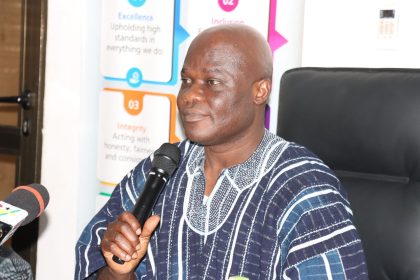
Mr Israel Akrobortu, Volta Regional Director of the Department of Children, said vision played a critical role in child development, making early intervention essential.
He noted that the HODVIC initiative had already supported communities in Wli, Fodome, Alavanyo, and Hohoe, where parent support groups had been formed to strengthen care systems for visually impaired children.
He said the team had earlier trained parents and caregivers in Hohoe in livelihood skills, while engaging them in strategies to improve the welfare of their children with visual impairment.
Mr Akrobortu reminded the community that Ghana was the first country to ratify the United Nations Convention on the Rights of the Child, which emphasised non-discrimination, the best interest of the child, the right to life, development, and participation.
He mentioned that the sensitisation sought to educate parents and caregivers on the causes, effects and treatment of visual impairment, identify affected children, and establish a parent support group in the Bakpa community.
The Director appealed to families, traditional authorities and the wider public to support visually impaired children, stressing that they are entitled to quality education, healthcare and protection.
“These children can become resourceful citizens and contribute to national development if they are given the right support,” he said.
Mr Lucky Atokple, Central Tongu District Social Welfare Officer, described the programme as a significant step toward promoting inclusion and equal opportunities for all children.
He said children with visual impairment deserve dignity, empowerment, and access to essential services.
“Every child matter, and disability is not inability. Let us challenge misconceptions and ensure that no child is left behind,” he said.
The event featured free eye screening for schoolchildren and community members, as part of efforts to promote early detection and treatment of visual problems.