
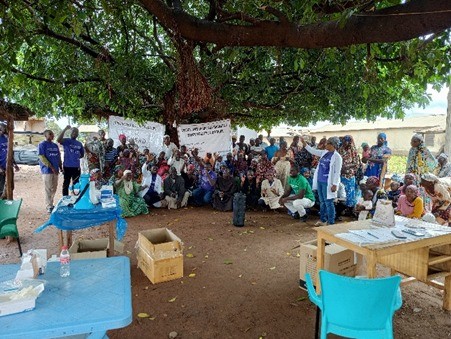
Over 600 people in three communities in the Jirapa Municipality have received HIV, Hepatitis B Virus (HBV) and Hepatitis C Virus (HCV) testing in a community-based health awareness, screening and testing campaign.
Out of the 647 people that registered for voluntary screening, testing and counselling, 13 tested positive for HCV, 19 for HBV, while three had HIV, and all were referred to the Clinic for treatment
The screening exercise was organised by Sahara Advocates of Change (SAC) in partnership with the Hain Polyclinic in the Ping, Nindoo and Hain communities as part of the “Knock and Respond: Breaking Stigmatisation Barrier” project.
The project was being implemented by SAC, in collaboration with the Hain Polyclinic, with support from Gilead Sciences, to encourage registered clients to take their regular medications and to create community solutions to reduce stigma and virus spread.
A statement by SAC to the Ghana News Agency (GNA) in Wa indicated that the project was also to raise awareness and educate the people on HIV, HBV and HCV, and encourage early detection and treatment.
“About 2,000 rural community members were sensitised and now have a clearer perspective of what the diseases are and their impact on their lives if they get it”, the statement said.
It indicated that stigma had forced about 50 HIV and 25 HBV clients who were receiving medication at the Hain Polyclinic to relocate to other communities to access care.
The statement, therefore, said the campaign facilitated community-led dialogue on addressing stigma and preventing further spread of the diseases, with each community providing its solutions in that regard.
In the Ping community, for instance, the people expressed resolve to, among other things, not discriminate against persons living with those diseases and to ensure their inclusion in communal activities.
The statement said the Chief of the Nindoo community also encouraged his subjects to support persons living with those diseases by engaging them in communal activities.
In Hain, the women and community leaders called for moral support and inclusion of persons living with HIV and hepatitis in community activities.
They also emphasised the need for precautionary measures to prevent transmission of those conditions.
The statement attributed the relatively high prevalence of those conditions in the area to some cultural and hygiene practices, including sharing calabashes, open defecation and poor handwashing habits.
According to the statement, the leadership of the Hain Polyclinic expressed gratitude to SAC and Gilead Sciences for the campaign.
They said it would contribute to increased awareness and reduced stigma and transmission rates of those diseases in the area.
Madam Rubelyn Yap, the Executive Director of Sahara Advocates of Change, said the project had achieved its objectives, particularly in creating community-driven solutions to reduce stigma and virus spread.
She noted that the campaign had improved HIV, HBV and HCV awareness in those communities and urged newly diagnosed persons to begin treatment.
Madam Yap also encouraged people to get tested to know their status and to receive treatment without fear of discrimination.