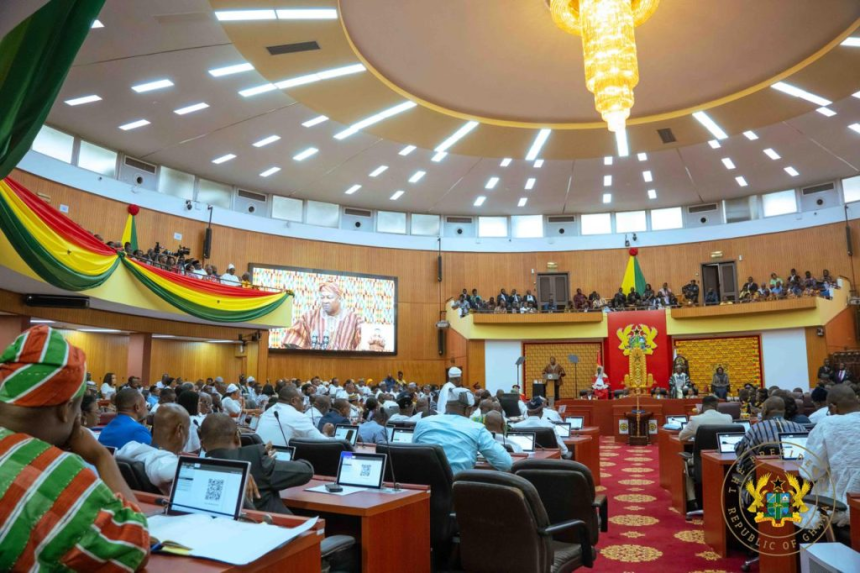
Parliament erupted in drama and symbolism on Friday as President John Dramani Mahama presented the 2026 State of the Nation Address, in fulfilment of his constitutional obligation under Article 67 of the 1992 Constitution.
The Ghana News Agency observed members of the Minority caucus dressed in black, with sashes inscribed “Ya yɛ mobo dodo”—to wit “we are too pitiful.”
They rose to their feet holding cocoa pods and singing in protest, a gesture symbolising their dissatisfaction with the recent decline in global cocoa prices, which they said had left Ghanaian farmers exposed and struggling.
In contrast, the Majority side appeared in white apparel, applauding and hailing the President throughout the address and describing him as “the best,” as he outlined progress made by his government and priorities for the year.
President Mahama declared that “Ghana is back, Ghana is working again,” describing the state of the nation as resilient. He urged Ghanaians not to give in to challenges but to embrace renewal, growth, and national determination.
The President lightened the atmosphere when he made a humorous reference to Minority Leader Alexander Afenyo-Markin, after mentioning former Minister of Defence Dominic Nitiwul, in relation to cocoa pricing.
“I and Nitiwul are from the North; you, Afenyo, you are from Winneba,” he quipped, drawing laughter across the chamber.
The session concluded with the Minority booing while Majority members responded with cheers and chants of praise.
However, in a moment of camaraderie after proceedings, President Mahama was seen in a hearty conversation with Mr Afenyo-Markin, highlighting the personal bonds that persist beyond political differences.
The President’s address touched on key sectors including health, education, agriculture, infrastructure, and the fight against corruption, reaffirming his government’s commitment to justice, accountability, and improved national development.