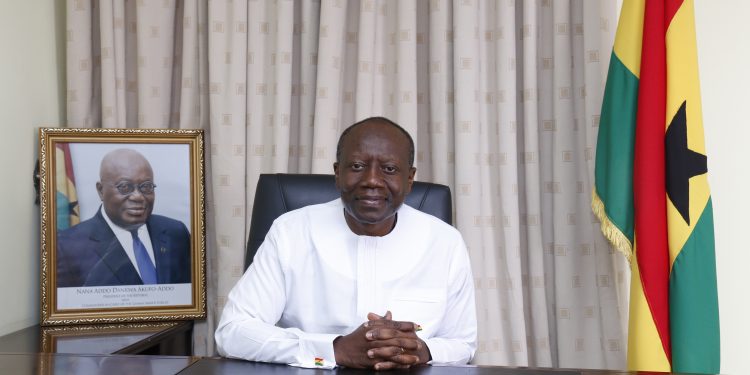
Dr. Kenneth Ashigbey, the Chief Executive Officer (CEO) of the Ghana Chamber of Mines, has stated that local manufacturing should be prioritized in Ghana ’s mining industry.
He said with mining, there was the need to look at the whole value chain and see how Ghanaians could make extra value out of the industry.
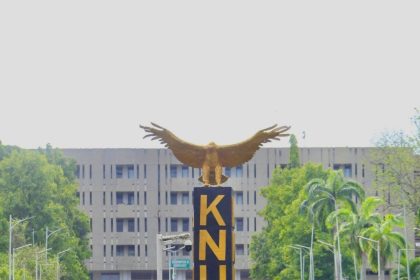
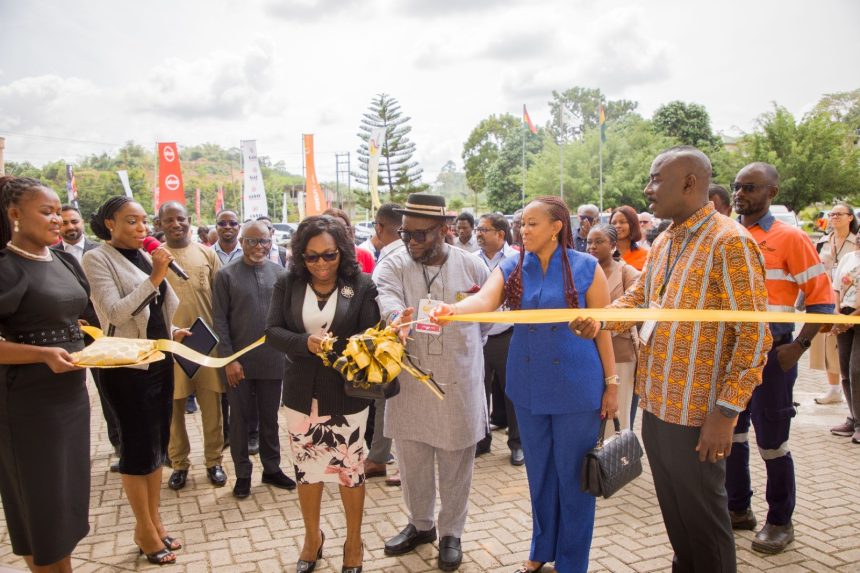
Addressing mining companies, suppliers, policymakers, financial institutions, and academia at the opening ceremony of the 2025 Mining Industry Marketing Expo (MIME) at the University of Mines and Technology (UMaT) in Tarkwa,Dr Ashigbey revealed that last year the industry spent $3.5 billion on local products and services, including fuel and electricity.
He said “A large chunk of this $3.5 billion that we are calling local content, there was not a company or somebody in Ghana who took the order and imported it from elsewhere. For the Chamber, this is where we believe that there should be a shift in paradigm”.
“We believe that before the last ounce of gold, ton of manganese, bauxite or diamond would be taken out of the ground, we should shift to manufacturing industries that add value, so that the $3.5 billion that was spent by the mining industry, that equates to about 49 per cent of the value that even the owners of Mines do not get, we can get Ghanaians owning that and we don’t just play in the intermediation” he added.
He noted that Ghana would only get the added margin from the $3.5 billion, if they followed the path some of their members were taking, for instance the platinum sponsor for this year’s event, Star Steels Limited, had started producing grinding mill that matched global market standards in Ghana.
The CEO said “If we get our mining companies buying it, the jobs and profits will stay in Ghana, and they will pay taxes based on it. We have Qualiplast Limited and Mark Partners also producing components in Ghana. This is what we want to encourage”.
Dr Ashigbey announced that the chamber was not just advocating and pushing their members to do it, but they had matched their words with actions and investments, adding, “So, in UMaT for instance, we are working with some of the professors, led by Professor Buah, to look into the issues of activated carbon.
According to him, there was a $40 million demand for activated carbon every year but majority of that was imported, so working together with UMaT they were trying to get a local substitute for that.
“Activated carbon, he explained,” come from palm kennel shells, coconut shells and even bamboo, so what is happening is that prof. Buah and his team have put together a reactor to produce that. The product has been tested by some of our Mines, and they have been found to meet the quality standard”.
He suggested that with the activated carbon, they could reclaim lands damaged by illegal mining by planting oil palm and coconut trees to produce the kernels and shells they needed.
Additionally, he stated that it was not just about products, but services played a big role, stressing that they could focus on training and localizing some of the services they required
“Our goal is to provide services not just locally, but also to other mining jurisdictions. The purpose of the Mining Expo was to connect member mining companies and suppliers to push their agenda.
So, that by 2028, when the Chamber turns 100, most of their local content would be locally manufactured in this country”.
Madam Victoria Awuni, the Deputy CEO of Minerals Commission in charge of Policy Planning, Mineral Titles, and Local Content, reiterated that achieving meaningful local content required collaboration, partnerships, and impactful joint venture, and that corporation had helped established an ecosystem that local businesses flourished.
She advised them to embed local content as part of their individual organizational culture, as opposed to just satisfying Minerals Commission regulations.
Madam Awuni said they should work together to ensure that local content remained at the heart of mining, because when local communities thrived, the entire industry and the nation thrived.
Mr. Udbhav Bhuwalka, a member of the management team for Star Steels Limited, on his part said, earlier this year, they commenced operations of their Forged Grinding Media plant to become an integrated local producer for the Ghanaian mining industry.
He said through this they created 700 direct and 500 indirect jobs across manufacturing, logistics, and technical services.
Mr. Udbhav said aside offering intensive training for local engineers, metallurgists, and technicians to global industry standards, they had partnered with Ghanaian suppliers for raw materials, packaging, and transport, thereby strengthening local Small and Medium-Sized Enterprises (SMEs).
Mr Ebenezer Cobbinah, the Municipal Chief Executive ((MCE) of Tarkwa Nsuaem, lauded mining industries that had supported and effectively collaborated with the assembly over the years in education, health, security, roads, and sanitation.
He said this had installed pride and addressed specific needs in the communities where these projects had taken place.
Professor Mrs. Grace Ofori-Sarpong Akuffo, Pro Vice Chancellor of UMaT, who chaired the function, said they were proud to host the conference, citing the Chamber’s in valuable support.
She said they were equipping their students with the skills to fit into the industry, as new technologies were emerging, the processing routes were being modified because of the kind of ores that they were treating, and therefore, if they were closer to industry it would improve the way they trained their students.
The theme for the two-day event was “Local Content at the Heart of Mining” and it included exhibitions, business networking, and panel discussions on innovations and local content.