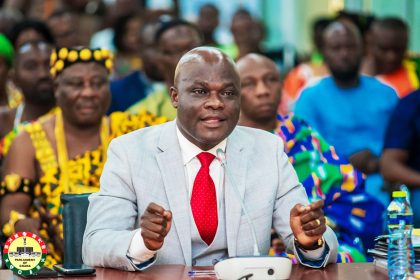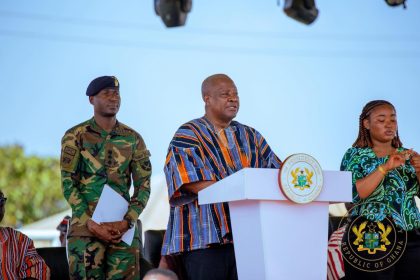
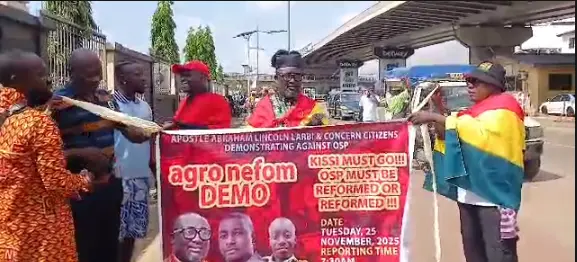
Thousands of protesters converged in central Accra on Tuesday calling for the dismissal of Special Prosecutor Kissi Agyebeng, accusing him of failing to deliver on the country’s anti-corruption agenda and misleading the public in recent high-profile investigations. The march, led by lawyer Martin Kpebu and religious leader Apostle Abraham Lincoln Larbi, drew a mix of civil society activists, professionals and ordinary citizens who said they had lost confidence in the Office of the Special Prosecutor.
Demonstrators began their procession in the morning, moving through major streets under heavy police presence before assembling near the Jubilee House, where leaders of the coalition formally presented a petition to the presidency. The Deputy Presidential Spokesperson received the document on behalf of President John Dramani Mahama.
Kpebu told reporters that the call for Agyebeng’s dismissal was rooted in what he described as questionable public claims made by the Special Prosecutor regarding attempts to arrest former Finance Minister Ken Ofori-Atta. He said Agyebeng had indicated that he sought assistance from the National Intelligence Bureau and Immigration authorities, assertions that the agencies had publicly contradicted. Kpebu argued that such contradictions undermined the credibility of the OSP and weakened public trust in an institution established to fight corruption at the highest levels of government.
Protest leaders also insisted that the office, established with strong public backing in 2018, had not demonstrated sufficient results to justify its continued operation. Some speakers said the country could no longer afford what they described as an expensive institution that was failing to meet its core mandate. Others urged the President to dissolve the OSP if the Special Prosecutor could not be removed promptly, arguing that the public’s expectations for accountability were being frustrated.
The petition handed to the presidency referred to several earlier requests for Agyebeng’s removal. Under Ghanaian law, such petitions must first be submitted to the President, who is required to refer them to the Chief Justice within seven days. If a prima facie case is established, a committee is set up to investigate the matter and make recommendations to the President.
Not all voices in the national conversation support the protesters’ demands. Some anti-corruption advocates have argued that the country should strengthen the office rather than weaken it, warning that sustained public pressure could harm a relatively young institution still finding its footing. They say that removing the Special Prosecutor could politicise the office further and undermine long-term efforts to build an independent anti-corruption body.
The Mahama administration now faces a delicate balance. Officials have affirmed the right of citizens to protest and petition the government, but any move to remove or publicly rebuke the Special Prosecutor could draw criticism from transparency groups who fear political interference. At the same time, ignoring the growing public dissatisfaction could carry its own political risks, particularly as activists threaten to intensify their campaign if the presidency takes no action.
The Office of the Special Prosecutor has not issued an official response to the protest. It remains unclear whether the presidency will refer the petition to the Chief Justice or take additional steps under the statutory removal process.
Tuesday’s demonstration has widened an already contentious debate about how Ghana’s anti-corruption institutions should function and be held accountable. As the government reviews the petition, the future of the OSP — and the credibility of the country’s broader anti-corruption framework — now hangs in the balance.