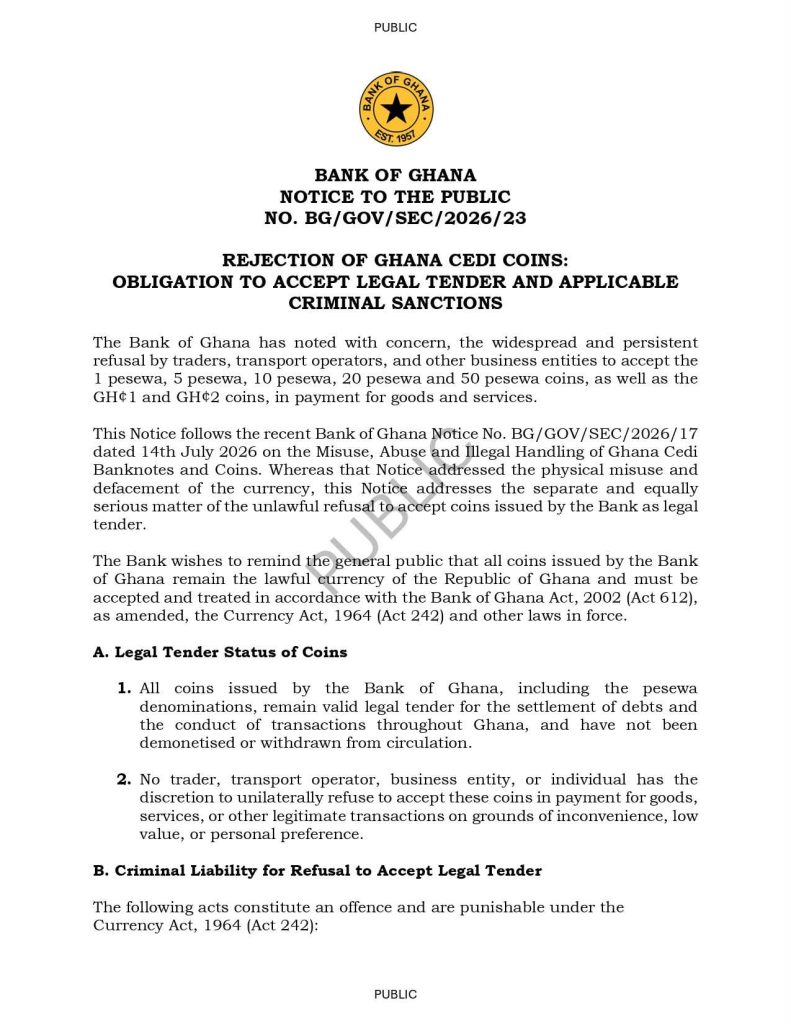

The Bank of Ghana (BoG) has issued a stern warning to traders, transport operators, and service providers, cautioning that the refusal to accept cedi coins in commercial transactions constitutes a criminal offence.
In a public notice released on Wednesday, the Central Bank emphasised that all coins it has issued, including the one pesewa, five pesewa, 10 pesewa, 20 pesewa, 50 pesewa, GHC1, and GHC2 denominations, remain legal tender and must be accepted in all commercial transactions nationwide.
The directive follows mounting reports that some businesses and transport operators have been rejecting coins, particularly the 20-pesewa denomination.
The BoG clarified that none of these coins have been demonetised or withdrawn from circulation, and therefore retain their full legal status for payment of goods and services.
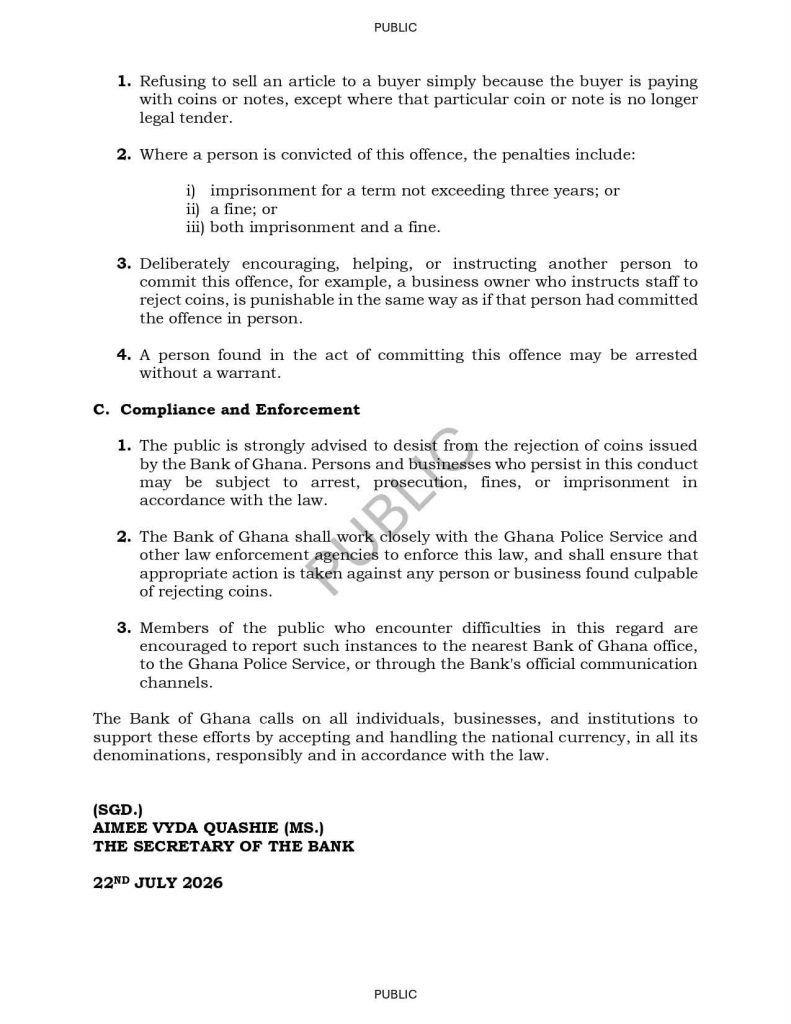
Citing the Currency Act, 1964 (Act 242), the Central Bank stated that refusing to sell goods or provide services solely because payment is tendered in coins or notes that are legal tender is an offence.
A person convicted under the Act is liable to imprisonment for a term not exceeding three years, a fine, or both, the notice added.
The BoG further warned that individuals who deliberately encourage, assist, or direct others to reject coins could also be held criminally liable and face the same penalties as principal offenders.
It added that a person found committing the offence could be arrested without a warrant.
“The public is strongly advised to desist from the rejection of coins issued by the Bank of Ghana,” the notice stated.
The Central Bank has indicated that it will collaborate with the Ghana Police Service and other law enforcement agencies to enforce the law and take decisive action against offenders.
It urged all individuals, businesses, and institutions to comply with the law by accepting all legal tender denominations in their daily transactions.