
Russia is expanding its network of cultural and educational centres in Africa as it seeks to strengthen ties beyond its military and security co-operation on the continent.
The centres will promote the Russian language, education, science and culture, while supporting various projects, Russia’s humanitarian agency says.
Known as “Russian Houses”, eight of 11 new centres are due to open in Africa, where 16 have already been set up over the years.
Russia’s state-controlled paramilitary force African Corps, which replaced the Wagner Group’s mercenary operations, has become a key security partner for multiple military governments in the West Africa in the fight against jihadist insurgencies.
In particular the juntas in Mali, Niger and Burkina Faso turned to the Russian mercenaries, now Africa Corps, as they sought to shrug off influence from their former colonial power France.
French and other anti-jihadist international forces have withdrawn from these countries, including the UN’s operation in Mali that ended in December 2023.
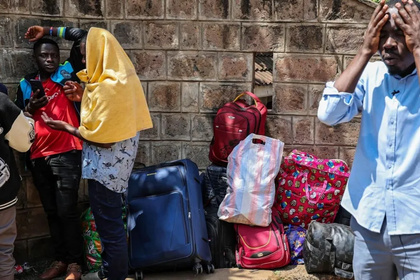
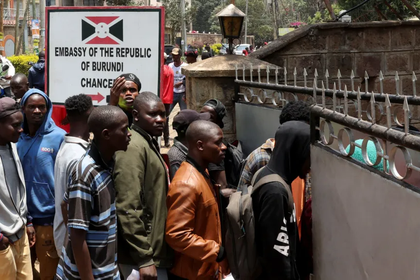
This year has also seen a surge in the reported number of African fighters caught up in the Russia-Ukraine war. Kenya, which has seen some of the highest numbers of recruits, blamed job agencies for luring men to Russia with work opportunities, only for them to end up fighting in Ukraine.
Russia has said its foreign recruits all joined voluntarily ”in full compliance with Russian law” – but agreed in March not to deploy Kenyans to the front.
According to Russia’s humanitarian agency Rossotrudnichestvo, Russia now aims to cultivate longer-term relationships through scholarships, universities, language programmes, cultural events and exchanges.
“We’re significantly changing the programme itself. We’re increasing the intensity of our work and the level of oversight,” said Igor Chaika, the head of Rossotrudnichestvo.
The new centres are due to open in the Democratic Republic of Congo, Kenya, Madagascar, Mali, São Tomé and Príncipe, Senegal, Sierra Leone and Togo.
Russia was looking for “tangible results” in promoting “the Russian language, Russian education, science, and culture”, Chaika added.
A new micro-grant programme would begin in 2027 to support educational, cultural, scientific, technological and youth projects abroad, Rossotrudnichestvo said.
The agency also wants stronger partner organisations to operate the Russian Houses across different African countries, to create what it described as a “full-fledged international network”.
Demand for partner Russian Houses had been growing, including from countries where the work of state institutions faced political restrictions, it added.
This latest announcement covers 11 additional sites, including two in Armenia, as well as locations in Thailand and eight African countries.
Chaika said they were particularly interested in fine-tuning the education programmes offered: “We must focus on who the country needs.
“If it needs doctors, we should train doctors; if it needs specialists in other fields, we should train those specialists.”
He also stressed the importance of foreign students returning home after studying in Russia, explaining that they could use their newly learnt skills to contribute to the economic development of their countries.
To support the growth, Rossotrudnichestvo said it had signed a separate agreement with the Association for Economic Cooperation with African Countries (AECAS).
This a Russia-Africa trade and business networking body set up by Russia’s President Vladimir Putin in 2020 – part of broader Russian efforts to maintain and build relationships with countries outside the West.