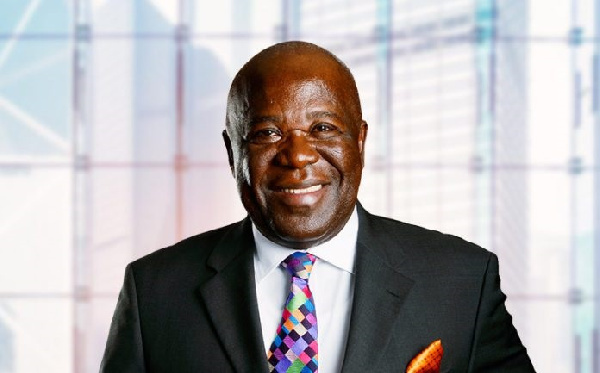
Sir Sam Jonah, one of Ghana’s most prominent business figures, has accused Nigerian authorities of effectively expropriating his business interests in Nigeria, after a long-running dispute over a major real estate development in Abuja escalated into what he describes as an unlawful administrative takeover of his companies.
In petitions to Nigerian authorities and Ghana’s government, Sir Sam alleges that regulatory actions by Nigeria’s Corporate Affairs Commission (CAC) stripped his companies of control by cancelling corporate filings, altering directorships and reallocating shareholdings, even though related matters were already before the courts.
The dispute centres on JonahCapital Nigeria Limited and Houses for Africa Nigeria Limited, two companies involved in the River Park Estate project in the Federal Capital Territory, one of the largest private housing developments in Abuja.
Sir Sam says the actions taken against his companies amount to expropriation, not through formal nationalisation, but through what he calls administrative interference that deprived the Ghanaian-led shareholders of their legal rights and control over the businesses.
According to his petitions, the CAC cancelled key corporate filings in December, with the effect of rolling back years of governance and ownership changes. Sir Sam argues that this move ignored existing court injunctions and ongoing litigation, and had the practical consequence of handing control of the companies to rival claimants.
At the heart of the dispute is a falling out between Sir Sam’s companies and a Nigerian businessman, Paul Odili of Paulo Homes Ltd, who was engaged as a local agent to help secure approvals for parts of the River Park project.
Sir Sam maintains that Mr Odili was never a shareholder or director in JonahCapital, but was compensated with land for services rendered. He alleges that Mr Odili later misrepresented himself as the owner of the estate, unlawfully obtained land title documents and sold or developed portions of the land without authorisation.
Mr Odili has publicly rejected those claims, insisting that he has legitimate rights in the project and that the estate cannot be taken from him. The competing claims have fuelled a complex legal battle involving civil suits, criminal complaints and regulatory interventions.
The matter has drawn in Nigeria’s police and political authorities. Sir Sam’s petitions say the Inspector-General of Police set up a special investigation panel in 2025 following complaints from both sides, but that the investigative process later became contentious, with rival reports and counter-allegations of bias.
The River Park dispute has also been examined by a ministerial committee in the Federal Capital Territory, with Nigeria’s FCT Minister, Nyesom Wike, publicly acknowledging the depth of the disagreement and the involvement of third parties in seeking approvals for the project.
The most sensitive aspect of the case, however, is the role of the Corporate Affairs Commission. Sir Sam and his executives have petitioned multiple Nigerian institutions, including the Attorney-General, anti-corruption agencies and the National Assembly, accusing the CAC Registrar-General of overstepping his powers and effectively determining the dispute through administrative action.
Nigeria’s House of Representatives has confirmed receipt of a petition on the matter, while some civil society groups have dismissed the allegations against the CAC leadership as unfounded, highlighting the sharply divided public narrative around the case.
The dispute has now taken on a diplomatic dimension. Ghana’s Ministry of Foreign Affairs has raised concerns at the regional level, petitioning ECOWAS over what it describes as interference with Ghanaian investments in Nigeria, and warning of broader implications for investor confidence and regional economic integration.
For Ghanaian officials, the Jonah case is being framed as a test of how West African states protect cross-border investments and resolve disputes involving foreign investors operating within the region.
Several court cases linked to the River Park Estate remain pending in Nigeria, while regulatory and parliamentary scrutiny continues. The outcome is likely to hinge on whether Nigerian authorities reverse or defend the CAC’s actions, how the courts rule on ownership and control of the companies, and whether regional diplomatic engagement leads to a negotiated resolution.