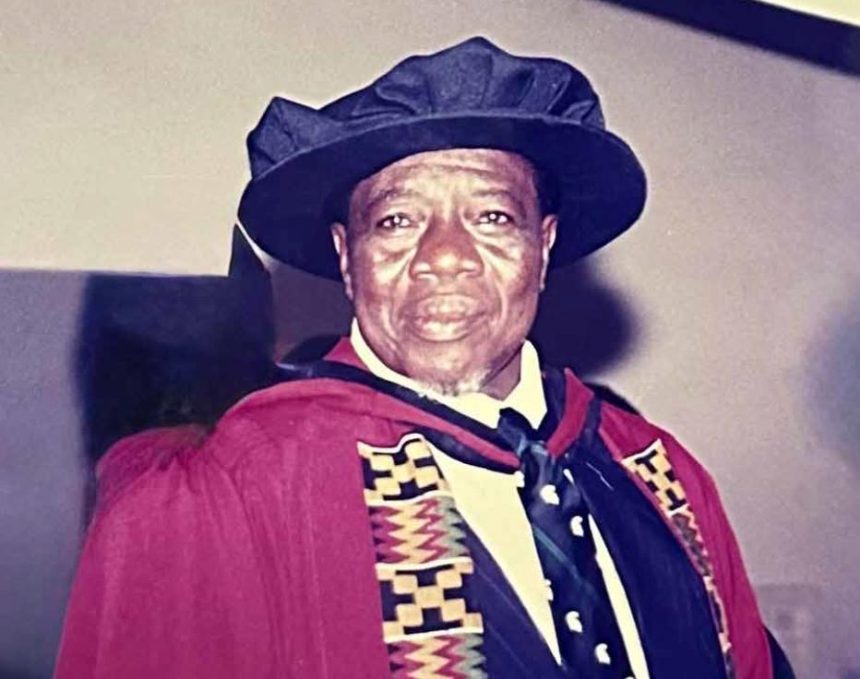
Naa Professor John Sebiyam Nabila, was a distinguished academic, traditional ruler and statesman who devoted his life to scholarship, public service and the preservation of Ghana’s chieftaincy institution. He was born on 15 December 1940 in Kpasenkpe, in what is now the North East Region of Ghana.
Known in public life as an eminent scholar and policy thinker, and in traditional circles as the Wulugunaba, he emerged from a background that combined modest rural beginnings with a strong lineage of leadership and service. He was the son aof the late Wulugunaba Sebiyam Barijesira, also known as Naa Taala, whose reign transformed Kpasenkpe into a thriving centre of trade, farming and fishing. His mother, Mma Adisa, of blessed memory, was the Paani, the first of his father’s official wives.
Prof. Nabila’s early education began in Kpasenkpe when the community’s first primary school was established. He often credited his formative years to the influence of dedicated teachers and mentors who instilled in him humility, discipline and a quiet determination to excel. He qualified as a teacher in the early 1960s, earning the Teachers’ Certificate “B” in 1960 and the Teachers’ Certificate “A” in 1963, before advancing to Sixth Form studies at Tamale Secondary School.
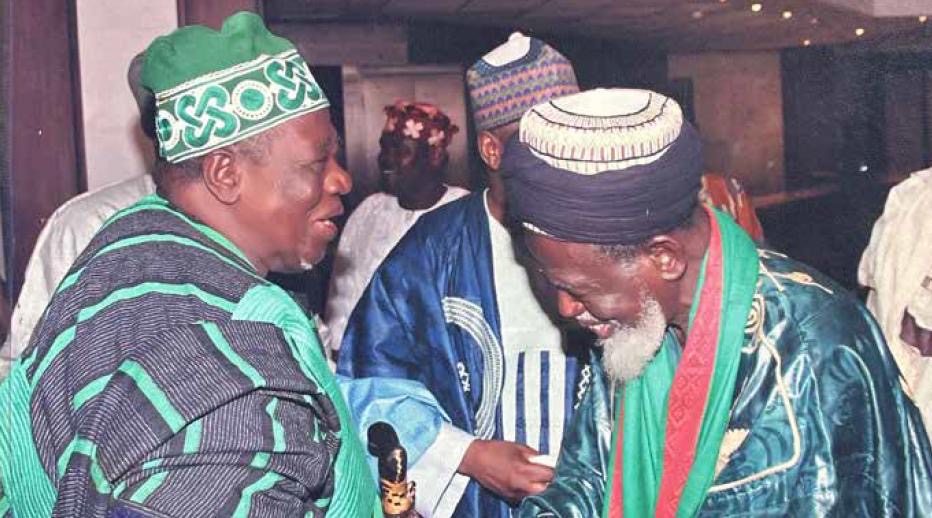
A visit to the University of Ghana proved decisive. Inspired by what he saw, he resolved to pursue education to the highest level. He was admitted to the University of Ghana, Legon, where he graduated with a Bachelor of Arts degree with honours in Geography in 1968.
His academic journey took him to the United States, where he obtained a Master’s degree in 1970 and a PhD in 1974 from Michigan State University. He specialised in Population and Medical Geography, with a minor in Demography and Sociology, laying the foundation for a career that would shape population studies and development policy in Ghana for decades.
On his return home, Prof. Nabila joined the University of Ghana, where he rose steadily through the academic ranks, becoming a full professor of Geography and Resource Development in 1997. Over more than four decades, he taught, researched and mentored generations of students, supervising numerous postgraduate theses and playing a key role in strengthening the Geography Department and the Regional Institute for Population Studies.
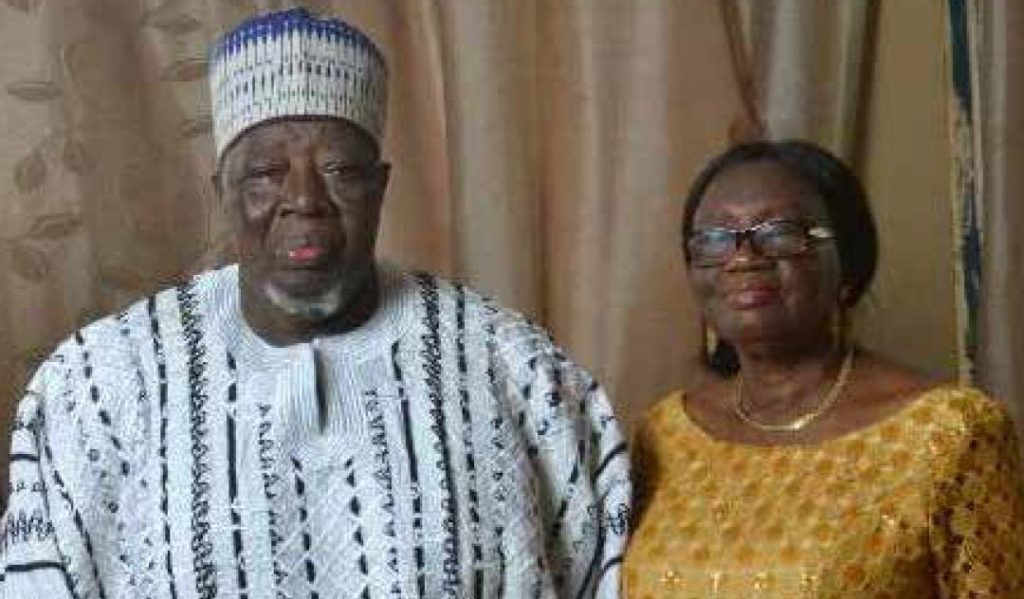
His research interests ranged across migration, population dynamics, urbanisation, health, gender, environment and development planning. His scholarly work earned international recognition and helped inform public policy in Ghana and beyond. In 1998, he received the University of Ghana’s Best Teacher Award, and in 2007 he was honoured by the state with the Companion of the Order of the Volta.
Beyond the university, Prof. Nabila was drawn into national service. He served as Member of Parliament for the Walewale Constituency and, during the Third Republic, as Minister of State for Presidential Affairs and Information, with responsibility for national security between 1979 and 1981. His ministerial career was cut short by political upheaval, but investigations later cleared him of wrongdoing, allowing him to return to academia with his reputation for integrity intact.
He continued to serve the nation in advisory roles, contributing to committees and boards on population policy, health research, environmental protection, HIV and AIDS, and national development planning.
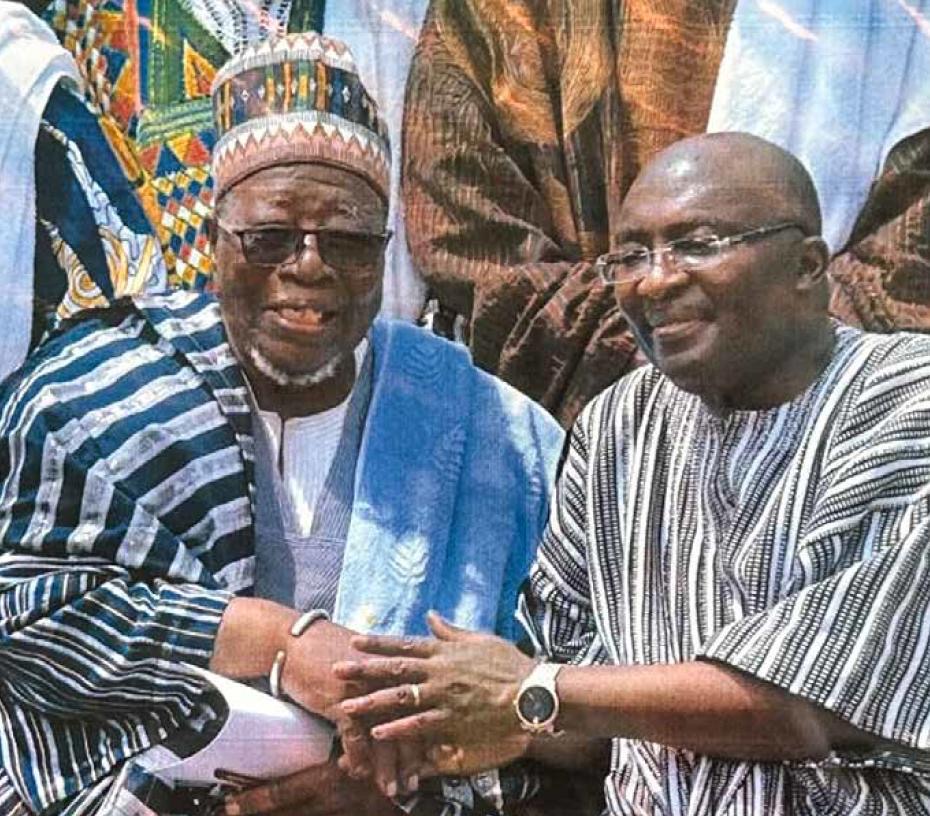
In 1993, he assumed a new mantle of leadership when he was enskinned as Paramount Chief of the Kpasenkpe Traditional Area, succeeding his father and taking the title Wulugunaba. From that position, he rose to become one of the most influential traditional leaders in Ghana. He served on the Mamprugu Traditional Council, the Northern Regional House of Chiefs and the National House of Chiefs, eventually becoming President of the National House of Chiefs from 2008 to 2016.
During two consecutive terms as president, a rare achievement in the institution’s history, Naa Prof. Nabila championed reforms in chieftaincy administration, peaceful succession, the codification of customary law and cooperation between traditional authority and the modern state. His leadership was widely credited with strengthening the role of chieftaincy in Ghana’s democratic governance.
A committed Christian, he was a long-standing member of the Assemblies of God Church, where he served in various capacities, including as council chair of the Assemblies of God Institute of Higher Learning. He was known for living his faith quietly, blending Christian conviction with his responsibilities as a traditional ruler, and demonstrating that faith and culture could coexist harmoniously.
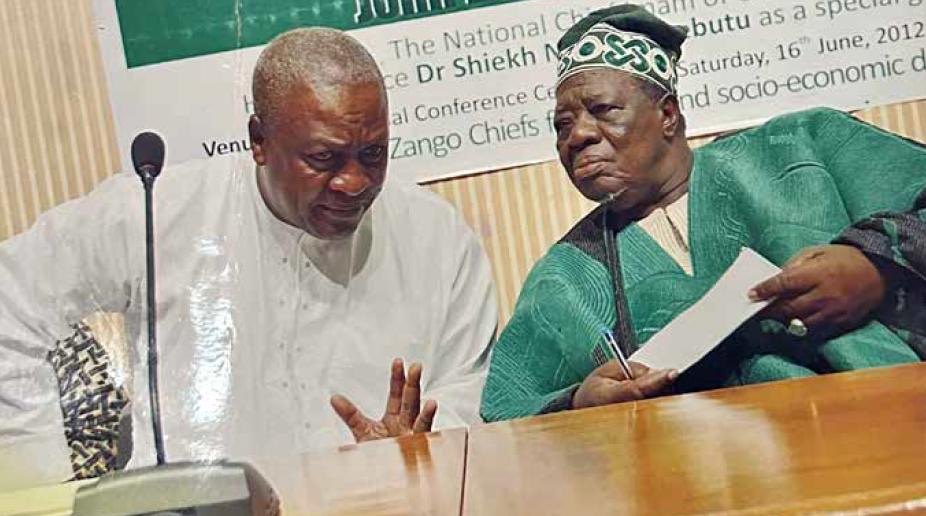
Between 2005 and 2016, he served three terms on the Council of State, first representing the Northern Region and later the National House of Chiefs, offering counsel during critical moments in Ghana’s political life.
Remembered for his humility, calm temperament and moral clarity, Naa Prof. John Sebiyam Nabila is widely regarded as a bridge between tradition and modernity, scholarship and governance. From Kpasenkpe to the highest councils of state and chieftaincy, his life was defined by service to God, to his people and to the nation.
He leaves behind a legacy of learning, leadership and unwavering dedication to Ghana.