Many member countries of the United Nations harbor this delusion of national sovereignty, especially African nations, yet the lessons of history consistently rub it in their faces.
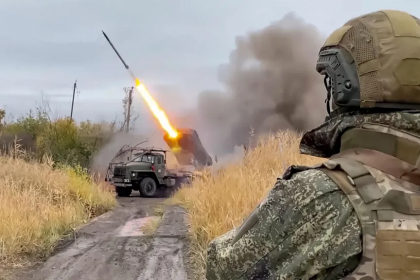
The real sovereignty lies in two things: economic and military might. We’ve seen the United States and Russia invade many countries, while France has conducted military actions in several African nations to protect its own national security interests, yet some still cling to the belief in absolute sovereignty.
The recent capture of Venezuelan President Nicolás Maduro by U.S. forces on January 3, 2026, serves as a stark reminder of the illusion of sovereignty for nations lacking robust economic and military might, echoing the vulnerabilities faced by many African countries.
In a swift military operation, American special forces extracted Maduro from Caracas amid strikes on Venezuelan territory, flying him out to face U.S. charges on drugs and weapons, all without significant international repercussions or Venezuelan deterrence capabilities to prevent it.
This brazen intervention underscores how superpowers like the United States can disregard borders and topple leaders in weaker states, much like historical incursions in Africa, reinforcing the urgent need for continents like Africa to prioritize building nuclear deterrents and alliances to avoid similar fates where sovereignty evaporates in the face of superior power.
For any country to be taken seriously, it needs to possess economic freedom and military power at a level that makes any other nation dealing with it think twice before acting aggressively. Without these pillars, a nation’s independence is little more than a fragile facade, easily shattered by external pressures or opportunistic interventions.
African leaders are doing the continent a great disservice by pursuing a non-proliferation agenda instead of working on acquiring or building nuclear weapons to safeguard the continent’s security.
The illusion that the world order will continue unchanged and that there is no imminent threat to Africa is a foolish belief, one that ignores the volatile nature of global politics and the potential for sudden shifts in power dynamics.
The world order can be disrupted at any moment; democracy could collapse worldwide, leading us back to rogue regimes without any enforceable international law, leaving us utterly vulnerable. History is replete with examples of empires falling and alliances crumbling, reminding us that stability is never guaranteed.
COVID-19 already taught us one harsh lesson: when it comes to life and death, it’s everyone for himself and God for us all. Vaccines were nationalized by wealthy nations, while African countries were left begging for doses to protect their populations.
We were incredibly lucky that the virus spared us to a large extent, perhaps God showed us mercy in that regard. When the South African variant was detected, African countries were immediately slapped with travel bans, isolating us further in a time of crisis.
I don’t know what else it will take to teach us to start building systems that truly safeguard our interests, rather than relying on the goodwill of others who prioritize their own survival.
For several decades, the African continent, with its 55 countries, still does not have a single permanent seat at the United Nations Security Council. Robert Mugabe fought for it with all his might and died without seeing that dream realized, and those who came after him continue the struggle.
We have not been taken seriously for obvious reasons. What are we going to do with veto powers at the UNSC? We lack the capabilities to take military action against any serious country, we don’t have the economic power to impose meaningful sanctions on any nation, and we have zero deterrence, so what exactly are we seeking a permanent seat for? It’s a symbolic gesture without the substance to back it up, highlighting our peripheral role in global affairs.
We need a new generation of African leaders who will reorganize the continent to form a NATO-style military alliance, complete with a collective protection clause, and commit to building nuclear weapons as well.
If we possessed nukes, no foreign military could simply fly in, sail to our coasts, and launch missiles against their targets, as happened in the case of Libya during the 2011 intervention. Such capabilities would fundamentally alter how the world engages with us, forcing respect through mutual assured caution.
We need nukes not just for deterrence but also for negotiations. North Korea has elevated itself to an important player on the global stage precisely because it has nuclear weapons; no single country dares to mess around its territory without facing dire consequences.
This demonstrates how strategic power can transform a nation’s standing, turning vulnerability into leverage in diplomatic arenas.
If we want to be treated right, we first need to go back to the drawing board and get things right, reevaluating our priorities and investing in self-reliance.
We are in an era of AI and drone technology, yet Africa has again become a mere consumer instead of actively participating in the race. We cannot run our economies without making serious and deliberate attempts to compete globally and still expect a different outcome.
To break this cycle, African nations must foster innovation hubs, invest in STEM education, and form strategic partnerships that position us as creators rather than dependents, ensuring that we harness these technologies for our own advancement and security.
There is no sovereignty in our current world order without economic freedom and nuclear armed military.