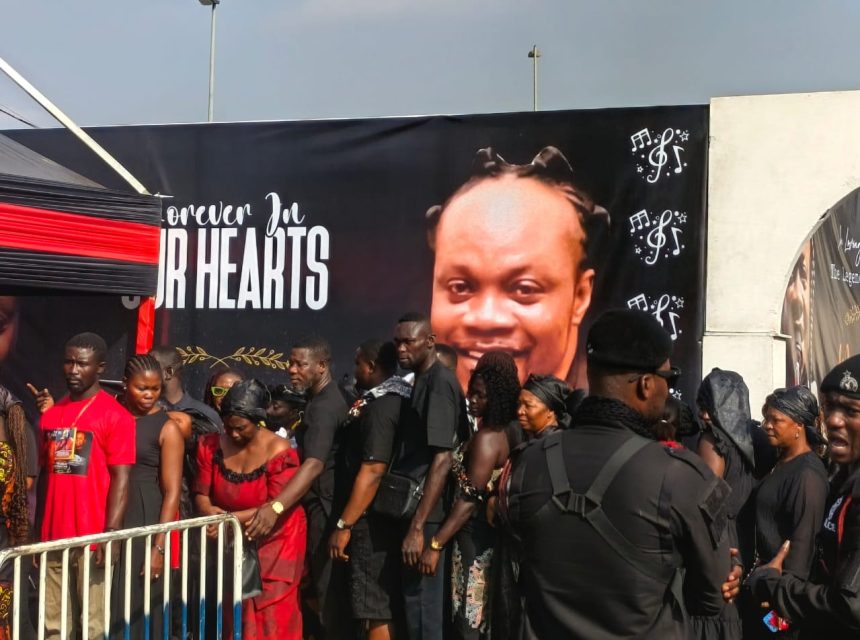
Long before the first prayer was said at the Heroes Park of the Baba Yara Sports Stadium, Daddy Lumba had already spoken as giant speakers mounted around the funeral grounds, exuded his unmistakable voice into the early Kumasi morning.
As mourners streamed in at dawn to bid farewell to Charles Kwadwo Fosu, it became clear that his funeral would not be guided only by hymns and dirges, but would be carried by music, composed by him.
On the day Ghana laid one of its greatest highlife legends to rest, Daddy Lumba became both the departed and the comforter.
For more than four decades, Lumba’s songs chronicled love and loss, betrayal and forgiveness, resilience and regret.
Those same themes returned powerfully at his funeral, turning the grounds into a space where melodies replaced words and lyrics expressed emotions too heavy for speech.
As the body lay in state, slow and reflective songs played continuously, forming a solemn rhythm for mourners filing past.
Some walked briskly, others paused, eyes fixed on the coffin, lips moving quietly as they mouthed lyrics they had known for years.
A few stopped altogether, overcome by emotion, as if the songs had opened old wounds or awakened buried memories.
To many, the music sounded less like entertainment and more like prayer.
There were moments when the crowd fell into complete silence — not because the speakers had gone quiet, but because Daddy Lumba’s voice filled every emotional space.
His songs spoke of endurance, betrayal, love and human weakness, themes that now felt painfully prophetic.
Lyrics that once accompanied weddings, road trips and late-night reflections suddenly took on deeper meaning in the presence of death.
“I have listened to this song for years but today, it feels like he is talking directly to us,” one mourner said, wiping tears from her face.
At several points, the boundary between performer and audience disappeared and as familiar choruses rang out, mourners sang back.
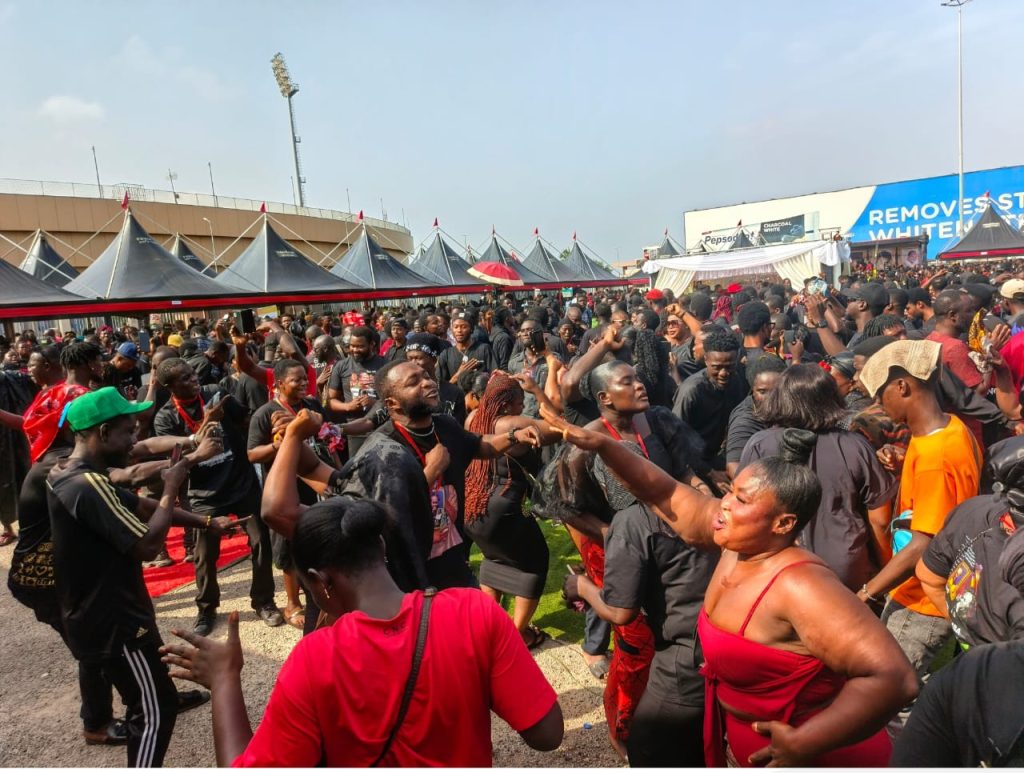
When certain songs ended, the crowd responded not with silence, but with applause, a final ovation for a man whose voice had shaped their lives.
When Daddy Lumba’s longtime collaborator and friend Ernest Nana Acheampong took the stage to perform, his voice trembled with grief.
The song they had once created together now served as a farewell, its lyrics heavy with memories of friendship, ambition and shared dreams.
At one point, he paused mid-performance, overcome by emotion, before continuing to the end as the crowd urged him on.
Perhaps the most striking sight was the range of generations united by the same playlist.
Elderly fans recalled when certain songs were first released, sharing stories of where they were and who they loved at the time.
Young people — some too young to have seen Daddy Lumba perform live stood quietly, absorbing the weight of lyrics they had only recently begun to understand.
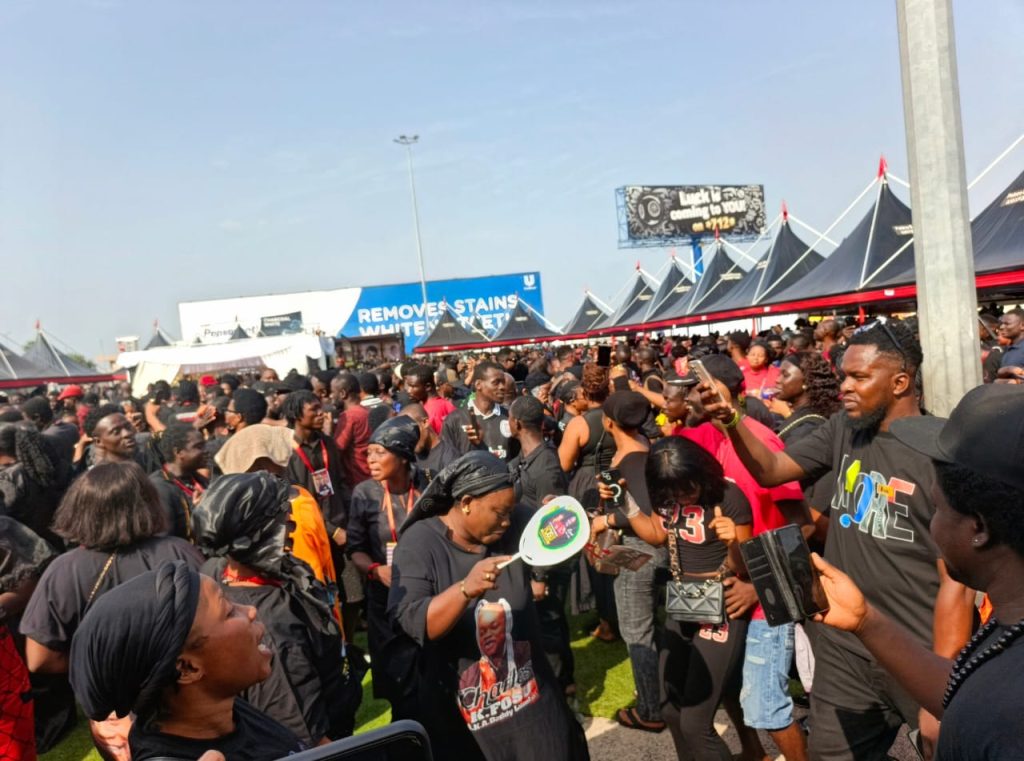
Even outside the main funeral grounds, Daddy Lumba’s voice dominated the atmosphere.
Food vendors, traders and drivers tuned their radios and speakers to his songs, creating a city-wide chorus.
As the funeral rites ended, the music that had guided the day gradually gave way to silence.
But for the thousands who gathered at Heroes Park, Daddy Lumba’s songs continued to echo long after the speakers went quiet.
In homes, vehicles and public spaces across Kumasi and beyond, his music remained a reminder that even in death, his voice still belongs to the nation.
GNA