
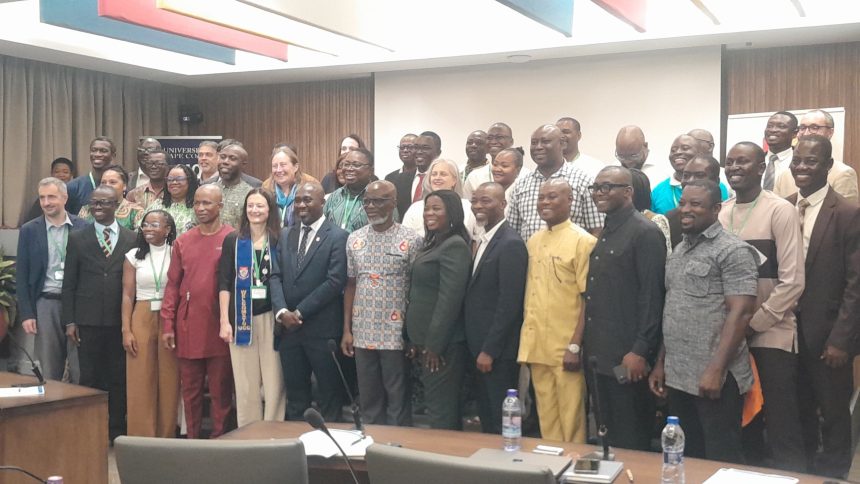
The University of Cape Coast (UCC) and the University of Bologna, Italy, have moved to advance Africa-Europe cooperation in higher education, with the opening of a five-day international conference on internationalisation, collaborative research and project funding.
The ‘Advanced Skills Course,’ funded by the Italian Ministry of University and Research, seeks to build the capacity of some core staff of six African universities to strengthen their international relations and partnerships.
Specifically, the conference will explore sustainable and mutually beneficial practices and innovative models in the areas of international mobility, collaborative research and joint university society initiatives.

The conference, which opened on Monday and is underway till Friday, is training researchers, senior administrators, and other critical staff of the host University, UCC, the University of Zambia, the University of Nairobi in Kenya, and the University of Pretoria, South Africa.
The rest are from the University of Witwatersrand in South Africa and Université Cheikh Anta Diop of Dakar, Senegal, as well as delegates from co-conveners, the University of Bologna.
Professor Denis Worlanyo Aheto, the Acting Vice Chancellor of UCC, opening the conference, was emphatic that internationalisation was not an option but a must for every university as development challenges had taken a global turn.
He said internationalisation fostered cross-cultural competencies, promoted knowledge in diplomacy, and facilitated innovation ecosystems and solutions to address societal problems.
Prof. Aheto underscored the importance of the conference, hoping that it would strengthen the bond between the participating universities and open new partnerships with other Italian universities.
“Indeed, the world is a global village, and our challenges, opportunities and aspirations are very much similar.
“I strongly believe that the learning experiences and the solutions you will proffer to the challenges in the three tracks as outlined in the programme, will speak to core issues on reshaping higher education institutions and make the university community across the world a better place,” he said.
In the case of UCC, the acting Vice Chancellor touted the university’s over 140 partnerships globally and singled out the collaboration with the University of Bologna, the oldest university in Europe, as a “beacon of academic diplomacy and shared innovation.”
He stated that having engaged in collaborative research in education, environmental and cultural studies, respectively, as well as in sustainable development, the partnership had helped UCC to strengthen its curriculum design, enhance staff training, broaden opportunities for students globally, among others.
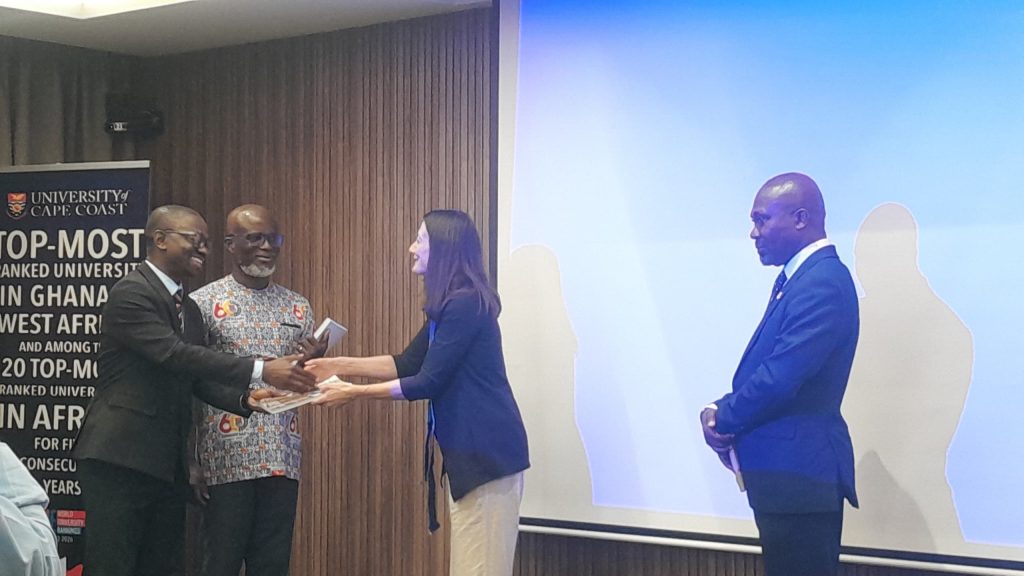
Prof Aheto said that while at the university continued to honour its responsibilities towards its surrounding communities and nationwide.
“We have adopted some basic schools around the university community as teaching laboratories, to help improve teaching and learning.
“This is a call to all of us to make an impact on the very society we live in with our research on a daily basis,” he emphasised.
Prof. Karin Pallaver, a Professor of African History, University of Bologna, stressed the importance of building stronger collaborations and successful relationships among universities to address global developmental needs.
She explained that the workshop was focused on collaborative research, teaching participants how to apply for joint projects, write successful proposals, and identify the appropriate funding bodies in Europe, Africa and across the world.
“We will discuss and work on the social impact our research can make – how universities all over the world can have an impact on global challenges and support local developments,” she said.
Prof. Pallaver was hopeful that the conference would end with productive ideas and techniques for scaling up and building a more successful future for Europe-Africa partnerships in higher education.
Prof. Samuel Bert Boadi-Kusi, the Dean of the Office of International Relations, UCC, said that for the Africa-Europe cooperation to stand, it needed to rest on sustainable and equitable partnerships which would cultivate knowledge and address sustainable development challenges.
“This includes scaling up academic and scientific cooperation, enhancing skill development, facilitating students and research mobilities, and supporting knowledge circulation and cooperation between and within European and African countries,” he explained.
He averred that the joint conference furthered UCC’s internationalisation and regionalisation strategy, which sought to foster partnerships among universities on the continent.