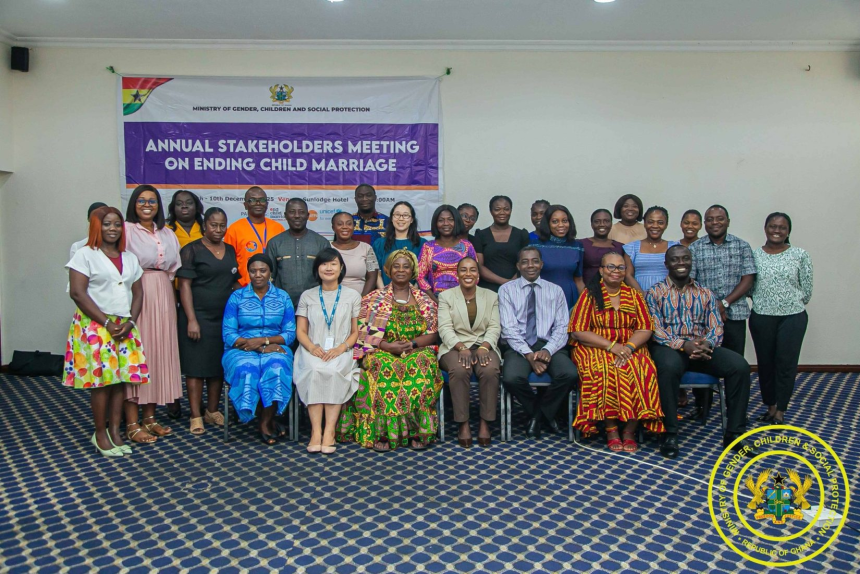
The Upper East Regional Coordinating Council (UERCC), in collaboration with the United Nations Population Fund (UNFPA), has held an initial coordination and alignment meeting with regional and district-level stakeholders.
This was to strengthen the implementation of humanitarian and child marriage interventions in the region.
The meeting brought together key institutions including the National Disaster Management Organisation (NADMO), Ghana Health Service, Ghana Education Service, the Domestic Violence and Victim Support Unit, and civil society organisations, to harmonise efforts, clarify roles, and outline priorities under the 2026 work plan.
Ms Yvonne Wonchua, the UNFPA Regional Focal Person, addressing stakeholders at the meeting, explained that the engagement marked a transition in the region’s programming focus, from core reproductive health services to humanitarian response because of evolving vulnerabilities.
She noted that although the region had made significant progress in areas such as maternal health, adolescent reproductive health, and family planning, it had been reclassified under UNFPA’s humanitarian programme because of emerging challenges, such as the influx of asylum seekers and recurring conflicts.
“The Upper East Region was assessed to have improved in key reproductive health indicators, which allowed UNFPA to shift attention to regions with greater need, while repositioning this region within the humanitarian framework,” she said.
Ms Wonchua added that the humanitarian focus aligned with UNFPA’s mandate to address sexual and reproductive health needs and gender-based violence in emergency settings, particularly among vulnerable populations such as women, girls, and displaced persons.
She emphasised that the collaboration with UERCC and other partners, including the NADMO, was crucial in addressing the complex humanitarian landscape in the region, which was prone to floods, conflict, and cross-border security threats.
On gains made over the years, she indicated that while measurable improvements had been recorded in reproductive health outcomes, sustaining such progress required continuous investment and coordinated action.
“Some of the gains are attitudinal, others depends on resources and how well agencies collaborate. Without sustained effort, we risk reversing the progress made,” she cautioned.
Mr A. Alhassan Ibrahim, the Regional Development Planning Officer, highlighted that the initiative aligned with Ghana’s National Development Policy Framework, particularly within the pillars of social development and governance.
He noted that the region continued to grapple with multiple developmental challenges, including poverty, youth unemployment, environmental degradation, and harmful cultural practices such as child marriage.
“We are here to deliberate on how best we can collectively address these challenges and improve the wellbeing of the people of the Upper East Region,” he said.
Madam Rita Mbamah, the Upper East Regional Gender Desk Officer of the Ghana Education Service, called for stronger school and community engagement on disaster preparedness and child protection, noting that educating children helped in spreading awareness to families.
She also called for intensified action against child marriage and affirmed that schools were ready to enrol migrant and refugee children.
The Upper East Region faces persistent vulnerabilities, including recurrent flooding from the spillage of the Bagre Dam in neighbouring Burkina Faso, ethnic and chieftaincy conflicts, food insecurity, and exposure to violent extremism along border communities.
The 2026 work plan under the UNFPA-UERCC partnership includes community dialogue sessions engaging men and boys to address gender-based violence and harmful practices, quarterly coordination meetings among essential service providers, and follow-up engagements with traditional authorities to track progress in ending child marriage.
Other planned activities include commemorating the 16 Days of Activism campaign and rolling out community sensitisation programmes to promote gender equality and strengthen prevention and response mechanisms.
The meeting is expected to enhance coordination among stakeholders, foster a shared understanding of responsibilities, and improve the delivery of humanitarian and child protection interventions across the region.