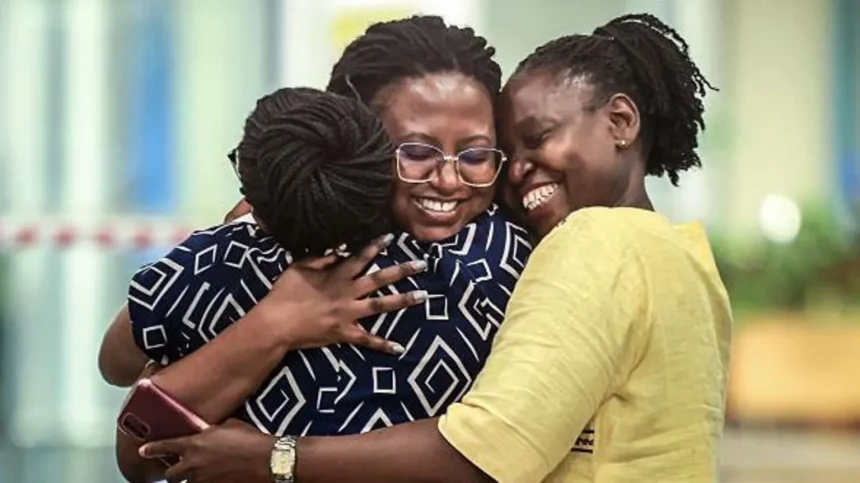
Some of the 43 Ugandan students evacuated from Iran have described their ordeal after being evacuated from the country.
“We could hear the ground trembling, we could hear the ground shake,” Oscar Nyegyema told AFP after arriving at Uganda’s Entebbe International Airport. “We really did not know whether we could make it out.”
Masters student Aloysious Ssegawa told BBC Focus on Africa that the bombings felt like an ”earthquake” and all he could think about doing was ”running for his life”.
After the US and Israel jointly attacked Iran on Saturday, Iran retaliated with strikes on Israel and US allies in the Gulf, leading to disruption across the Middle East
Uganda’s ambassador in Tehran arranged for the students to leave by bus to the Turkish border and then on to Istanbul where they caught a flight home.
Ssegawa was based in the northern part of Tehran and travelled for four days before safely arriving back at Entebbe International Airport in Uganda.
He described how there were extreme traffic jams and people were carrying their belongings as they fled Iran.
”There was a lot of panic, I must admit, everyone was scared. When you are in the building and a bombing happens, it shakes and you feel like it is an earthquake. And the only thing that comes to mind is running for your life,” Ssegawa told the BBC.
He added that it was ”psychologically traumatic, and I felt like I was really in danger”.
This is the second time he has fled Iran. He first left last year during the 12-day war, but returned because he wanted to finish his studies.
Despite these experiences, he says he will return again, if a peace deal is achieved.
Nyegyema said his university had been hit by an air strike. “We were all scared, we were all feeling devastated.”
Nevertheless, he also intends to return to Iran and complete his programme as soon as he can.
Some Ugandan students opted to remain in Iran, even after their government offered to bring them home.
”There were about 51 in one university, but the eight decided to remain behind willingly,” Ugandan State Minister Balaam Barugahara told Reuters news agency.
Jonan Gumushabe told Reuters that he was just a few days away from finishing his degree when he left Iran.
Another evacuee, Sharon Twiine, who had been studying international relations at Ahlul Bayt International University in Tehran, said she would need therapy before continuing with her studies.
“It was scary, traumatising and I wouldn’t wish for anyone to experience” such a thing, she said.