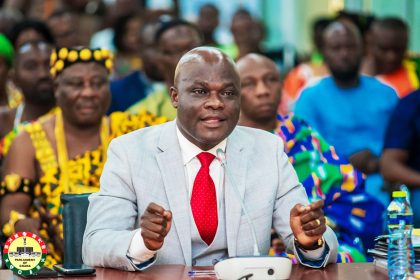
Mr Ahmed Ibrahim, the Minister for Local Government, Chieftaincy and Religious Affairs, has announced a new tougher approach to sanitation enforcement, warning Metropolitan, Municipal and District Assemblies (MMDAs) that the era of staged clean-ups and advance notice inspections is over.
He said the government had begun an experimental but deliberate strategy to introduce a strong central supervisory force to support MMDAs in delivering a cleaner and healthier Ghana.
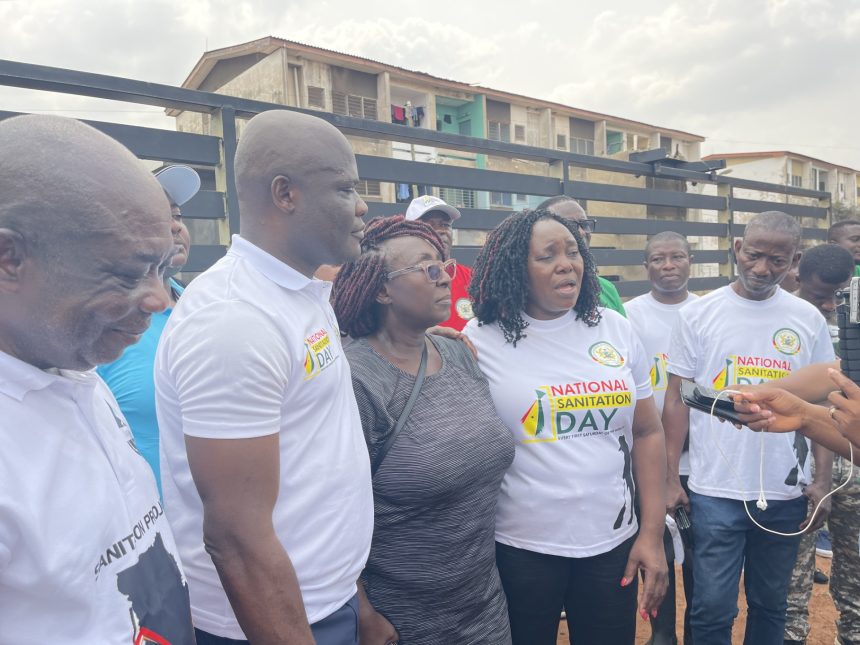
The Minister was speaking at the National Sanitation Day, “Christmas Edition,” which was held in Accra.
As part of the exercise, the Minister, together with his Deputy Minister, the Minister for Tourism, Culture and Creative Arts, and a delegation from the Ministry moved through several assemblies without prior notice.
They started from Ayawaso East and West, through Ayawaso West Wuogon, La Nkwantanang–Madina and finally arrived at the Adenta Municipal Assembly.
Mr Ibrahim described the exercise as a “Nicodemus call” to assemblies, stressing that the Ministry would no longer follow the traditional practice of informing assemblies ahead of inspections,a situation he said had encouraged pretence and deception.
He said sanitation inspections would now be conducted simultaneously and unannounced, with ministers moving in different directions to assess performance on the ground.
The Minister underscored the role of the media as a critical accountability tool, noting that leadership must be intentional and deliberate to achieve results.
“We cannot pretend to be ruling and expect the expected results. That is what President Mahama stands for, and that is what the reset agenda is about,” he added.
Mr Ibrahim stressed that the sanitation drive would not be limited to the Greater Accra Region, describing the exercise as a nationwide wake-up call for all public officers, including chief executives and directors.
He said from Monday, December 15, sanitation operations would be intensified, with borla taxis, sweepers, and waste trucks expected to be fully operational to prepare the country for the festive season.
The Minister cautioned the various Metropolitan, Municipal and District Chief Executives (MMDCEs) against complacency, reminding them that their appointments were based on service, not mere administration of funds.
He said the Ministry would intensify supervision and would no longer issue letters ahead of inspections, insisting that preparedness must be continuous.
He announced a multi-sectoral approach to the sanitation exercise, with the Ministers for Interior, Tourism, Transport, and Health expected to join efforts to ensure Ghana is clean and healthy ahead of the Christmas festivities.
Madam Abla Dzifa Gomashie, Minister for Tourism, Culture and Creative Arts, said Ghana’s ability to market itself effectively to the world depended largely on the cleanliness of its cities.
She said it was impossible to promote a country that was perceived as dirty, adding that visitors often formed their first impressions not from hotels or tourist sites, but from the streets they encountered on arrival.
The Minister appealed to traders operating along major roads to make space for pedestrians by keeping walkways clear, warning that street congestion only worsened traffic challenges in urban centres.
She reaffirmed the government’s commitment to working with local authorities, the media, and the public to ensure clean, safe, and welcoming cities, particularly as Ghana prepared to receive visitors during the Christmas and New Year festivities.
GNA