The United Nations Industrial Development Organisation (UNIDO) has urged African countries to accelerate industrialisation and value addition to realise the full benefits of the African Continental Free Trade Area (AfCFTA).
The Organisation warned that AfCFTA would fall short of its promise if trade integration was not matched by strong productive capacity.
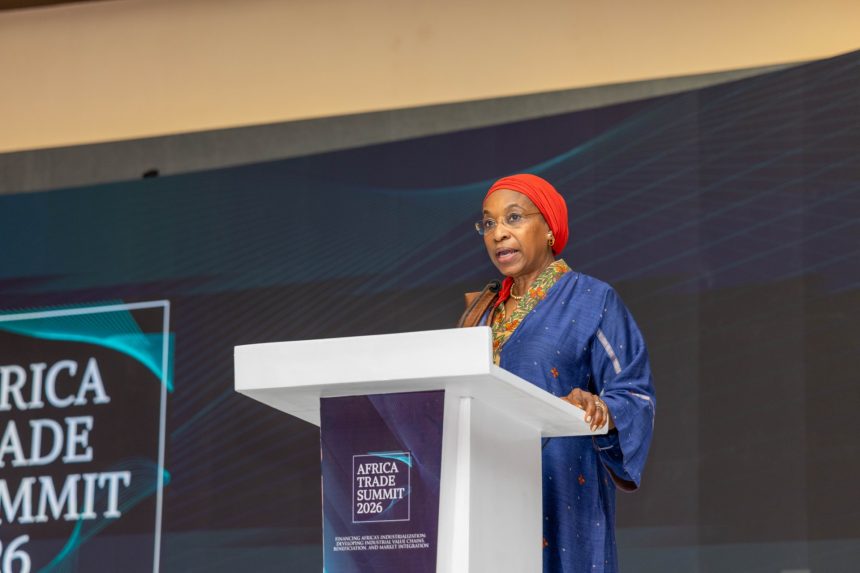
Madam Fatou Haidara, Deputy Director General of UNIDO, made the call at the opening of the 2026 Africa Trade Summit, underway in Accra.
She said Africa must move decisively from exporting raw commodities to producing, processing and trading value-added goods within the continent.
The two-day summit has brought together policymakers, business leaders, investors and development partners to advance intra-African trade and industrialisation.
Madam Haidara said, “AfCFTA should not be seen only as a trade agreement; it is also an industrial agreement,” adding that Africa’s competitiveness depended on its ability to produce at scale, process locally and trade regionally.
She said that although Africa had a clear vision and abundant natural and human resources, progress had been constrained by weak execution, fragmented national approaches and limited value retention from trade.
Madam Haidara said much of Africa’s trade remained commodity-based, while many industrial ambitions struggled to move from policy statements to actual production.
She called for a deliberate shift from extraction to beneficiation, from primary production to manufacturing, and from isolated national efforts to integrated regional value chains anchored in shared infrastructure and harmonised policies.
“Comparative advantage is not destiny,” she said, stressing the need to transform minerals into refined materials, agricultural output into processed and branded products, and energy potential into reliable power for industry.
Madam Haidara called for a stronger focus on project preparation, risk-sharing mechanisms, demand guarantees and partnerships that could attract long-term finance from development finance institutions and the private sector.
At a ministerial panel discussion later in the day, she underscored the importance of regional industrial corridors and harmonised policies to enable cross-border investment and scale.
She said industrialisation required deliberate and predictable policy choices, noting that an enabling environment for private sector investment was a stronger incentive than tariff reductions.
Madam Haidara called on governments to agree on shared priority value chains and align policies, incentives and trade measures around those sectors.
She said UNIDO was supporting African countries through its Programme for Country Partnership, which brings governments, the private sector, research institutions and development partners together around nationally defined industrial priorities and pipelines of bankable projects.
Madam Haidara said UNIDO would continue to support value-chain development, corridor-based industrialisation, industrial policy advisory services and investment-ready programmes as Africa moved towards the Fourth Industrial Development Decade.
The Africa Trade Summit, organised by the Africa Trade Chamber and its partners, is a private sector-led continental platform aimed at translating AfCFTA ambitions into concrete industrial and trade outcomes.
UNIDO is a specialised agency of the United Nations mandated to promote inclusive and sustainable industrial development.
It works with governments and partners to strengthen industrial policy, build productive capacity, develop value chains, mobilise investment and support industrial projects that create jobs, boost trade competitiveness and support sustainable growth.