
History does not always arrive with trumpets.
Sometimes it comes disguised as a football match.
Ninety minutes had passed.
The crowd had already rehearsed its victory songs.
The script was ready.
The host nation would lift the cup at home.
Justice, they said, had already chosen its side.
Then something inconvenient happened.
A goal appeared and vanished.
A penalty arrived out of nowhere.
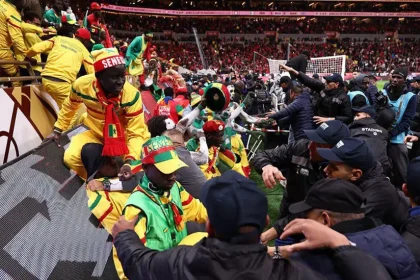
Men walked off the field, not because they were tired, but because they felt cheated by the shape of the world.
For fourteen minutes, the game stopped.
And in that silence, something more important than football was being negotiated.
Power.
Fairness.
Pride.
The thin line between dignity and surrender.
Most people think the story of that night is about referees and VAR and chaos.
It is not.
It is about what happens when life rewrites your ending.
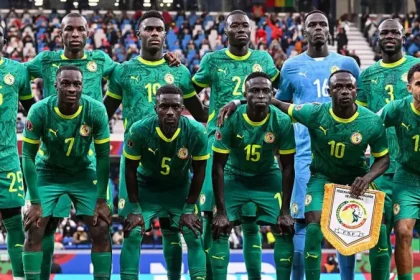
Senegal had every reason to leave.
The decision felt stolen.
The crowd was hostile.
The moment was poisoned.
Walking away would have been clean.
Walking away would have been understandable.
Walking away would have protected their anger.
But anger has never built empires.
And protest, by itself, has never finished a race.
So they came back.
Not because the injustice disappeared.
Not because the referee apologised.
Not because the crowd softened.
They came back because some victories are too important to abandon to bitterness.
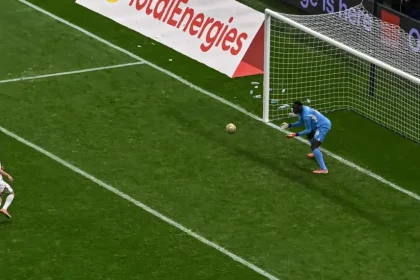
The penalty was taken.
It was saved.
That save was not only reflex.
It was philosophy.
Because life will always present you with moments when the rules bend against you.
A promotion lost to politics.
A contract given to a cousin.
A dream delayed by people who never had to earn theirs.
In those moments, you can walk off.
Or you can stay long enough to see whether destiny still remembers your name.
Extra time arrived.
Fatigue.
Fear.
Silence.
Then, in the ninety-fourth minute, a ball crossed the line.
No controversy this time.
No VAR.
No debate.
Only truth.
And suddenly the night understood itself.
The team that almost quit became champions.
The stadium that expected to celebrate learned humility.
The injustice that tried to decide the story became only a footnote.
Here is the lesson nobody teaches in school:
Life will test you not when things are fair, but when they are not.
Character is not revealed when you are winning.
It is revealed when the referee is against you and the crowd wants your defeat and the easy exit is already open.
Most people leave the field too early.
They leave relationships before the turning point.
They leave careers before the breakthrough.
They leave countries before the rebuild.
They leave themselves before the version of them that could have survived arrives.
Senegal did not win because they were lucky.
They won because they refused to let injustice write the final sentence.
And somewhere in that stadium, without speeches or slogans, a quiet law announced itself:
Those who endure the longest often arrive last — but they arrive holding the trophy.
Not every battle will reward you so visibly.
But every battle you refuse to abandon teaches the same discipline:
Stay.
Even when the rules wobble.
Even when the crowd mocks.
Even when the story seems stolen.
Because sometimes the only difference between defeat and history
is the courage to play the extra time.