
Ghana spent much of the week dissecting another troubling set of WASSCE results, after widespread failings in several core subjects reignited debates about teaching standards, learning habits and the overall state of senior secondary education. While the numbers were sobering, the national response carried a mix of frustration, sarcasm and weary humour, as students, teachers and parents tried to make sense of what had gone wrong.
The chief examiner’s reports point to patterns that have become all too familiar. In English, many candidates struggled to understand the demands of the questions, with some copying portions of the passage wholesale and offering them back as answers, apparently hoping that the examiners might at least appreciate the effort to stay on topic. In the sciences, examiners noted widespread confusion over basic concepts, with some answers falling into the category of “creative but incorrect.”
Mathematics, however, drew the most attention. A significant number of candidates appeared unable to attempt large parts of the paper, prompting renewed concern among educators. Teachers say some of the difficulties reflect weak foundational skills, but many insist that the larger problem is psychological. Mathematics, they argue, is as much about mindset as method. Students who enter the subject convinced they dislike it often avoid practising it, and the lack of practice then reinforces the very fear that held them back. As one senior teacher put it, “The moment a student decides they hate Maths, the subject decides it won’t fight them. It simply steps aside and lets them fail.”
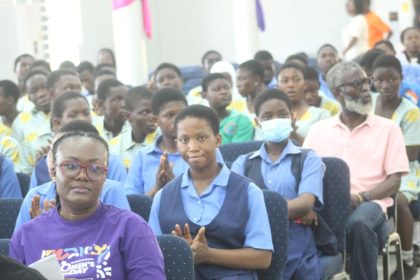
News of the results sparked an immediate wave of commentary. On social media, some users suggested WAEC had changed the syllabus without informing candidates, while others argued (apparently with a straight face) that exam questions should “meet the students halfway.” In many schools, teachers spent the day consoling stunned candidates. One headteacher described the mood as a blend of silence, nervous laughter and occasional disbelief. “Some students genuinely expected the grades to magically align with their intentions,” she said. “Reality had other ideas.”
Education analysts say the crisis has deeper roots. Many candidates struggle with comprehension and tend to read exam questions in haste, misinterpreting verbs such as “explain,” “compare” or “evaluate.” Teachers also report that some students reach senior high school without mastering basic arithmetic, which leaves them unprepared to handle more advanced concepts. Meanwhile, persistent shortages of updated textbooks, well-equipped laboratories and experienced teachers continue to undermine classroom delivery.
Amid the hand-wringing, attention is turning to possible solutions. Officials at the Ministry of Education say they are studying the examiners’ reports and will consider targeted interventions. Teachers, for their part, argue that real progress will require a shift in attitudes, beginning with the reinvention of Mathematics from a source of dread into a subject students can approach without fear. Several schools have begun experimenting with peer study groups, low-pressure practice sessions and early remediation for struggling learners. The hope is that consistent engagement will chip away at the belief, held by many students, that Mathematics is a hostile force rather than a skill to be learned.
Despite the public anxiety, educators insist that the situation is reversible. They argue that improved foundational teaching, steady practice and a healthier mindset can significantly change outcomes. As one examiner remarked, “Mathematics is not plotting against anyone. It has no emotions. It simply rewards the work put into it.”
Whether the country can embrace that idea before the next round of exams may be the true test. The WASSCE numbers have delivered another wake-up call. What happens next will determine whether Ghana wakes up or decides to hit the snooze button again next year.