
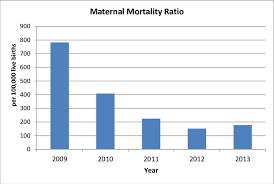
Maternal Mortality Ratio (MMR), which is defined as the number of maternal deaths per 100,000 live births, has improved in Ghana over the time frame of 1990-2023.
This is contained in the summary of Ghana-specific findings from the analysis of the Institute for Health Metrics and Evaluation (IHME), University of Washington study on, ‘The new Global Burden of Disease (GBD) 2023 research,’ published last Wednesday, 01 April 2026
It indicated Ghana had an MMR of 275 in 2023 and MMR of 387 in 1990, which represented 1 per cent annualised improvement since 1990.
MMR decreased rapidly between 1990 (387) and 2000 (220), followed by a relatively stable MMR until 2015 (233); since 2015, however, MMR has gradually increased to 275 in 2023, indicating that progress in reducing maternal mortality in Ghana may be slowing in recent years.
In 2023, the highest MMR in Ghana was among older maternal age groups, with MMRs of 556, 561, and 2,100 among women aged 40-44, 45-49, and 50-54, respectively; the lowest MMR was 164 among 20-24 year olds.
In 1990, the top three causes of maternal deaths in Ghana were maternal hemorrhage, maternal hypertensive disorders, and maternal sepsis; in 2023, the top cause remained maternal hemorrhage, followed by other direct maternal disorders and maternal hypertensive disorders.
The cause of maternal deaths with the greatest percent reduction between 1990-2023 was obstructed labour and uterine rupture, which decreased from a cause-specific MMR of 21 in 1990 to 6 in 2023.
Ghana’s MMR was lower in magnitude across the entire time frame of 1990-2023 compared to the western sub-Saharan region as a whole.
In the most recent estimation year of 2023, Ghana’s MMR was 275, which is around 35 per cent lower than the MMR across the region (428).
“Although progress in Ghana has slowed in recent years, progress in reducing MMR across the western sub-Saharan Africa region has continued, with MMR continuing to decline across the region between 2015-2023.”
A study says global maternal deaths have declined over the past three decades, yet progress has slowed in recent years and remains uneven across countries.
The study estimates that 240,000 women died from maternal causes in 2023, accounting for 5.5 per cent of all deaths among women aged 10-54 worldwide.
Maternal deaths remain concentrated in regions facing the greatest health system and data challenges, particularly across sub-Saharan Africa, Oceania, South Asia, Southeast Asia, and parts of the Caribbean.
The study, shared with the Ghana News Agency revealed that Nigeria, India, the Democratic Republic of Congo, Ethiopia, and Pakistan, in 2023, recorded the highest numbers of maternal deaths worldwide.
Dr Maegan Ashworth Dirac, senior author and Assistant Professor of Health Metrics Sciences and Family Medicine said “While the world made impressive strides in reducing maternal mortality after 2000, momentum has slowed since 2015 and, in some places, has started to regress.
To reverse this trend, health systems must strengthen access to quality care before, during, and after pregnancy, particularly in countries where maternal mortality remains highest.”
The analysis, led by researchers at the IHME at the University of Washington and collaborators worldwide, provides the most up-to-date global assessment of maternal mortality trends across 204 countries and territories through 2023, including subnational estimates for 20 countries.