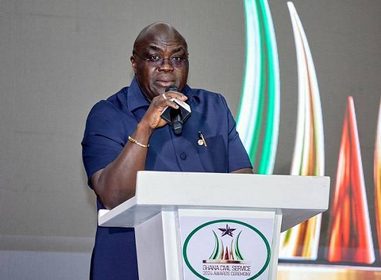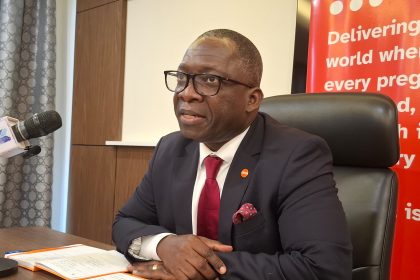
Dr Victor Doke, a Research Fellow at the Kofi Annan International Peacekeeping Training Centre, has warned that the global multilateral system is undergoing a significant transformation, shifting from dialogue-driven engagement to transactional diplomacy.
He said the evolving trend, largely influenced by major global powers, posed serious implications for Africa’s role in global governance, peace, and security.
“Multilateralism, as we know it, was largely based on dialogue and cooperation, but what we are seeing now is a shift towards transactional engagements,” he explained.
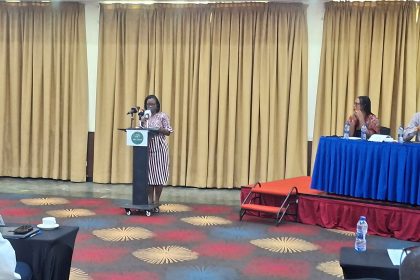
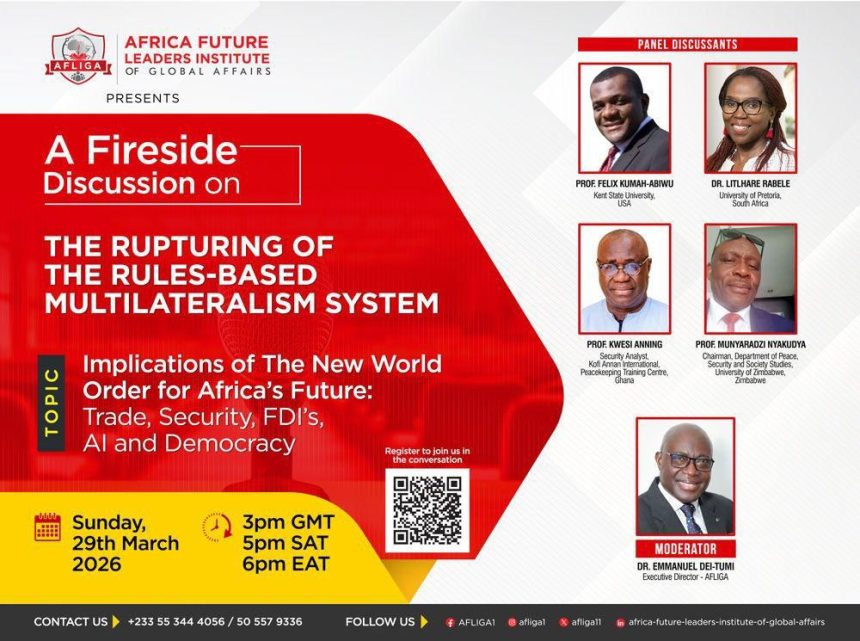
Dr. Doke was speaking at a high-level virtual panel discussion on the emerging global order organised by the Africa Future Leaders Institute of Global Affairs (AFLIGA).
It was on the theme: “The Rupturing of The Rules-Based Multilateralism System.”
Dr. Doke said powerful nations increasingly prioritise national interests over collective global stability, often attaching conditions to diplomatic or military interventions.
“If a powerful country intervenes today, the question is: what is in it for them? That is the reality of the current system,” he said.
He explained that the shift was contributing to the weakening of rule-based multilateralism, where global institutions were expected to operate on fairness and inclusivity.
He indicated that the existing system had historically favoured dominant economies, adding that “there were rules, but these rules often worked to the advantage of powerful nations who control vast economic resources.”
Touching on Africa’s position, Dr Doke said the continent remained a key player in global affairs, particularly due to its economic potential and strategic importance.
However, he warned that internal challenges such as corruption, insecurity and weak governance structures could undermine Africa’s position in demanding accountability and support from the international community.
“Our role as a region is very key, not only economically, but also in terms of peace, security and international diplomacy,” he said.
Professor Felix Kumah-Abiwu of Kent State University, in the United States of America, also contributing to the discussion, said there were clear signs of a weakening global order that had sustained relative stability for decades.
He observed that the rule-based multilateral system was “fading away,” as powerful nations increasingly failed to adhere to the same rules expected of smaller states.
“There seems to be a rupturing or weakening of the old world order that we have long understood,” he said, adding that the development raised critical questions about Africa’s agency in shaping global trade, diplomacy and security.
Prof Kumah-Abiwu stressed that while Africa had historically contributed to global development, it had often been marginalised in international decision-making processes.
He said the current shift could, therefore, present an opportunity for the continent to assert itself more strongly on the global stage.
Dr Litlhare Rabele of the University of Pretoria, South Africa, also expressed concern that global powers were increasingly using military and economic influence to secure national interests, often at the expense of human rights and collective peace.
She called for reforms to the United Nations Security Council, describing it as outdated and ineffective in addressing contemporary global challenges.
“We cannot continue with a system where those who are key actors in conflicts also hold veto power,” she said.
Dr Rabele urged the African Union to strengthen its role in resolving conflicts on the continent, emphasising the need for “African solutions to African problems.”
Professor Munyaradzi Nyakudya of the University of Zimbabwe, noted that while the changing global order posed challenges in trade, governance and diplomacy, it could also create opportunities for Africa to leverage its vast resources and act with a unified voice.
“Africa has an opportunity now to speak and act together and make use of its abundant resources for the benefit of its people,” he added.
GNA