
The Sankore Project, an initiative aimed at strengthening science, technology and innovation (STI) systems and digital inclusion in West Africa, has recorded progress in operationalising national research and innovation funds.
It also progressed in strategy development and innovation commercialisation in Ghana and Nigeria after one year of implementation.
The project, implemented by the United Nations Educational, Scientific and Cultural Organization (UNESCO) with funding from the Foreign Commonwealth Development Office (FCDO), focused on advancing national STI ecosystems, supporting research uptake, and fostering partnerships across the sub-region.
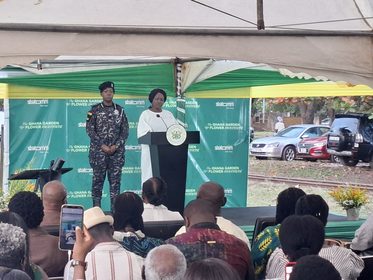
At a close-out event held in Accra, stakeholders said the project had contributed to strengthening governance and financing frameworks for research, building institutional capacity, and promoting regional collaboration.
Mr Edmond Moukala, UNESCO Representative to Ghana, in a speech read on his behalf, said the project delivered “high-impact, demand-driven interventions” despite implementation challenges.
“UNESCO can confidently say that the Sankore project has made meaningful contributions,” he said.
He cited support for the operationalisation of the Ghana National Research Fund and technical work towards activating Nigeria’s National Research and Innovation Fund as key outcomes.
“These processes are complex and politically sensitive, yet essential to building sustainable and accountable research financing systems,” he added.
Mr Moukala said the project also strengthened the capacity of public research institutions to commercialise innovation through audits and peer learning, enabling institutions to take “important steps towards translating research into socio-economic impact.”
He noted that the establishment of a regional STI help desk had improved access to expert-driven technical support and coordination across West Africa.
Ms Chisom Udemezue, Technology and Innovation Adviser, West Africa Research and Innovation Hub, FCDO, said the project was designed to respond to national priorities in Ghana and Nigeria and deepen bilateral cooperation in science and technology.
“We wanted to strengthen our partnership with Nigeria and Ghana… by co-creating and delivering on national priorities,” she said.
She emphasised the link between investment in STI and economic growth.
“There’s a straight-line relationship between economic growth and strong national science and technology systems,” she said, adding that domestic funding of research was critical to ensuring ownership and coordination.
Ms Udemezue said the project supported efforts to mobilise public and private financing for research, particularly through the Ghana National Research Fund.
Ms Melody Esiawonam Boateng, National Professional Officer for Natural Sciences at UNESCO Accra, said the project in Ghana prioritised support for the research fund, including development of a legislative instrument, a five-year strategic plan, and a grants management system.
“We want the fund to operate in a very transparent manner with strong governance framework… and respond to national priorities,” she said.
She added that the project also supported efforts to address the long-standing challenge of research outputs not being translated into practical applications.
“We are hoping that this intervention will show market pathways into commercialisation so that our research does not end up on the shelves,” she said.
Prof. Abigail Opoku Mensah, Acting Administrator of the Ghana National Research Fund, said the project had provided timely support to the fund’s operationalisation.
“We have benefited so much from the Sankore project… it looks as if they were prepared for GNRF,” she said, noting progress towards developing a robust and transparent grant management system and legal framework.
Mr. Nashiru Salifu, Deputy Director of Science and Technology at the Ministry of Environment, Science and Technology, said the operationalisation of the Ghana National Research Fund was key to strengthening the country’s science and technology system.
Dr Olayiwola Agoro of the Federal Ministry of Innovation, Science and Technology in Nigeria, described the project as “an eye-opener,” particularly in guiding efforts to operationalise the country’s research and innovation fund.
Stakeholders at the event said while the project had formally ended, its outcomes provided a foundation for sustained collaboration, policy alignment and investment in STI systems across West Africa.