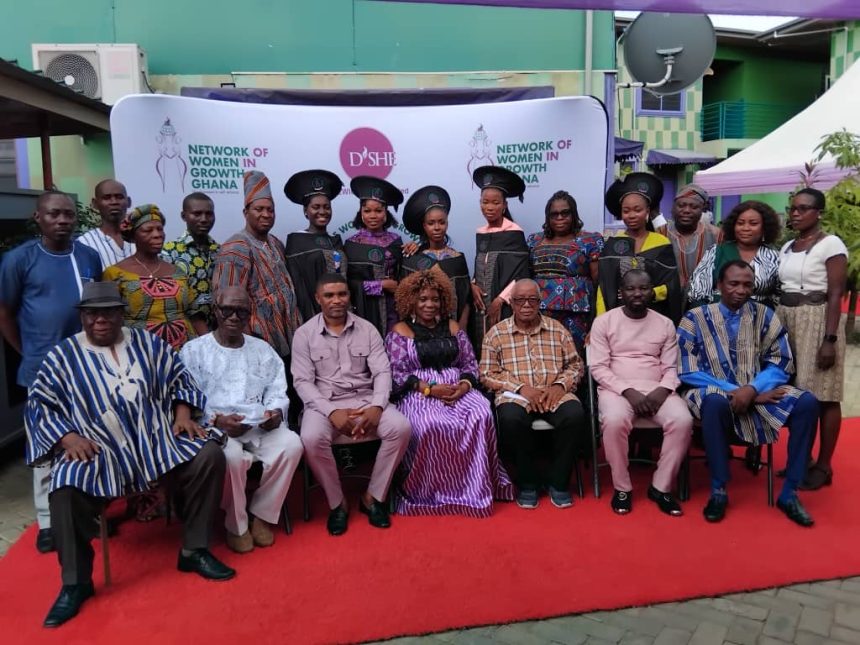
The Network of Women in Growth Ghana, Development in Self Reliance (D’SHE NEWIG), has graduated its first batch of fee-paying students at its fashion school in Tefle in the Volta Region.
The graduation ceremony marked a significant milestone for the institution, as five women successfully completed training in fashion designing, cosmetology, bead making and other related vocational skills.
Speaking at the event, Mr Collins Armah, National Project Coordinator and Team Leader for the TVET Voucher Project, described Technical and Vocational Education and Training (TVET) as a “master key” to unlocking opportunities for the youth in Ghana.
He said TVET equipped individuals with employable skills that enabled them to secure jobs or become self-employed, noting that countries that had attained significant development did so by prioritising skills training.
“TVET opens doors. With the right skills and certification, you can create your own job or be employed. It gives you independence and the opportunity to grow further academically and professionally,” Mr Armah said.
He urged the graduates to take their training seriously, apply their skills diligently and explore opportunities to advance within the National TVET Qualification Framework.
Mr Armah noted that skills training had the potential to reduce unemployment, as skilled individuals were better positioned to create jobs and contribute to national development.
Madam Mawusi Awity Nudekor, Founder of the school and a TVET Consultant, said the graduation marked the first cohort of students who personally financed their training following delays in government support under the TVET Voucher Programme.
She explained that although 10 students initially enrolled, only five completed the programme due to financial constraints, highlighting the high cost of vocational training, which is largely practical-based.
“TVET is expensive because of the materials and the intensive practical training involved, but it remains the most viable path to national development,” Madam Nudekor said.
She called on government, parents and other stakeholders to invest more in TVET, stressing that national development depended largely on the skills of the people.
Madam Nudekor encouraged the graduates to build on their knowledge, remain innovative and aspire to higher levels of education such as B.Tech, M.Tech and beyond, to become ambassadors of the institution.
Mr Stephen Asomani, Greater Accra Regional Coordinator of the Ghana TVET Service, advised the graduates to continuously upgrade their skills, noting that learning did not end at the basic proficiency level.
He urged them to remain creative and adaptable in a dynamic society, stressing that innovation would distinguish them in a competitive job market.
“You must think outside the box and do things differently to succeed. The skills you have acquired are just the beginning. Continue to learn, grow and give back to society,” he added.
Madam Forgive Dzadzah, Chairperson of the Association of Small Scale Industries in South Tongu and a facilitator in cosmetology, commended the graduates for their resilience and dedication.
She reminded them that fashion went beyond clothing and served as a tool for identity, culture and storytelling, and encouraged them to remain steadfast despite challenges.
In a speech on behalf of the graduates, the Course Representative, Rosemary Kudze, described the journey as challenging but rewarding, noting that the cohort had made history as pioneers of the school’s first graduation.
“We have found our voice through threads and creativity. This is just the beginning of our journey as professionals,” she said.
The event was attended by parents, friends, facilitators, principals of other TVET institutions and officials from the TVET sector, who celebrated the achievements of the graduates and reaffirmed the importance of skills development in Ghana’s growth.
GNA