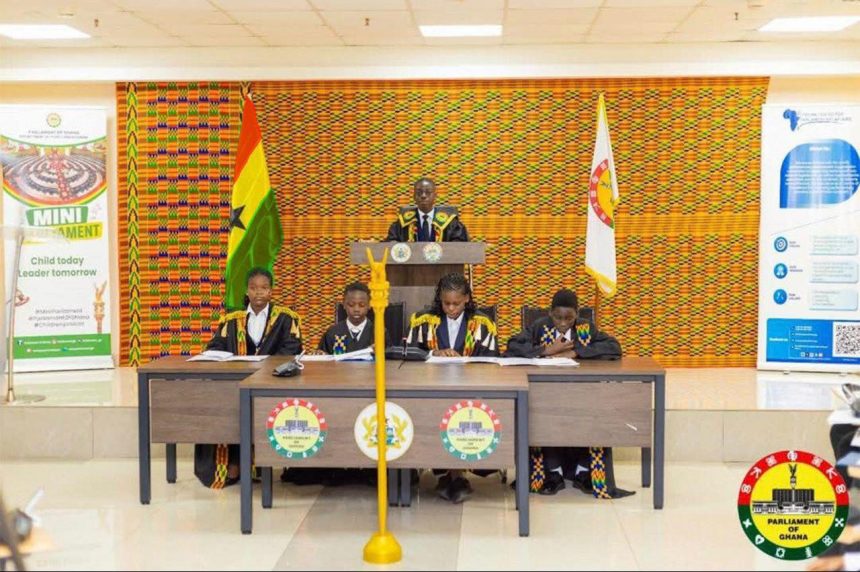
In a bold move to reshape how young Ghanaians engage with governance, Parliament has launched a “Mini Parliament”, a child-led initiative that allows schoolchildren to step into the shoes of lawmakers and debate real national issues.
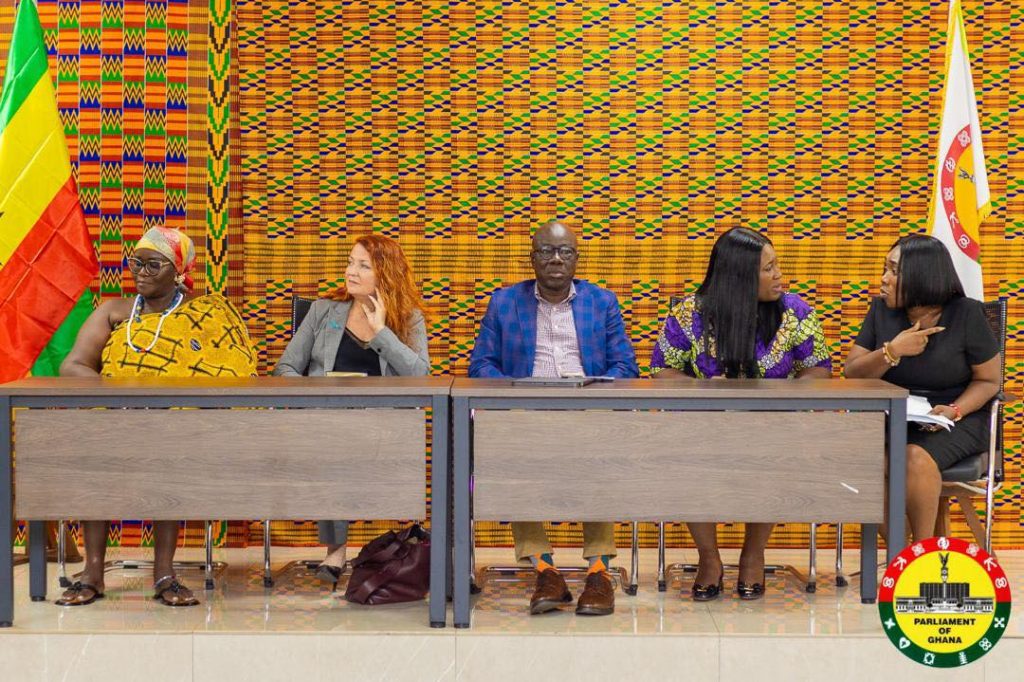
At the launch event held at Parliament House, Helen Ntosu, Chairperson of the Parliamentary Committee on Gender, Children and Social Protection, declared that the old model of top-down policymaking for marginalised groups is no longer enough.
“Citizens, especially the youth, now demand seats at the decision-making table,” she said, adding that the initiative reflects Ghana’s growing commitment to transparency and public trust.
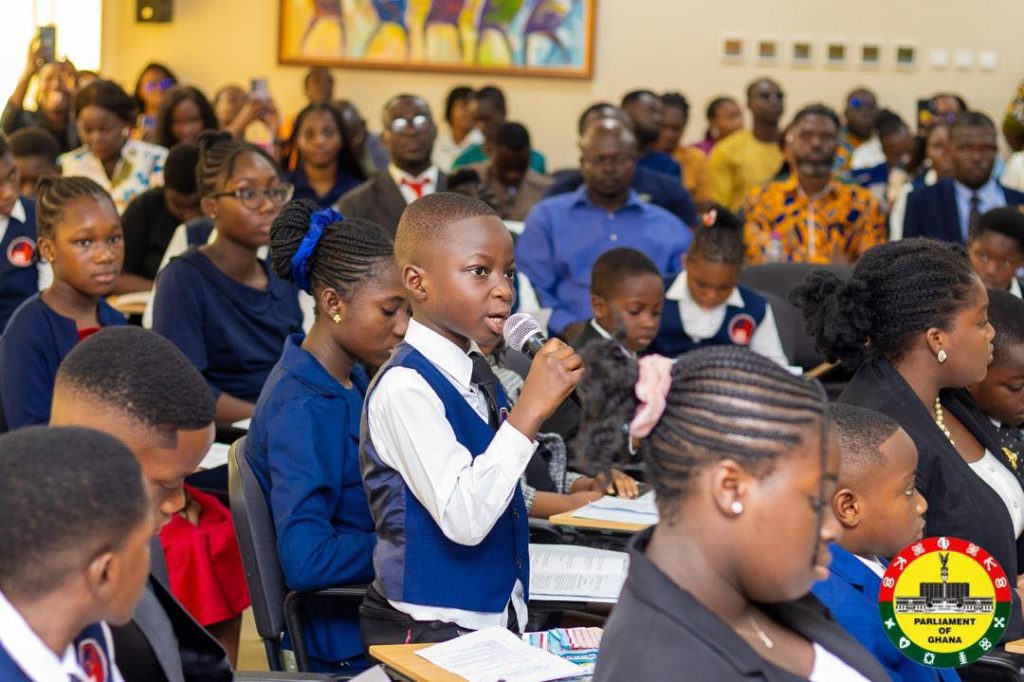
The maiden sitting saw young participants passionately debate the topic: “Responsible Use of Technology by Children,” touching on online safety, digital etiquette, and cyberbullying.
Experts from the Cyber Security Authority were on hand to guide them on protecting personal information online.
UNICEF’s Chief Social Policy and Inclusion Officer, Paulina Sarvilahati, reminded the audience that Ghana made history as the first country to ratify the UN Convention on the Rights of the Child.
“You deserve to be heard, protected, and to achieve your dreams,” she told the children, urging them to speak boldly.

Parliament’s Director of Public Engagement, Supt (Rtd) Effia Tenge, revealed that between 2023 and 2025, over 44,000 people, more than 70% of them primary and JHS pupils, took part in parliamentary educational tours. However, she noted that many struggled to understand legislative procedures.
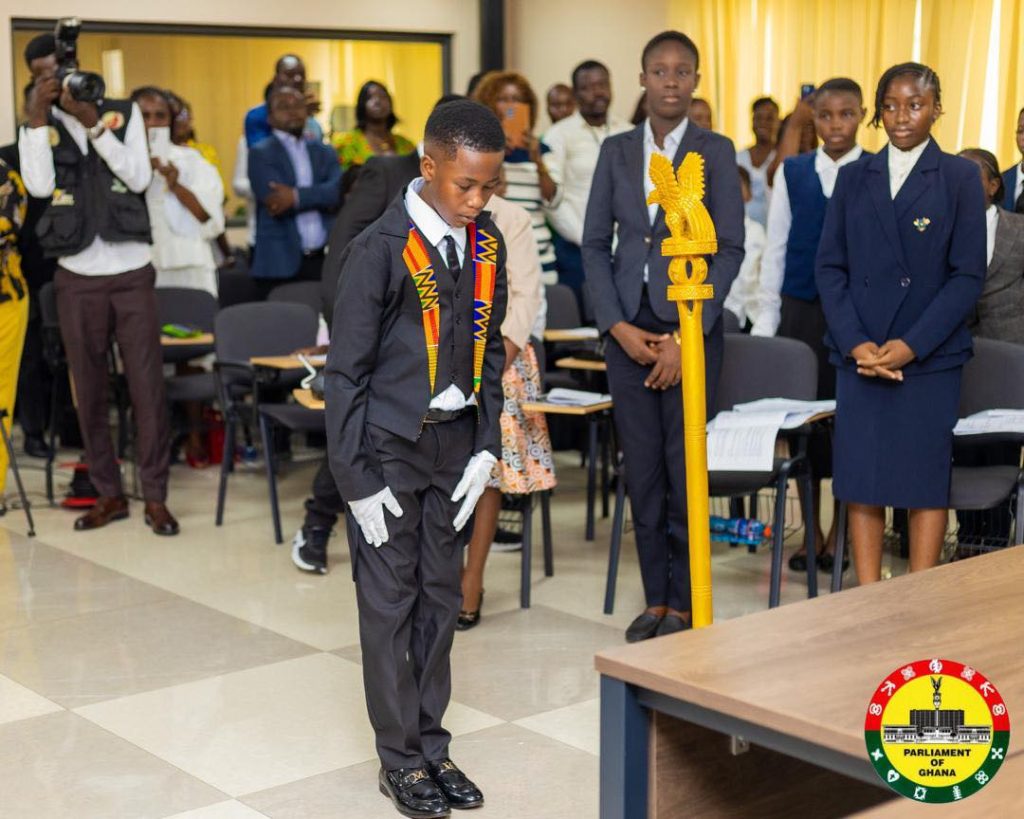
The Mini Parliament, she explained, solves this by offering a hands-on role-playing experience in which children act as MPs.
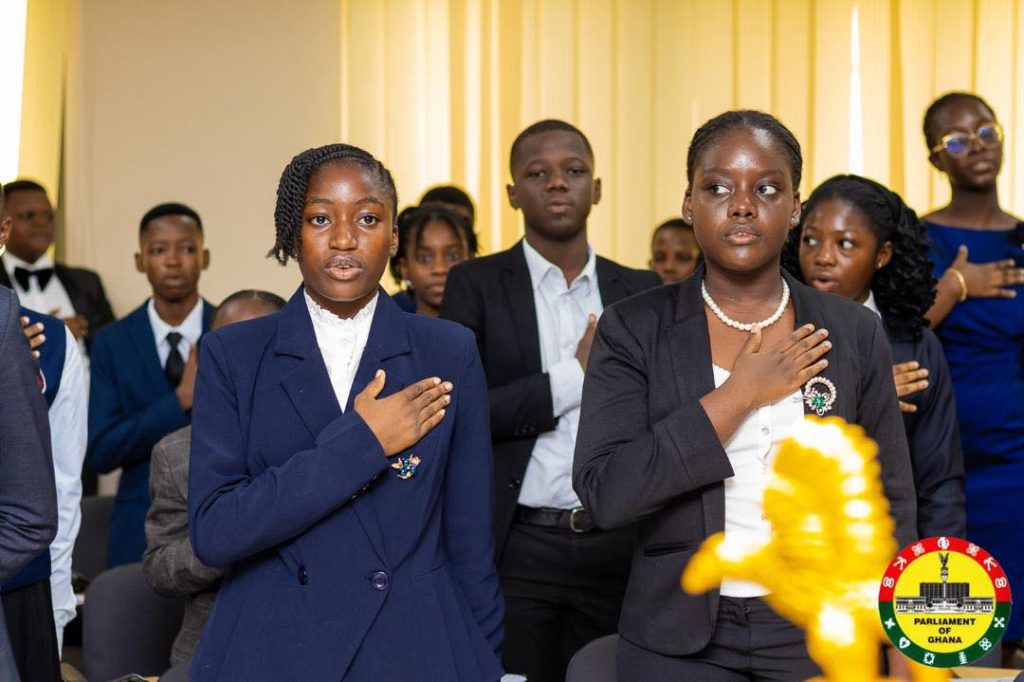
Kate Addo, Head of Public Affairs, praised the children’s confidence and eloquence, reminding them that “leadership begins with responsibility, integrity, and service.” Dr Rasheed Draman, Executive Director of ACEPA, said early exposure to governance helps nurture responsible future citizens.
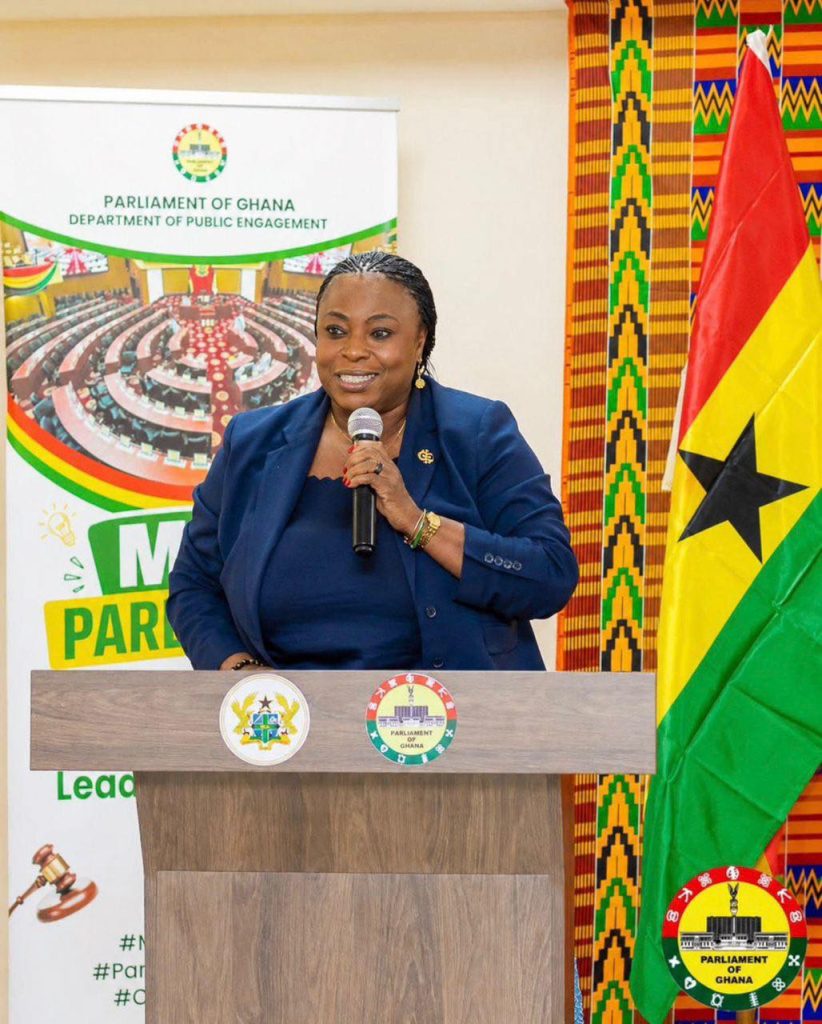
The Queen Mother of Dzorwulu Abelemkpe, Manye Naa Badu Diaba I, encouraged the young lawmakers to remain morally grounded and to listen to their parents and teachers.
“You are tomorrow’s leaders,” she said. “Start preparing today.”
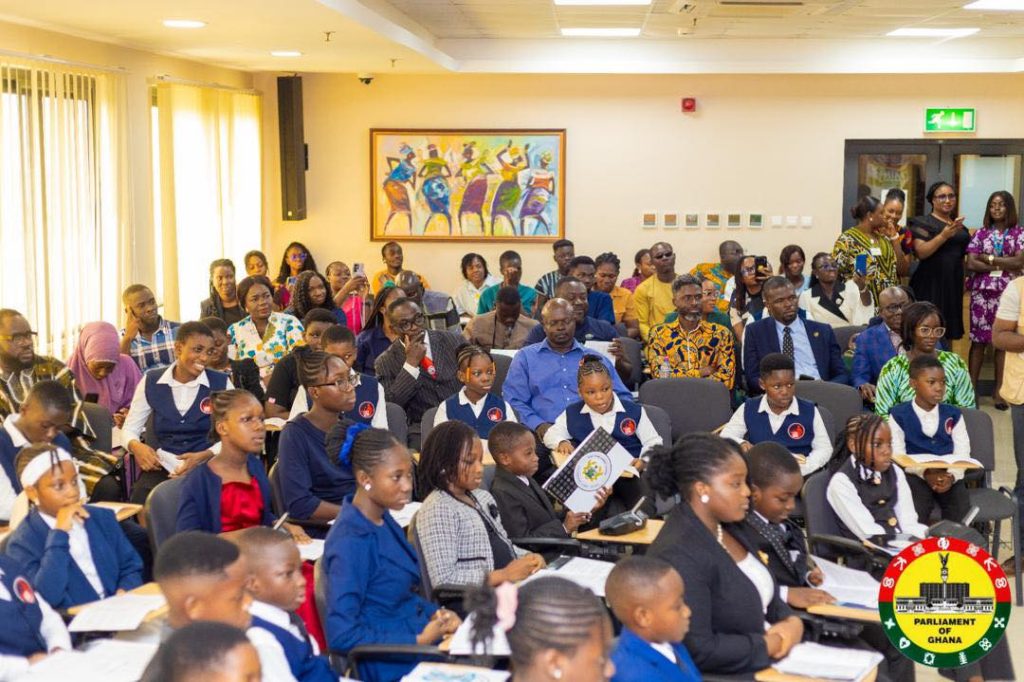
With the Mini Parliament now launched, Ghana takes another step toward amplifying children’s voices, not just as beneficiaries of policy, but as active contributors to national dialogue.