
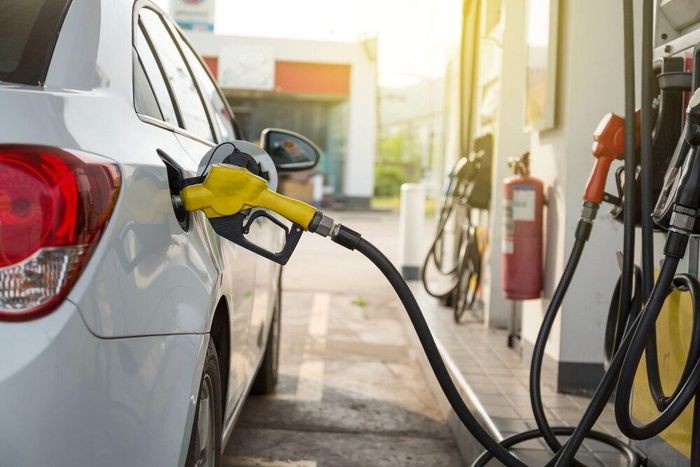
The Chamber of Oil Marketing Companies has announced a significant upward adjustment in petroleum product prices, effective Saturday, August 1, 2026.
The projected increases, which cover the August 1–15 pricing window, are being driven by two principal factors: a sharp rally in global crude oil prices and continued depreciation of the Ghana cedi against the United States dollar.
Petrol is expected to rise by approximately 7.58 per cent, with a litre projected to sell at about GH¢15.23. Diesel is forecast to record the steepest jump at 12.50 per cent, bringing the price per litre to roughly GH¢17.45.
Liquefied petroleum gas is also set to increase by 4.13 per cent, with a kilogramme expected to retail at around GH¢16.40.
While these projections indicate substantial hikes, some market analysts have noted that the eventual impact at the pumps may be less severe for certain consumers, as several oil marketing companies have already implemented incremental price adjustments over the past few weeks.
In parallel, the National Petroleum Authority has issued revised minimum price floors for petroleum products, effective August 1.
The new floor for diesel has been raised from GH¢14.35 to GH¢16.97 per litre, while petrol’s floor has increased from GH¢13.28 to GH¢14.53 per litre. For LPG, the approved floor now stands at GH¢11.06 per kilogramme.
The Authority has directed all oil marketing and LPG marketing companies to strictly comply with these benchmarks, effectively prohibiting the sale of products below the statutory minimums and curtailing the scope for discount-based competition among retailers.
The Chamber attributes the projected price increases to sustained geopolitical tensions, particularly developments surrounding the US-Iran conflict and ongoing uncertainty over the reopening of the Strait of Hormuz, a critical chokepoint for global oil shipments.
While initial optimism over a possible peace agreement had temporarily eased market pressures, Iran’s rejection of Oman’s shared-control proposal, coupled with renewed tanker attacks and continued shipping restrictions, has sustained supply-side risks and kept Brent crude trading near US$88 per barrel.
Over the review period, average crude oil prices rose from US$71.90 to US$88.62 per barrel, representing a 23.25 per cent increase.
Refined product prices have followed suit, with diesel posting the highest gain at 24.84 per cent, followed by petrol at 12.58 per cent and LPG at 12.24 per cent.
Compounding these external pressures is the continued weakness of the domestic currency. The exchange rate moved from GH¢11.4970 to GH¢11.6593 per US dollar during the review period, reflecting a 1.41 per cent depreciation that has further elevated the cost of importing refined petroleum products.
With both international and domestic cost drivers pointing in the same upward direction, the incoming pricing window is expected to place additional strain on household budgets and transport-related expenditures across the country.