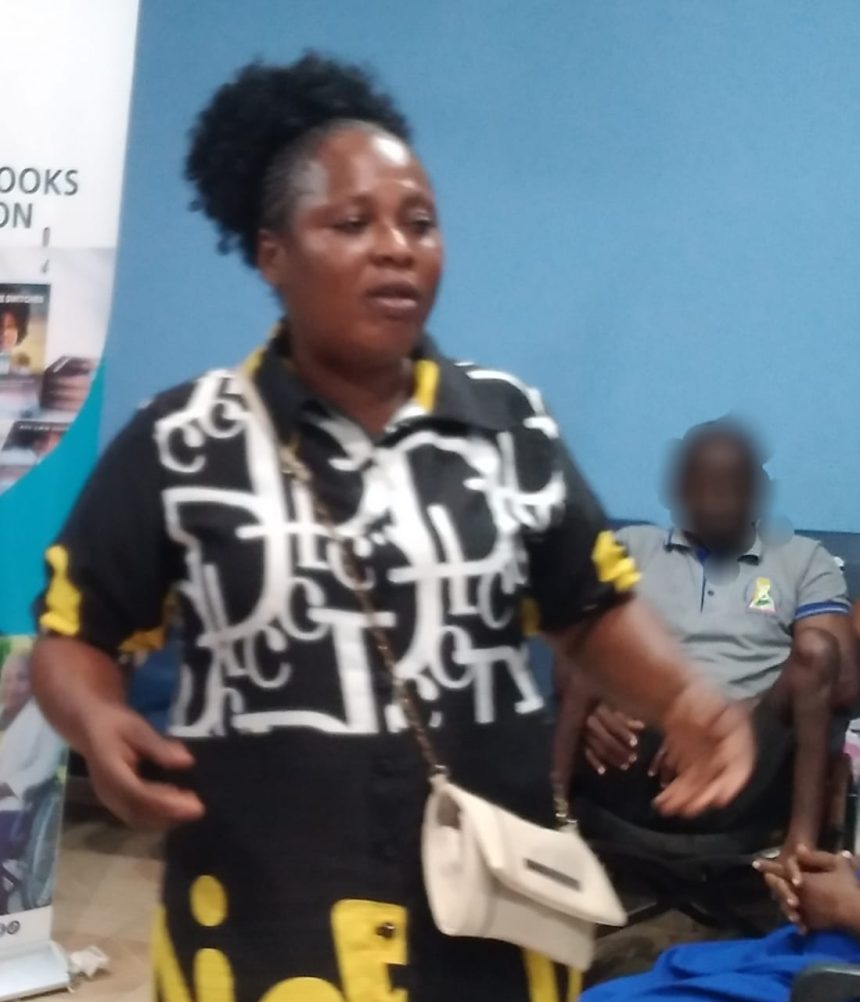
Madam Evelyn Donkor, a mother of a child living with cerebral palsy, has appealed to the public to end the deep-seated stigma and discrimination against children with disabilities and their families.
Madam Donkor, a seamstress who relocated to Ho in 2017, shared her experiences of struggling to secure accommodation and maintain her livelihood while caring for her daughter.
She told the Ghana News Agency (GNA) that finding a place to live had been a major challenge, as several landlords had refused to rent rooms to her because of her daughter’s condition.
According to her, some landlords openly expressed fears that other tenants would leave the premises if she moved in with her child.
The discrimination, she said, extended beyond housing.
Madam Donkor explained that as a seamstress, she depended on community patronage to support her family and cater for her daughter’s needs, but some residents stopped patronising her business after becoming aware of her child’s condition.
“They avoid me and my work as if the condition is airborne disease, this condition can happen to anyone,” she said.
She further disclosed that her daughter also experienced discrimination in school from both teachers and fellow pupils because of her condition.
Madam Donkor said the unfriendly environment eventually compelled her to withdraw the child from school.
She noted that the decision was particularly difficult because her daughter had shown noticeable improvement in speech development while attending school.
Madam Donkor urged the public to abandon misconceptions and superstitious beliefs surrounding disabilities.
She emphasised that cerebral palsy was a neurological condition and neither a spiritual curse nor a contagious disease.
“I am appealing to the public to stop the discrimination,” Madam Donkor pleaded.
“This condition can happen to anyone. It is not an airborne disease, and you cannot catch it by living near someone suffering from it,” she stated.
She called for greater public education, understanding and support for children living with disabilities and their families to enable them to participate fully in society.
GNA