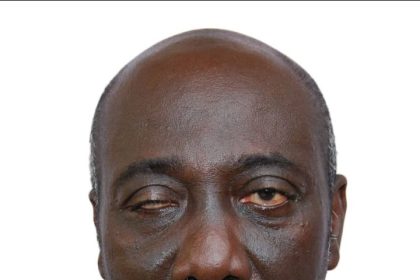

Pastor Ernest Asiedu Alao-Caesar, Senior Pastor of EverTrue Church, has urged parents to delay giving children personal smartphones until they turn 18 or complete Senior High School, citing growing risks associated with unrestricted internet access.
He said although smartphones provided useful tools for communication, research and learning, children could access those benefits through safer alternatives, including basic mobile phones, supervised computers and controlled internet services.
Ps Alao-Caesar made the call on Sunday during the church’s Future Leaders Boot Camp in Accra.
He said a smartphone was more than a communication device because it could provide children with unrestricted access to millions of people, ideas, images and online influences that parents could not always monitor or control.
“A smartphone is not merely a telephone. When you give a child unrestricted access to a smartphone, you potentially open your home to millions of people, ideas, images and influences you do not know and cannot always control,” he said.
He identified pornography, sexually explicit content, cyberbullying, online grooming, sextortion, scams, gambling, violent material and harmful social media communities as some of the risks confronting children online.
The Senior Pastor said many parents were unaware of their children’s activities on platforms such as Snapchat, WhatsApp groups, Telegram and other private online spaces.
He said some adults exploited children’s access to smartphones and social media to establish relationships with them, gradually break down boundaries and manipulate them into inappropriate relationships or sharing intimate material.
Ps Alao-Caesar said the private nature of several messaging platforms, including disappearing messages, secret groups and private chats, made parental supervision increasingly difficult.
“A child may appear quiet, disciplined and completely safe at home, yet be participating in conversations and online communities that the parents would never approve of,” he said.
He therefore urged parents not to equate a child’s physical presence at home with digital safety.
Ps Alao-Caesar also expressed concern about excessive smartphone use and its potential impact on children’s academic performance, concentration, sleep and family relationships.
“Homework now competes with TikTok, reading competes with YouTube, sleep competes with WhatsApp conversations, and family interaction competes with social media,” he said.
He recommended that parents provide basic mobile phones where communication was necessary, while children requiring internet access for schoolwork should preferably use supervised family devices.
He cautioned parents against giving in to pressure from children who claimed their classmates already owned smartphones.
“Parenting cannot be determined by peer pressure. A parent’s responsibility is not to make sure a child possesses everything his or her friends possess. It is to protect the child’s education, character, safety and future,” he said.
Ps Alao-Caesar stressed that delaying smartphone ownership did not amount to denying children access to technology, but rather allowing them to acquire greater digital freedom when they were better prepared to manage its responsibilities.
“There is a difference between teaching your child how to use technology and surrendering your child to technology,” he said.
He called for broader discussions among parents, schools, churches, policymakers and child-development professionals on children’s access to smartphones and social media.
His message to parents, he said, was simple: “Do not be afraid to delay the smartphone. A smartphone can always be bought later. Childhood cannot be recovered once it is lost.”
GNA