Some fisherfolk in Cape Coast have welcomed government’s proposed GHC400 million investment in the development of the fisheries sector in 2027, describing it as a significant intervention that could improve their livelihoods.
However, they want a significant portion of the money to be channelled into addressing critical challenges confronting the industry, including inadequate premix fuel and poor landing facilities in Cape Coast.
Finance Minister Cassiel Ato Forson, presenting the 2027 Budget Statement on Thursday, November 12, 2026, announced a GHS400 million allocation to the Ministry of Fisheries and Aquaculture to support the livelihoods of fishing communities.
He explained that GHS100 million would be allocated each to the provision of fishing inputs and outboard motors for fishermen, the development of fish markets, and support for women and youth in aquaculture to expand opportunities in fish processing.
An additional GHS29 million would be invested in completing and operationalising the Anomabo Fisheries College to strengthen skills development and training in the fisheries sector.
In separate interviews with the Ghana News Agency (GNA), the fisherfolk commended the intervention with joy but suggested a more holistic approach to addressing their challenges.
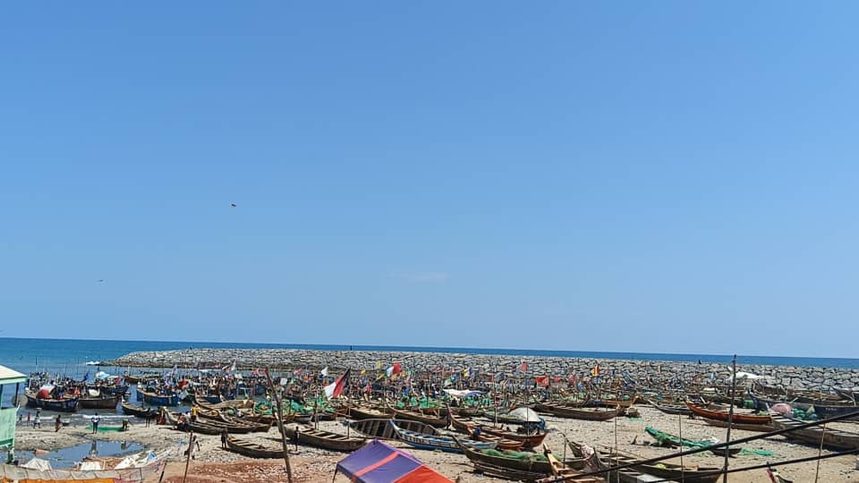
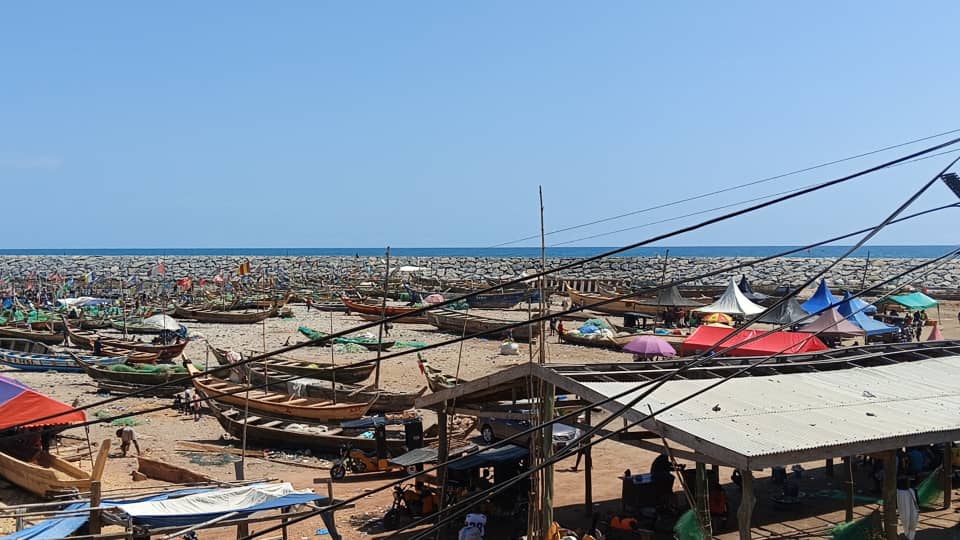
Okyeame Kofi Krah, Linguist to the Chief Fisherman, appealed to government to allocate part of the money to dredge the berthing area at Abrofo Mpoano, a landing site adjacent the Cape Coast Castle, which had accumulated sand and become bare following the construction of the sea defence.
He said the situation obstructed fishing canoes easy access to the shore and caused constant damage to the canoes.
Consequently, he implored authorities to dredge the area, develop the landing site and build sheds for fishmongers.
He further appealed for the construction of a cold store to improve fishing activities.
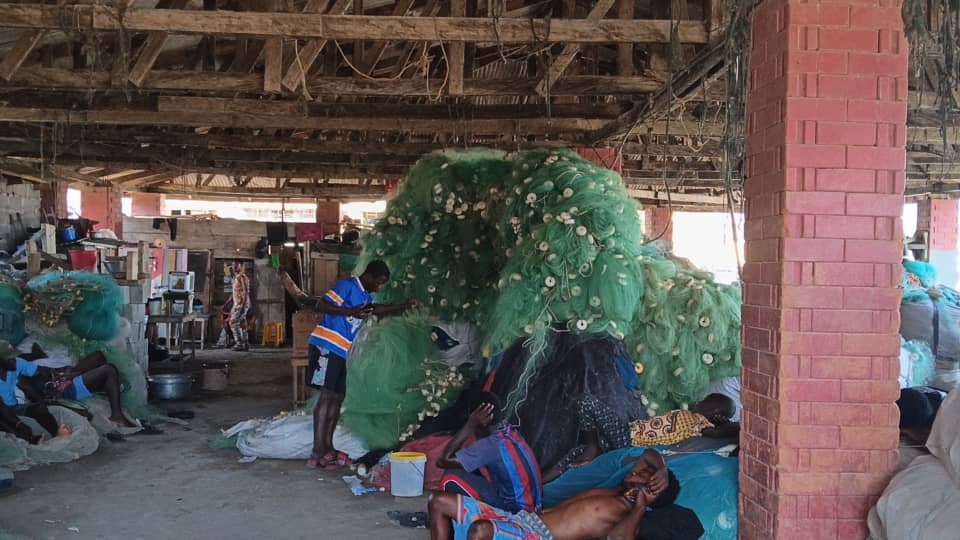
Okyeame Krah called for the completion of the stalled Anaafo Market, which was intended to provide a trading space for women but had become a white elephant, forcing many traders to operate under congested conditions at the beach.
He was convinced that the proposed investment could transform livelihoods if the resources were directed towards their pressing needs, including outboard motors, fishing nets, lines and reliable premix fuel supplies which was mostly in short supply.
To ensure fairness and prevent political interference, he said distribution of government support should be done through the leadership of the fishing communities.
Mr Kobena Kakraba, an elder at the Chief Fisherman’s Office, described the investment as a good move but stressed the need for its equitable distribution through the leadership of the fisherfolk.
He reiterated the challenges posed by the sea defence project and called for urgent repair works to be done.
Additionallly, he appealed for the construction of a wharf to facilitate fishing operations.
On premix fuel, he corroborated concerns about unreliable supplies, saying the provision of at least three tanks weekly would bring considerable relief to fishermen.
As it stands now, they are forced to rely on regular petrol which they described as expensive and caused damage to their outboard motors.
Agya Kwamena, a canoe owner from Komenda, also welcomed the proposed investment, saying it would provide the much-needed support to fishing communities.
He noted that outboard motors now cost between GHS45,000 and GHS60,000, expressing hope that the intervention would reduce prices significantly.
He further urged the government to clamp down on the sale of substandard motors which was affecting fishing activities.
For Papa Atta, a fisherman, the high cost of fishing gear was another major challenge as fishing nets were selling between GHS2,500 and GHS4,000.
He appealed for the establishment of a special pension scheme for fishermen to provide them with financial security after years of service.
However, Kojo Kakraba, another fisherman, expressed doubts about the intended benefits of the budget allocation, saying he feared the resources would be distributed selectively and on political lines, leaving many fisherfolk out.
Some fishmongers also welcomed the government’s proposed market development initiative but expressed concerns about whether they would have access to the facilities after their construction.
A fish monger, Sister Esi, said fish sales had declined considerably, forcing women to return home with unsold fish, a situation she attributed partly to the lack of money in the local economy.
She called on the government to create more employment opportunities for the youth in the community to improve economic activities and boost purchasing power.
Ms Blessing Dadzie, who also welcomed the proposed markets, cautioned that political promises must translate into tangible benefits for the intended beneficiaries.
GNA