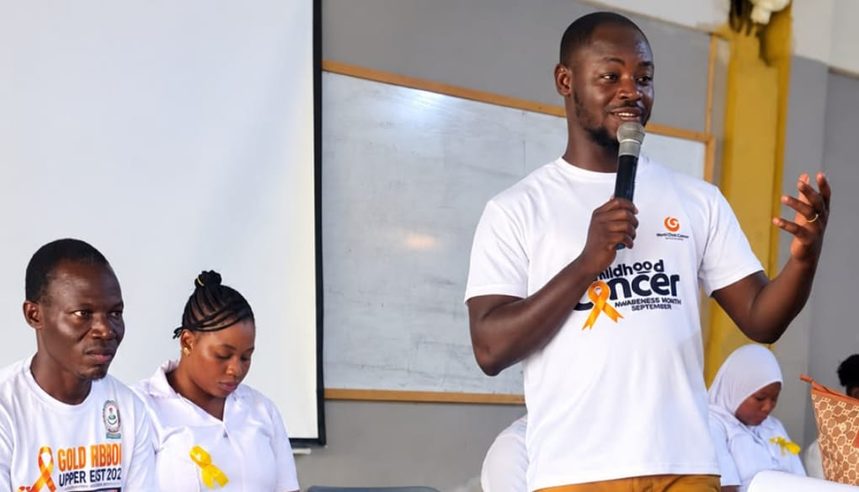
The Paediatric Oncology Unit of the Upper East Regional Hospital has sensitised students of the Nursing Training College in Bolgatanga on the early warning signs of childhood cancer and appropriate health-seeking behaviour.
The engagement formed part of activities, including radio discussions, planned by the Unit to mark Childhood Cancer Awareness Month under its “Gold Ribbon Upper East” initiative.
Childhood Cancer Awareness Month is observed globally in September each year to honour young patients and survivors and raise awareness about childhood cancer.
The Paediatric Oncology Unit, in collaboration with the Childhood Cancer Society of Ghana, recently launched the Hospital’s maiden Childhood Cancer Awareness Month initiative on the theme: “Demonstrating Impact: From Challenge to Change. See, Start, Save.”
Mr Jonah Awinbe Ayamba, Assistant Manager of the Unit, who was accompanied by Mr Thomas Abapori Adda, a paediatric oncology nurse, said student nurses occupied a unique position in their communities because some members of the public mistook them for qualified health professionals when they wore their uniforms.
He said they could, therefore, be approached by community members seeking advice on various health concerns, including those affecting children.
Mr Ayamba said the sensitisation was designed to equip the students with accurate and basic information to enable them to recognise possible warning signs of childhood cancer, provide appropriate health guidance and encourage people to seek assessment from qualified health professionals when necessary.
He took the students through a range of signs that could warrant further medical assessment, including unusual lumps or swelling anywhere on the body, unexplained weight loss or poor growth, persistent fever without a clear cause, unusual paleness, tiredness or weakness, frequent or unexplained bruising or bleeding, and persistent joint or bone pain.
Other warning signs, he said, included changes in the eyes, such as a white appearance in the pupil or squinting, persistent or unexplained changes in balance, persistent headaches, and sudden or persistent changes in vision.
“The presence of any of these signs does not mean that a child has cancer. Rather, such symptoms should prompt appropriate medical evaluation to determine the underlying cause and ensure that the child receives the necessary care,” Mr Ayamba told the students.
He also addressed common misconceptions about childhood cancer, saying the condition was neither contagious nor caused by spiritual forces and was not necessarily untreatable.
Mr Ayamba said childhood cancer was not caused by the fault of a child’s parent or relative and did not affect only adults.
He cautioned the students against spreading misinformation and encouraged them to share accurate health information and direct children and their caregivers to appropriate healthcare facilities for professional assessment.
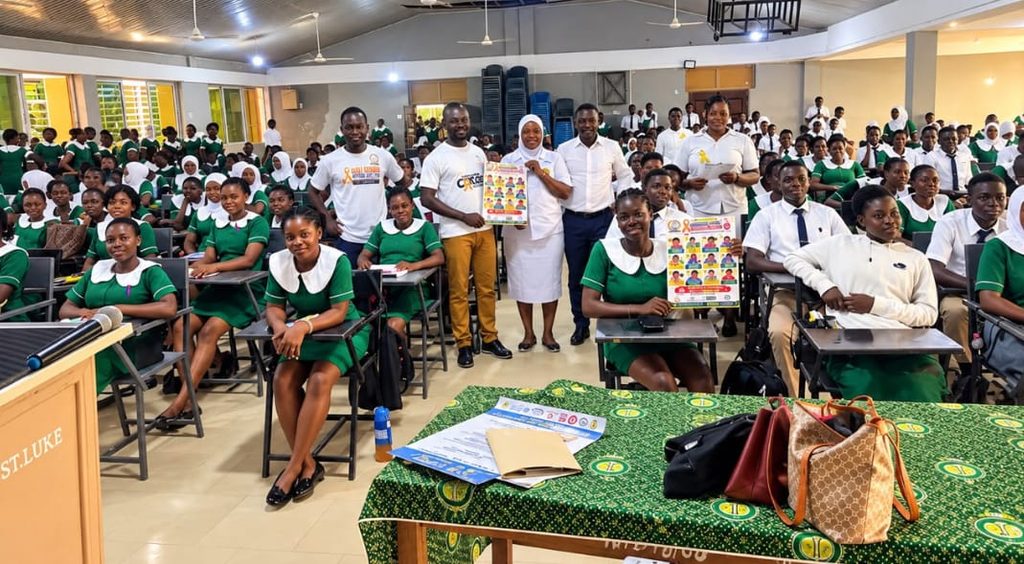
He urged the students to become “health information multipliers” in their communities.
“When you encounter children with concerning symptoms or are approached by people seeking advice about a child’s health, use the knowledge gained from this engagement to encourage early professional assessment and share appropriate childhood cancer awareness information with families and communities,” he said.
Mr Ayamba also provided the students with contact information for the Paediatric Oncology Unit to enable them to seek guidance or make appropriate referrals when they encountered childhood cancer-related concerns during their interactions with communities.
Mr Mathias Gnansin, Academic Officer of the College, thanked the Paediatric Oncology Unit for extending the awareness campaign to the College and commended its leadership for recognising student nurses as an important part of the broader healthcare system.
GNA