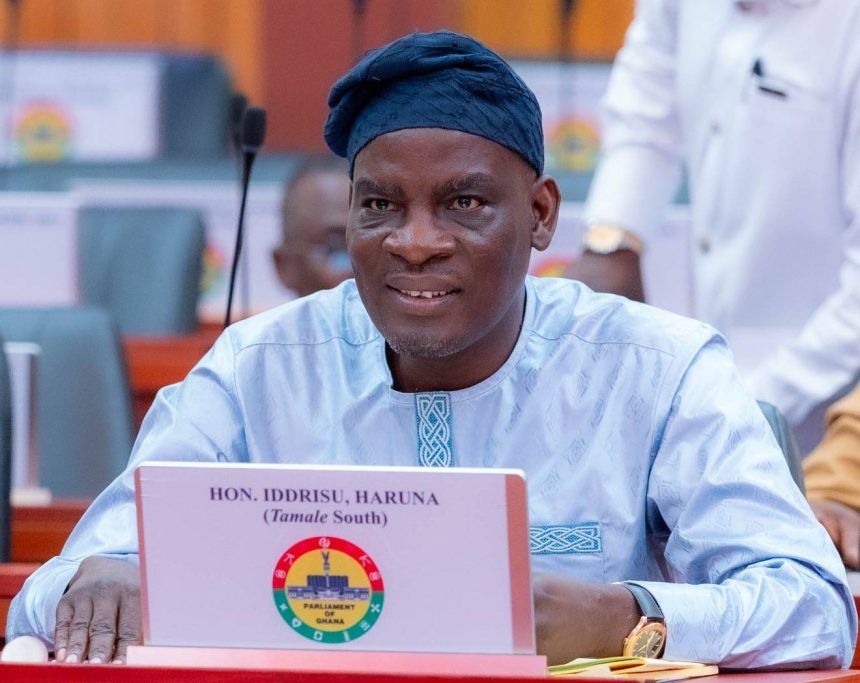
The government has spent GHC917 million to support 321,807 students under the No-Fees-Stress Policy, the Minister of Education, Haruna Iddrisu, has revealed.
He said the amount was paid from budgetary support from the Consolidated Fund.
“The GHC917 million is a direct flow from the Ministry of Finance from the Consolidated Fund as part of the Ministry of Education’s budgetary support. Other releases have gone to the Students Loan Trust Fund (SLTF) from the Ghana Education Trust Fund (GETFund) for the students’ loan disbursement,” he said.
Mr Iddrisu disclosed this yesterday at a Stakeholder Engagement on implementing the No-Fees-Stress Initiative at Dawu in the Eastern Region.
The programme, organised by the SLTF, had the theme: “Strengthening No-Fees-Stress Implementation through Institutional Partnerships for Inclusive, Equitable and Sustainable Student Financing”.
Representatives of Vice Chancellors Ghana, Vice Chancellors of Technical Universities, Principals of Colleges of Education, the Federation of Ghana Medical Students, civil society organisations (CSOs) and the Parliamentary Select Committee on Education.
Mr Iddrisu said the initiative stems from the National Democratic Congress’ 2024 Resetting Ghana Manifesto, in which President John Mahama committed to reducing the financial burden of tertiary education on students and their families.
He said the commitment was translated into action on July 4, 2025, with the launch of the No-Fees-Stress Initiative, implemented by the SLTF and funded by the GETFund.
“Let me commend the management and leadership of the Students Loan Trust Fund, and the leadership and management of GETFund, for keeping this dream a reality under President Mahama’s Reset.
“Arguably, and statistically, GH¢917 million has so far been spent to support students under the No-Fees-Stress, covering a student population of 321,807,” he emphasised.
Mr Iddrisu admitted that one of the major challenges facing the policy was the timely release of budgetary allocations for its implementation, and stressed the need to address it to avoid defeating the purpose of the initiative.
“So regardless of your financial standing, regardless of your geographical location, regardless of the status of your parents, an eligible Ghanaian who qualifies to access higher education must be supported by government to access higher education,” he said, adding that the policy “has come to stay”.
He also announced that the government had, for the first time in many years, opened up student loan support to students studying Law, thereby demystifying legal education.
“We will do the same for medical education in the coming years,” he said.
“As a true value of human capital development, maybe we should now accept that human capital development be construed as a strategic investment requirement of every government and sufficient budgetary allocation provided for it.”
Presenting an update, the Chief Executive Officer of the SLTF, Dr Saajida Shiraz, said the fund was a statutory agency under the Ministry of Education mandated to provide financial resources for tertiary students.
She said the fund had, over the past year and a half, contended with “an expanded mandate” following the introduction of the government’s flagship No-Fees-Stress Policy, which she described as “a transformational initiative by President John Dramani Mahama to ensure that financial circumstance would not become a barrier to accessing tertiary education for any Ghanaian student”.
The policy, she said, has five sub-components: the no academic fee policy; free tertiary education for persons with disabilities; the Students Loan Plus initiative; an enhanced traditional loan scheme with higher loan amounts and reduced interest rates; and digitalisation of the system to make loans easier to access.
“So for this academic year, we came up with a very creative financing model to deal with the urgent funding needs of students now trying to access special education, and it is that funding we are calling bridge funding,” she said.
The Board Chairperson of the SLTF, Cynthia Amerley Amarteifio, said that under the President’s reset agenda, access, inclusion, affordability and sustainability in tertiary education had been placed at the centre of the government’s education agenda.