The International Monetary Fund (IMF) reports a sharp drop in global development assistance, admitting two of its critical emergency buffers are needed replenishment.
The Fund said dwindling official development assistance (ODA) was forcing it to step up concessional financing for low-income countries, with bilateral aid for Africa projected to fall 12 per cent in 2026.
The IMF pointed to rich members were yet to complete pledges to the Poverty Reduction and Growth Trust (PRGT) while its Catastrophe Containment and Relief Trust (CCRT) faced funding pressure.
The two facilities are critical for health, humanitarian relief, education and social protection, governance and budget support, infrastructure and energy, agriculture and food security, and climate adaptation.
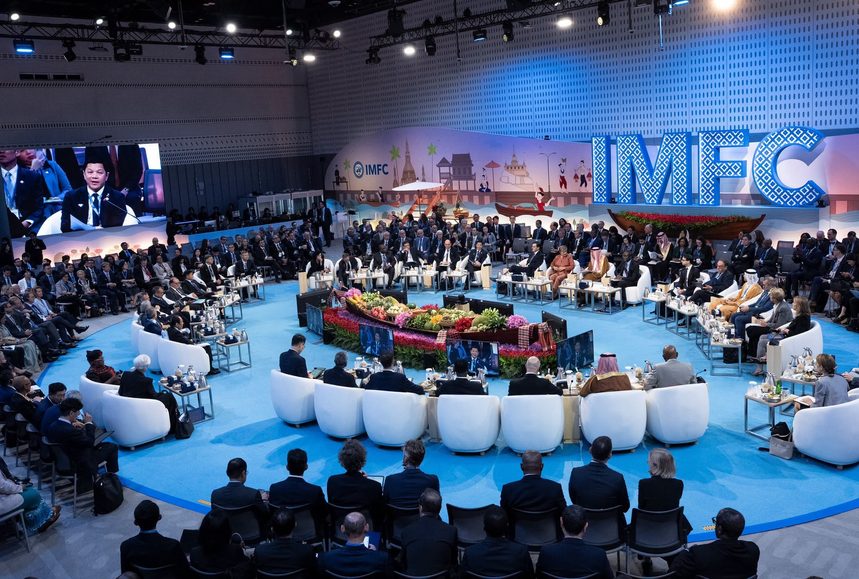
Ms Kristalina Georgieva, Managing Director, IMF, made the disclosure at the Fund’s Global Policy Agenda briefing in Bangkok last Tuesday, saying it has reformed its core facility for the poorest nations to allow it to triple lending when needed.
“We have seen development assistance dropping. And at the Fund, we recognise our responsibility to be available to finance countries when they need that financing. This is why we reformed the PRGT, so we can triple lending to low-income countries when it is necessary,” she said.
Ms Georgieva was candid that the reform on paper was not matched by cash in hand, saying, “we will continue to pressure our members to complete their commitments,” acknowledging that pledge of low-income countries.
On the CCRT, she said: “We still have a bit of money in it, so we can still act. But we have so often had to rush to use the CCRT that, indeed, we need a replenishment. And we will be urging our better‑off members to please help us in that regard.”
The IMF Chief noted the low-income countries were supporting the facilities, saying, “we are moving at a good pace. And many of the low‑income countries have done their job to pledge – Malawi I think was the last to do it – so we, as the Fund, can be a source of financing.”
The CCRT was heavily used during COVID, Ebola and the Morocco earthquake, disbursing over US$700 million in debt relief but with only US$800m raised of a US$1.4 billion target, can the Fund respond if another shock hits in 2026?
For vulnerable members, including Ghana, Senegal and Caribbean small island states present in Bangkok, the implications are stark – access to cheap IMF money may increase, but access to free emergency relief may disappear.
Speaking with the Ghana News Agency, Professor Godfred Alufar Bokpin, Economist, attributed the development to a deeper breakdown in the international economic system with major powers showing growing inertia toward multilateral institutions.
“The reality is that the global economic order, with the UN, IMF, World Bank at the apex of it, is not working for the powers that be. So, you will notice that there’s a certain inertia towards the IMF from the powerful countries,” he noted.
The professor of finance at the University of Ghana Business School (UGBS), recommended to Ghana and other beneficiaries of the PRGT and CCRT to start mobilising resources within to fill the gap.
“Developing countries must learn to manage and deal with corruption and manage their economies efficiently, build institutions, build trust, rather than thinking that the IMF will be dishing out monies. Not going to happen,” Prof Bokpin urged.
GNA