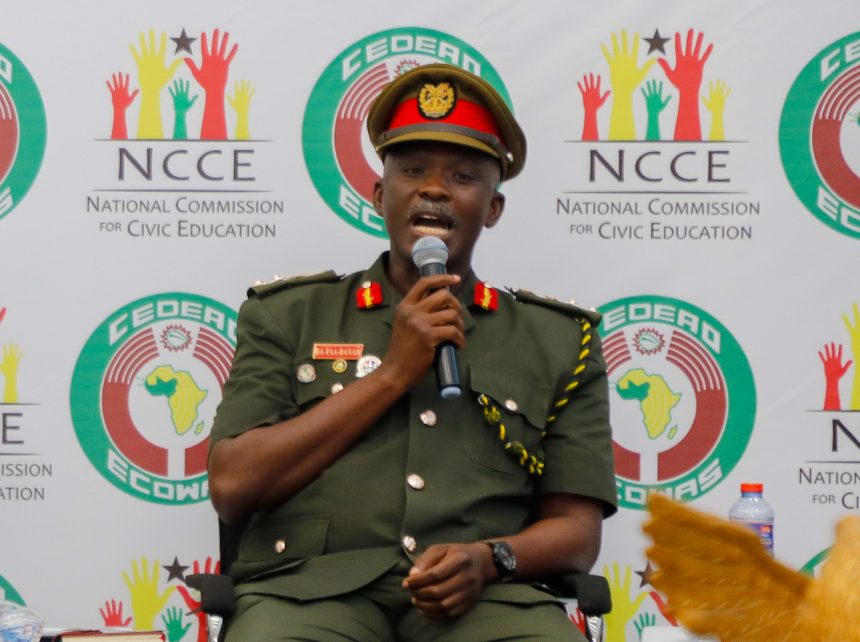
Major General Tim Ba-Taa-Banah, the Director of the National Counterterrorism Fusion Centre, has identified citizen complicity in criminal activities as one of the biggest threats to Ghana’s national security.
He said the deliberate or inadvertent protection of criminals by citizens, including providing them with accommodation, transportation and other forms of support, could undermine the efforts of security agencies to prevent and combat crime.
“The biggest threat is the enemy within. The complicity of the citizen when crime is about to be committed, when it is being conceived, when it is being planned, and when it is committed,” he said.
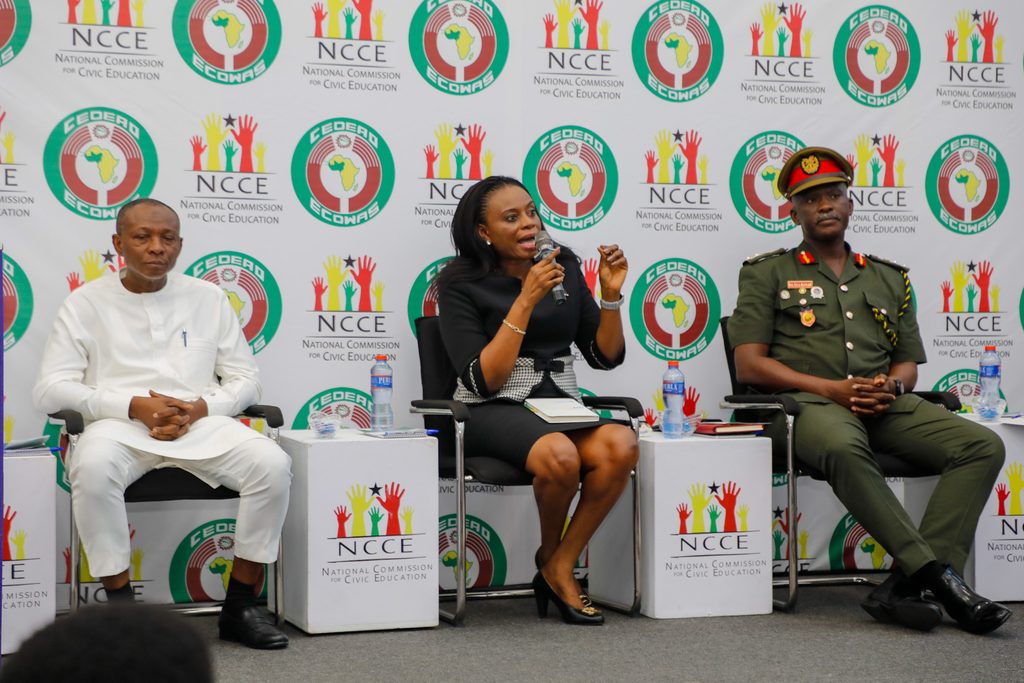
Major General Ba-Taa-Banah, who is also the Chairman of the Joint Operations Committee of the National Security Council Secretariat, said this while contributing to a National Dialogue on the theme: “Sustaining Post-Election Peace and Strengthening Community Resilience Against Emerging Security Threats in Southern Border Communities of Ghana,” in Accra on Wednesday.
The dialogue was organised by the National Commission for Civic Education (NCCE) in collaboration with the Economic Community of West African States (ECOWAS).
He said citizens sometimes complained about the inability of security agencies to deal effectively with criminals while withholding information that could assist investigations.
Landowners and other community members who knowingly provided shelter to criminals contributed to creating an environment in which criminal activities thrived, he stated.
Major General Ba-Taa-Banah said Ghana had remained relatively secure despite security challenges in the West African sub-region but cautioned against complacency.
He said Ghana’s geographical location and proximity to countries experiencing violent extremism and transnational organised crime meant that developments in the northern parts of the country could have implications for communities in the south.
“We aren’t an island, so all the other threats that the countries around us face, we equally face them,” he said.
He urged citizens to complement the work of security agencies by reporting suspicious activities and anomalies within their communities, either directly to security agencies or through traditional authorities, adding that traditional leaders remained important partners in maintaining peace and stability, particularly in communities where citizens might be reluctant to approach security agencies directly.
Major General Ba-Taa-Banah also stressed the need to sustain measures to control small arms and light weapons, saying their misuse had contributed significantly to conflicts in parts of West Africa.
He called for continued public education and initiatives that encouraged the voluntary surrender of unlicensed weapons.
Madam Victoria Ama Asieduwaa, a Peace and Conflict Analyst at the National Centre for the Coordination of Early Warning and Response Mechanism, called for the establishment of community peace structures involving chiefs, youth leaders, women’s groups and other stakeholders to identify warning signs and relay them to the appropriate national institutions.
She noted that low levels of reporting were partly linked to declining public trust in state institutions and urged stakeholders to improve access to justice to restore confidence.
She added that effective early warning required communities to identify and communicate emerging risks before they escalated into conflicts.
“We cannot secure the peace we so cherish without doing this,” she said, advocating a human-centred approach to early warning and conflict prevention.
Dr Mustapha Abdallah, a Senior Researcher at the Kofi Annan International Peacekeeping Training Centre (KAIPTC), said Ghana also needed to address internal vulnerabilities that could make communities susceptible to violent extremism.
He identified unemployment, inequality, marginalisation and governance challenges as some of the conditions that had contributed to radicalisation and violent extremism in parts of the Sahel.
He urged Ghana to look beyond border security and address such vulnerabilities within communities, particularly those along the southern borders.
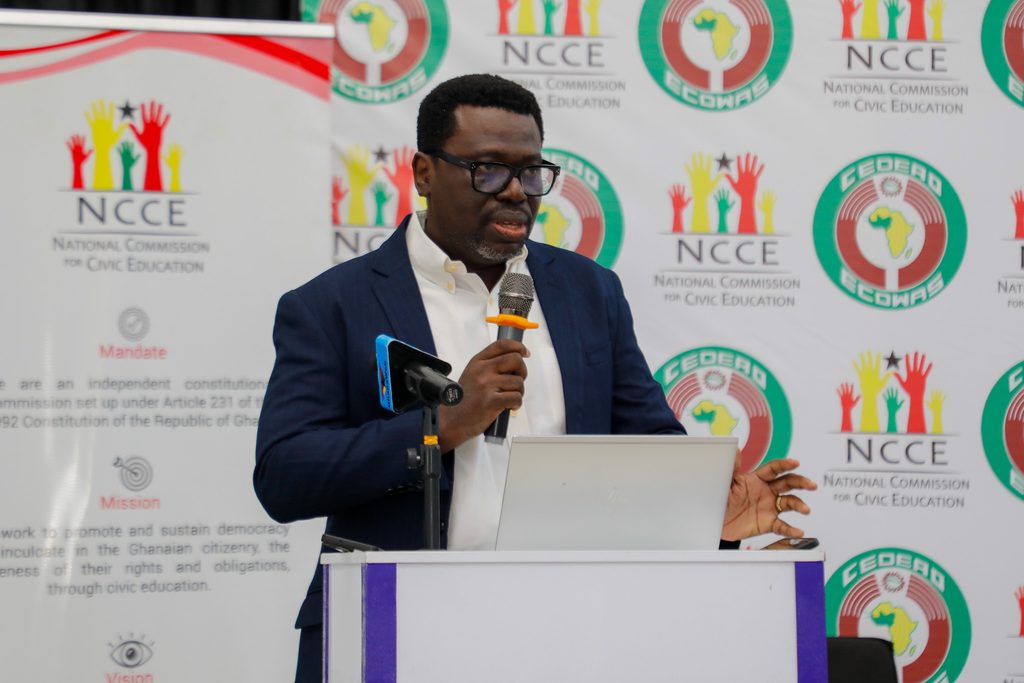
Ms Kathleen Addy, the Chairperson of NCCE, in a speech read on her behalf by Mr Victor Brobbey, her Deputy in charge of General Services, added that although Ghana had a strong reputation as a peaceful and stable democracy, the country could not afford to take its peace and security for granted.
Ms Addy said the successful conduct of the 2024 elections and the peaceful transfer of power demonstrated the maturity of Ghanaians and the strength of the country’s democratic institutions but stressed the need for continuous efforts to protect and strengthen the peace.
She called for nationwide security-related interventions rather than those concentrated in northern Ghana, warning that southern and coastal communities were also exposed to emerging threats, including violent extremism, narcotics, cross-border crime and disinformation.
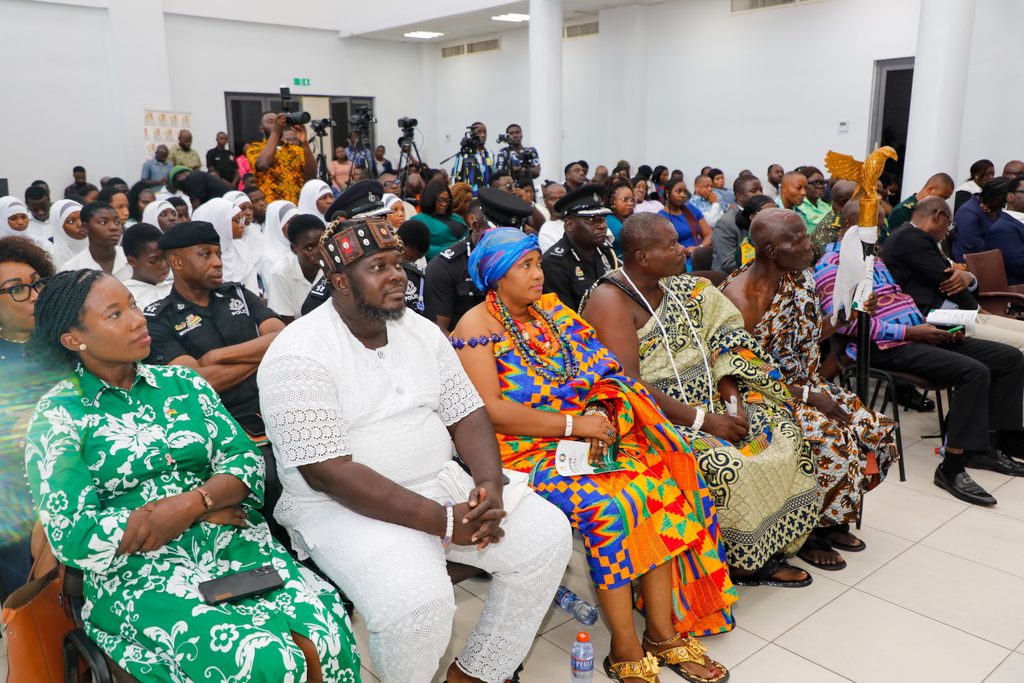
The dialogue brought together security agencies, traditional authorities, civil society organisations, community groups, students and other stakeholders to identify emerging security threats, strengthen community resilience and promote collaboration in preventing conflict and violent extremism.