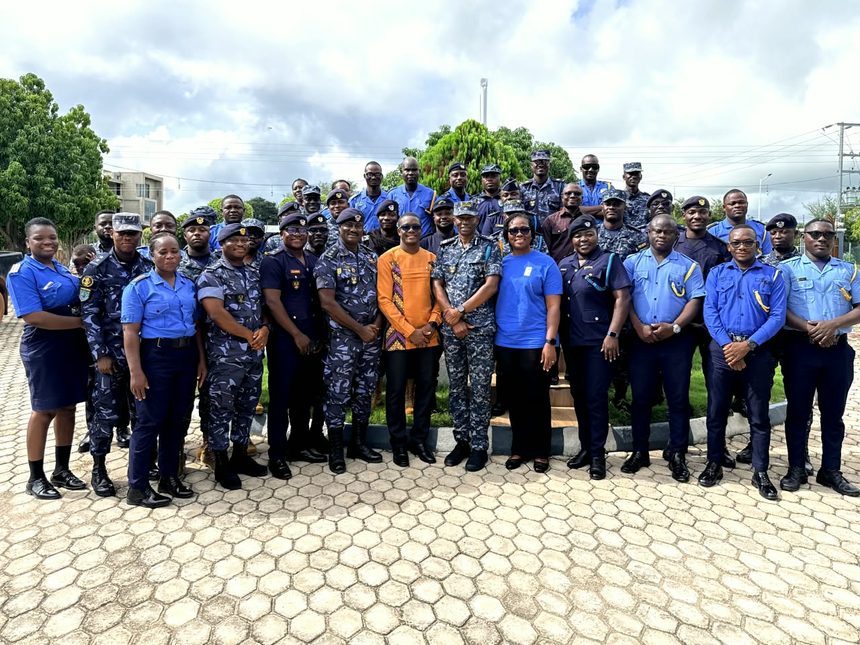
The Energy Commission has engaged officers of the Customs Division of the Ghana Revenue Authority (GRA) in the Upper East Region to strengthen the enforcement of energy efficiency regulations governing electrical appliances entering the country.
The training, sponsored by the United Nations Development Programme (UNDP) and the Clean Climate and Air Coalition (CCAC), was aimed at equipping Customs officers with the knowledge and skills to identify appliances that meet Ghana’s minimum energy performance standards at the country’s entry points.
Mr Hubert Nsoh Zan, Manager, Energy Efficiency Regulations at the Energy Commission, speaking at the training in Bolgatanga, said the engagement was necessary because Customs officers were strategically positioned at the country’s seaports, land ports and borders, where they served as the first point of contact for imported electrical appliances.
He said the Commission initially focused on three categories of appliances, namely refrigerators, air conditioners and lighting devices, because they were often used for long hours and inefficient models consumed significant amounts of electricity.
The scope, he said, had since been expanded to 19 appliances as part of efforts to strengthen demand-side management and reduce pressure on the national electricity supply.
Mr Zan said reducing electricity consumption through the use of energy-efficient appliances would contribute to a more reliable power supply and help reduce brownouts resulting from excessive demand.
He said the Commission was, therefore, working with Customs officers to deepen their understanding of the regulatory requirements, what to look out for during inspections and how to enforce the regulations.
Mr Zan said electrical appliances entering Ghana were required to meet specified minimum performance standards before they could be allowed onto the market.
He said enforcing the standards was also important for consumer safety and environmental protection, as poor-quality electrical appliances could contribute to fire outbreaks.
“On the other hand, if they are not of quality, it means that the electrical products that they have used to wire them can cause fire outbreaks,” he said.
Mr Zan said the objective of the Commission was to ensure that appliances entering the country met the required quality, energy efficiency and environmental standards.
He cautioned Customs officers against facilitating the entry of inferior and non-compliant appliances, saying the regulations prescribed punitive measures for enforcement officers who aided or permitted such goods to enter the market.
The sanctions, he said, could include imprisonment and fines.
Ms Joyce Caitlyn Ocansey, Programme Coordinator of the Drive Electric Programme at the Energy Commission and Gender Specialist for the CCAC Customs Training, said the programme was also promoting gender-sensitive approaches to Customs operations and enforcement.
She said the objective was to ensure that gender considerations were incorporated into enforcement, inspection, verification, employment, training and stakeholder engagement.
Ms Ocansey called for the inclusion of women and men in training, deployment and enforcement activities, noting that gender-sensitive teams could improve the efficiency, productivity and sustainability of Customs operations.
Mr Daniel Akolgo, Assistant Revenue Officer of the Customs Division at the Missiga Station of the Bolgatanga Collection, said the training had improved officers’ understanding of the categories of appliances that should be allowed into the country.
He said the knowledge acquired would enable Customs officers to identify appliances with high energy consumption and prevent non-compliant products from entering the Ghanaian market.
Mr Dramani Vug, Assistant Revenue Officer at the Kulungugu Station of the Bolgatanga Collection, said the training had also clarified the responsibilities of Customs officers in dealing with appliances suspected of violating the regulations.
He said the officers had been taught how to identify compliant and non-compliant appliances and determine whether products should be detained or seized.
Mr Akolgo said officers who participated in the training would share the knowledge acquired with their colleagues at their respective stations to broaden enforcement capacity.
GNA