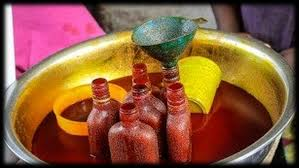
The Eastern Regional Office of the Food and Drugs Authority (FDA) has arrested several palm oil traders for allegedly selling products adulterated with Sudan IV dye, a banned synthetic colourant known to pose serious health risks.
The arrests followed the FDA’s annual surveillance exercise and laboratory analysis of palm oil samples collected across the region.
Out of 76 palm oil samples tested, 12 failed laboratory analysis, leading to enforcement action against the suspected offenders.
Five traders arrested at the Koforidua Central Market are currently assisting the Police with investigations at the Koforidua Central Police Station to help trace the source of the adulterated products.
Ms Anita Owusu-Kuffour, Eastern Regional Head of the FDA, told the Ghana News Agency that seven other suspected traders from Nkawkaw, Asamankese and the Kwaebibirem District were also assisting the Police in their respective jurisdictions.
She warned that the use of unlawful substances such as Sudan IV dye in food products could cause serious health problems, including cancer, liver damage and kidney disease.
Ms Owusu-Kuffour therefore urged the public to report any suspected food safety violations to the FDA or the Police, stressing that consumer vigilance was critical to protecting public health.
“Voluntary reporting by consumers is essential in monitoring product safety,” she said.
She said the FDA had intensified its engagement with palm oil producers and sellers across the region to educate them on the dangers of adulteration and the legal consequences of using banned colourants.
Ms Owusu-Kuffour reaffirmed the Authority’s commitment to enforcing the Public Health Act, 2012 (Act 851), to ensure that food products on the Ghanaian market were safe for consumption.
She advised consumers to be cautious when buying palm oil, particularly products with unusual colour or texture, and to purchase only from trusted and certified sources to minimise health risks.
Ms Owusu-Kuffour added that a simple test could be conducted at home by pouring a small quantity of palm oil into a clear glass of water.
“If the oil floats and the water remains clear, the oil is safe. However, if the water changes colour, it may indicate the presence of an added dye,” she explained.